Epping Collection Checklist for Building Projects
Plan a smoother Epping collection for retaining walls, fencing, timber, drainage and concrete projects with this practical materials checklist.
A good collection run can keep a project moving. A rushed one can mean another trip for a missing post, the wrong sleeper length, or the drainage materials you only realise you need once excavation has started.
Whether you are a builder, landscaper, fencing contractor or a hands-on homeowner, taking a few minutes to organise your list before you collect can make the job easier. This guide covers the details worth checking when you are collecting retaining-wall, fencing, timber, drainage and concrete supplies from Epping.
Start with the job, not the product list
The best materials list starts with a clear picture of the job. Before you decide how many sleepers, posts or bags of concrete you need, write down what the finished project needs to do.
For example, a retaining wall may need to hold back soil, manage water and create a level area. A fence may need to follow a boundary, work around a slope and include gates or returns. A concrete repair may need a fast-setting mix, reinforcement or a specific finish.
Bring these basics with you:
- The project type and a simple sketch if you have one
- Overall length, height and depth measurements
- Photos of the site, especially slopes, corners and existing structures
- Any product preferences, colours or finishes you are considering
- Your preferred collection day and vehicle or trailer details
Clear information helps you ask better questions and makes it easier to identify the materials that belong on the same collection list.
Retaining wall collection essentials
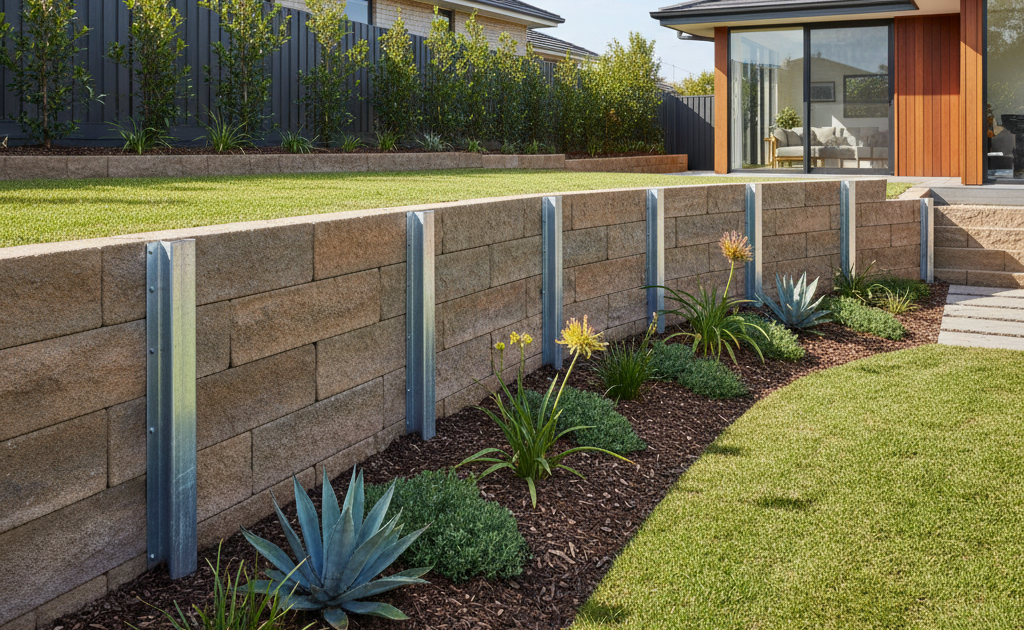
Concrete sleeper retaining walls are made up of more than the visible sleepers. The right combination of posts, drainage and backfill materials matters just as much as the face of the wall.
Check your wall dimensions
Measure the total wall length and the planned height at several points. Ground that looks level can change across a site, particularly on a sloping block. Note where the wall steps up or down, where it turns a corner and where it meets another structure.
Those details affect the number and type of sleepers and steel posts you may need. They also help you identify whether standard posts, corner posts or other configurations are required.
Do not leave drainage until later
Water pressure is one of the most important considerations behind a retaining wall. Your project may need drainage pipe, geofabric and suitable drainage aggregate so water can move away from the wall rather than build up behind it.
Add drainage to the first version of your list, not the last. If you are unsure what applies to your site, bring photos and measurements so you can discuss the project before collection.
Think about handling and transport
Concrete sleepers and steel posts are substantial materials. Confirm the length of the products you are collecting and make sure your vehicle, trailer and tie-down plan are suitable. Planning this early can help you decide whether collection, staged collection or delivery is the better fit.
Fencing materials to include in your plan
A fencing project can involve panels, posts, rails, caps, gates and fixings. The exact list depends on the fence style, height, boundary layout and whether you are replacing an existing fence or starting from scratch.
For Colorbond or timber fencing, check the following before you collect:
- Total fence run and the location of every corner
- Fence height and any changes in level
- Gate openings, returns and connections to existing structures
- Post, rail and panel requirements
- Caps, brackets, fixings and touch-up items where relevant
If your fence follows a slope, take a few extra measurements along the run. This can help you plan the layout and avoid under-ordering the components that make the fence work as a complete system.
Timber for landscaping and fencing work
Timber products are often used across several parts of one project. Sleepers may form garden edges or steps, while posts, rails and palings support a new timber fence. Listing each use separately helps avoid mixing up lengths and profiles.
Write down the intended use of every timber item. Instead of simply noting “posts,” record the size, length and quantity you need for each section of the job. Do the same for rails, palings, sleepers, plinths and brackets.
It is also worth checking how the timber will be transported and stored. Longer lengths need appropriate support in transit, and materials should be kept off the ground and protected from unnecessary moisture before installation.
Drainage and concrete: the materials that support the finish
Drainage and concrete products are easy to overlook because they are often installed before the visible part of the project is complete. They are still central to a durable result.
Drainage checklist
For drainage work, consider the route water needs to take, the length of pipe required and the fittings or fabric that support the system. Agi pipe and geofabric are common parts of retaining-wall and landscaping drainage plans, but the right approach depends on the site and project design.
Concrete checklist
For concrete work, calculate the area or volume you need to fill and allow for the type of job. A small repair, a footing and a larger slab can call for different products and quantities. Check whether you need cement, concrete mix, rapid-set concrete, blocks or other supporting materials.
If you are collecting bagged products, think about weight as well as quantity. Splitting a larger order into manageable loads can make collection and unloading safer and more practical.
Make your Epping collection run more efficient
Once you have your list, group it by project stage. Put the materials you need first on the job at the top, then add the items needed for later stages. This gives you a clearer view of what must be collected now and what can wait.
Before you head to FPM Building Supplies, check availability for the products you need and let the team know if you are collecting longer, heavier or larger quantities of materials. A quick conversation can help you prepare for the right collection method and reduce surprises on the day.
Final check before you leave
Use this short final review before collection:
- Measurements are written down and easy to read
- Product sizes, quantities and finishes are listed
- Corners, gates, slopes and drainage are accounted for
- Your vehicle or trailer is suitable for the load
- You have allowed for the materials that support the visible finish
- You have asked about availability and collection timing
A well-prepared list does not replace site-specific advice or engineering requirements, but it does make it easier to have a useful conversation and collect with a clearer plan.
Ready to organise your next project? Start your Epping collection enquiry and speak with FPM Building Supplies about the materials you need.
Explore Topics
Written by
FPM Building Supplies Team
Content creator and writer sharing insights and stories.


