
Mon - Fri 7:00 - 17:00
32 fullarton dr Epping 3076 Australia
Posted by FPMBuildingSupplies
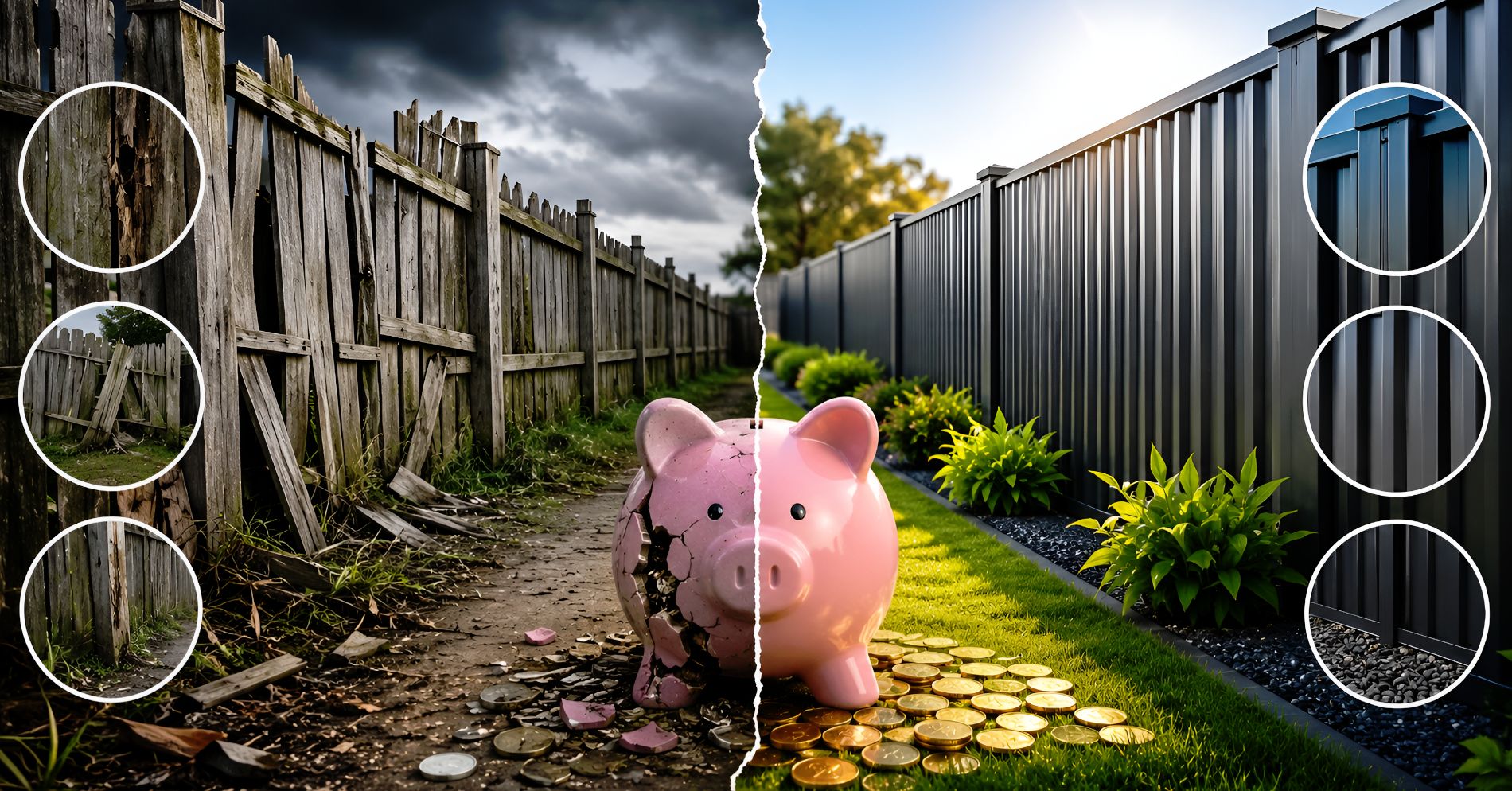
Exposed: Why Budget Fencing Materials Cost 3 Times More Over 20 Years
Table of Contents
ToggleIntroduction: The Fence That Cost Twice as Much (But Looked So Cheap)
Let me tell you about Sarah. Sarah needed a new fence for her Melbourne backyard. She found a great deal online—timber posts and panels at a price that seemed too good to pass up. “Why spend more?” she thought. “A fence is a fence, right?”
Two years later, Sarah’s fence was already showing signs of trouble. Posts were leaning. Panels were warping. She spent weekends sanding, repainting, and making repairs. Five years in, she replaced several sections entirely. By year ten, she was planning a complete replacement.
Meanwhile, her neighbour Mark chose a different path. He invested in quality galvanised steel posts and concrete sleepers. His upfront cost was higher—about 30% more than Sarah’s budget option. But ten years later, Mark’s fence still looks like the day it was installed. No painting. No repairs. No weekend chores.
Who really saved money?
This isn’t just Sarah and Mark’s story. It’s a pattern repeated across Australian properties every day. The truth about budget fencing materials is uncomfortable but important: what seems like a smart saving upfront often becomes a costly mistake over time. At FPM Building Supplies, we’ve seen this cycle countless times. You can explore our complete product range or learn more about why customers choose us for their fencing material needs. For personalised advice on your fencing project, our team is available at +61 421370700 to help guide your material selection.
This guide exposes the real cost of budget fencing materials over a 20-year period. We’ll break down the hidden expenses, compare material lifespans, and show you how investing in quality upfront can save you thousands in the long run. If you want to understand more about our company background, visit our about page for detailed information about our operations and commitment to quality. Understanding the true cost of fencing helps you make informed decisions that protect your budget and your property for decades.
The Hidden Math of Fencing Costs: Why Upfront Price Is Just the Beginning
The Illusion of “Cheap” Fencing
When comparing fencing options, it’s natural to focus on the price tag. A timber post might cost $15. A basic steel post might be $25. A quality galvanised steel post might be $40. On the surface, the budget option looks like the smart choice.
But fencing costs don’t end at the checkout. The real expense unfolds over years of ownership through:
- Maintenance materials (paint, sealant, rust converter)
- Labour time (your weekends or hired help)
- Repair costs (replacing damaged sections)
- Premature replacement (buying a new fence sooner than expected)
Our fencing ROI calculation guide helps you understand return on investment for quality fencing materials. Understanding total cost of ownership helps you see beyond the initial price tag.
The 20-Year Timeline: Where Budget Choices Really Show Their Cost
Let’s do the math with realistic Australian figures:
Budget Timber Fence (20-year projection):
- Initial cost: $3,000
- Maintenance every 2-3 years: $300 × 7 times = $2,100
- Repairs years 5-10: $800
- Full replacement year 12: $3,500 (inflation-adjusted)
- Total 20-year cost: ~$9,400
Quality Galvanised Steel/Concrete Fence (20-year projection):
- Initial cost: $4,500 (50% more upfront)
- Minimal maintenance: $100 × 2 times = $200
- Minor repairs: $200
- Total 20-year cost: ~$4,900
The budget option costs nearly twice as much over two decades. And that’s a conservative estimate—many budget fences fail even sooner in harsh Australian conditions.
Our steel posts vs wooden posts guide compares material longevity that informs this cost analysis. Understanding long-term costs helps you make financially smart fencing choices.
The Time Tax: What Your Weekends Are Really Worth
Beyond direct financial costs, there’s the often-overlooked “time tax” of maintaining budget fencing. Every weekend spent sanding, painting, or repairing is time not spent with family, pursuing hobbies, or relaxing.
For tradespeople, time spent maintaining their own property is time not spent earning. For busy families, it’s time that could be invested in relationships or personal growth.
Our low-cost high-impact landscaping guide helps maximise value within budget limitations. Understanding time value helps you appreciate the true cost of high-maintenance materials.
Material Showdown: How Different Fencing Options Really Perform Over Time
Timber: The Classic Choice with Classic Problems
Timber fencing has undeniable appeal—natural beauty, traditional look, and often lower upfront cost. But Australian conditions are tough on timber:
- Rot and decay: Even treated timber succumbs to moisture, especially in Melbourne’s variable climate
- Insect damage: Termites and borers can compromise structural integrity
- Warping and splitting: Temperature swings and UV exposure cause timber to move and crack
- Regular maintenance: Requires sealing or painting every 2-3 years to maintain appearance and protection
Our concrete sleepers vs timber retaining walls guide compares material longevity that informs fencing decisions. Understanding timber limitations helps you weigh its true value.
Basic Steel: Better Than Timber, But Not Perfect
Untreated or lightly coated steel posts offer better durability than timber but come with their own challenges:
- Rust and corrosion: Without proper galvanisation, steel rusts quickly, especially in coastal areas
- Paint failure: Cheap paint chips and peels, exposing metal to the elements
- Structural weakening: Rust compromises post strength over time
- Maintenance requirements: Still requires periodic inspection and touch-up painting
Our galvanised steel fence lifespan guide explores how long galvanised materials perform in various conditions. Understanding steel performance helps you choose posts that won’t become the weak link.
Quality Galvanised Steel and Concrete: The Long-Term Champions
When properly specified and installed, quality materials deliver exceptional value:
- Galvanised steel posts: Hot-dip galvanising provides decades of corrosion resistance without maintenance
- Concrete sleepers: 50 MPa concrete offers superior strength, durability, and weather resistance
- Minimal maintenance: No painting, sealing, or regular treatments required
- Long lifespan: 50+ years of service with minimal intervention
Our concrete sleeper life cycle guide examines how concrete products perform over decades of use. Understanding material longevity helps you calculate the genuine value of quality investments.
The Australian Factor: Why Our Climate Makes Budget Choices Even Costlier
Melbourne’s Reactive Clay Soils: A Fence’s Worst Enemy
Melbourne sits on a vast basin of reactive clay soils that swell when wet and shrink when dry. This constant movement puts enormous stress on fence posts and foundations.
Budget materials struggle with this movement:
- Timber posts crack and split as soil shifts
- Basic steel posts bend or pull out of unstable foundations
- Cheap concrete footings crack and crumble
Quality materials handle Melbourne’s soils better:
- Galvanised steel posts flex slightly without breaking
- High-strength concrete resists cracking from ground movement
- Proper foundation design accommodates soil movement
Our the ultimate guide to fencing on clay soil guide provides guidance for challenging soil conditions. Understanding soil challenges helps you choose materials that won’t fail under Melbourne’s unique ground pressures.
Weathering the “Four Seasons in One Day”
Melbourne’s unpredictable weather—from scorching summer days to cold winter snaps—tests building materials constantly. Budget fencing materials often can’t handle these extremes:
- UV degradation: Cheap paints and sealants break down quickly in intense sun
- Thermal expansion: Temperature swings cause materials to expand and contract, leading to cracks and failures
- Moisture damage: Heavy rainfall and humidity accelerate rot and corrosion
Quality materials are engineered for Australian conditions:
- UV-stable finishes resist sun damage
- Materials with low thermal expansion coefficients handle temperature swings
- Corrosion-resistant coatings protect against moisture
Our Melbourne weather-resistant materials guide addresses regional material performance considerations. Understanding climate resilience helps you select materials that thrive in Melbourne’s variable conditions.
Coastal Corrosion: The Salt Factor
For Melbourne’s bayside and coastal suburbs, salt-laden air accelerates corrosion of many materials. Budget fencing options often fail quickly in these environments:
- Untreated steel rusts rapidly in salty air
- Timber finishes degrade faster with salt exposure
- Basic concrete can suffer from salt crystallisation damage
Quality materials provide exceptional coastal resistance:
- Hot-dip galvanising provides superior salt corrosion protection
- Marine-grade concrete formulations resist salt damage
- Proper drainage design prevents salt accumulation
Our coastal Victoria fencing steel guide covers coastal applications where corrosion resistance matters significantly. Understanding coastal requirements helps you choose posts that won’t rust away in salty air.
The Real Cost Breakdown: Where Your Money Actually Goes
Initial Purchase: Just the Beginning
The sticker price of fencing materials is just the first expense. Consider what else you’ll need:
For budget timber fencing:
- Posts, panels, nails/screws: $3,000
- Concrete for post footings: $300
- Tools (if you don’t have them): $200
- Initial total: ~$3,500
For quality galvanised steel/concrete fencing:
- Galvanised posts, concrete sleepers, fasteners: $4,500
- Concrete for post footings: $300
- Tools (if you don’t have them): $200
- Initial total: ~$5,000
The quality option costs about 43% more upfront. But that’s where the comparison ends.
Maintenance Costs: The Silent Budget Killer
Budget fencing requires regular maintenance to maintain appearance and function. Over 20 years, these costs add up significantly:
Budget timber fence maintenance (20 years):
- Sealing/painting every 2-3 years: $300 × 7 times = $2,100
- Replacement of damaged sections: $800
- Tools and supplies for maintenance: $300
- Total maintenance: ~$3,200
Quality galvanised steel/concrete fence maintenance (20 years):
- Occasional cleaning: $100 × 2 times = $200
- Minor fastener replacement: $200
- Total maintenance: ~$400
The budget option costs 8 times more in maintenance over two decades.
Labour Costs: Your Time Has Value
Even if you do maintenance yourself, there’s a cost to your time. If you hire help, labour costs multiply the expense.
Budget fence labour (20 years):
- DIY time value: 10 weekends × $200/weekend opportunity cost = $2,000
- Or professional help: $500 × 7 maintenance events = $3,500
Quality fence labour (20 years):
- Minimal DIY time: 2 weekends × $200 = $400
- Or minimal professional help: $200 × 2 events = $400
The budget option costs 5-8 times more in labour over two decades.
Replacement Costs: The Biggest Budget Surprise
Perhaps the most significant cost difference comes from premature replacement. Budget fencing often needs complete replacement within 10-15 years, while quality fencing can last 50+ years.
Budget fence replacement:
- Full replacement year 12: $3,500 (inflation-adjusted from initial $3,000)
Quality fence replacement:
- No replacement needed within 20-year timeframe
This single factor can double the total cost of budget fencing over two decades.
The Complete 20-Year Cost Comparison
Let’s bring it all together with realistic figures:
Budget Timber Fence (20-year total cost):
- Initial purchase: $3,500
- Maintenance materials: $3,200
- Labour/time cost: $2,000 (DIY value) or $3,500 (professional)
- Replacement year 12: $3,500
- Total: $12,200 (DIY) to $13,700 (professional)
Quality Galvanised Steel/Concrete Fence (20-year total cost):
- Initial purchase: $5,000
- Maintenance materials: $400
- Labour/time cost: $400 (DIY value) or $400 (professional)
- No replacement needed
- Total: $5,800 (DIY or professional)
The budget option costs 2.1-2.4 times more over 20 years. And that’s a conservative estimate—many budget fences fail even sooner, increasing the cost difference.
Our fencing ROI calculation guide helps you understand return on investment for quality fencing materials. Understanding complete cost analysis helps you make financially intelligent fencing choices.
Beyond Money: The Hidden Costs of Budget Fencing
Aesthetic Degradation: When Your Fence Becomes an Eyesore
Budget fencing doesn’t just cost more financially—it can degrade your property’s appearance and value. A leaning, warped, or peeling fence:
- Reduces curb appeal and property value
- Creates a neglected appearance that affects neighbourhood perception
- May violate local council regulations or body corporate rules
Quality fencing maintains its appearance for decades, enhancing rather than detracting from your property’s value.
Our stylish concrete sleeper features guide covers design approaches that benefit from aesthetic applications. Understanding aesthetic impact helps you choose fencing that enhances your property.
Safety and Security Compromises
As budget fencing deteriorates, it can compromise safety and security:
- Leaning posts or loose panels create trip hazards
- Weakened structures may fail completely, causing injury or property damage
- Gaps or weaknesses compromise security and privacy
Quality fencing maintains its structural integrity and security function throughout its long service life.
Our concrete sleeper safety procedures guide covers safety considerations that apply to fencing installations. Understanding safety implications helps you choose fencing that protects your property and family.
Environmental Impact: The Hidden Cost to Our Planet
Budget fencing often has a larger environmental footprint over its lifecycle:
- More frequent replacement means more material consumption and waste
- Chemical treatments for timber can leach into soil and waterways
- Transportation emissions from multiple purchases and replacements
Quality fencing reduces environmental impact through:
- Longer lifespan means fewer replacements and less waste
- Durable materials require fewer chemical treatments
- Efficient manufacturing and transportation of longer-lasting products
Our the environmental benefits of using precast concrete products guide explains sustainability advantages. Understanding environmental impact helps you align fencing choices with ecological responsibility.
Making the Smart Choice: How to Invest in Quality Without Breaking the Budget
Understanding True Value, Not Just Price
The key to smart fencing investment is understanding value, not just price. Consider:
- Lifespan: How long will this fencing last?
- Maintenance: What ongoing care will it require?
- Performance: How well will it handle Australian conditions?
- Aesthetics: How will it look over time?
Our fencing material longevity guide helps you understand how different materials perform over time. Understanding value factors helps you make informed purchasing decisions.
Prioritising Critical Components
You don’t have to upgrade everything at once. Focus on the components that matter most for longevity:
- Posts: Invest in quality galvanised steel posts—they’re the backbone of your fence
- Foundations: Proper concrete footings prevent post movement and failure
- Fasteners: Quality connectors maintain fence integrity over time
You can save on less critical elements while ensuring the structural components are quality.
Our galvanised steel posts guide covers the full range of options available for different applications. Understanding component importance helps you allocate your budget effectively.
Taking Advantage of Bulk Pricing and Professional Advice
Quality doesn’t have to mean expensive. Strategies to maximise value:
- Bulk purchasing: Buying materials for your entire project at once often qualifies for volume discounts
- Professional consultation: Expert advice can help you avoid costly mistakes and choose the right materials for your needs
- Phased implementation: Complete critical sections first, then expand as budget allows
Our bulk concrete sleepers Melbourne page covers options for projects requiring significant material quantities. Our contact page provides easy access to our team for discussing your project. Understanding value strategies helps you achieve quality results within your budget.
Compliance and Standards: Building to Code
Australian Building Standards
All fencing should comply with relevant Australian Standards for structural safety and building code requirements where applicable. These standards ensure fences are created safely and effectively, especially for boundary and safety applications. You can reference Standards Australia for authoritative information on construction standards affecting your project. Understanding compliance helps you prevent failures by building to proven specifications.
National Construction Code Considerations
The National Construction Code provides framework information affecting structural requirements for fencing, particularly for retaining walls, boundary fences, and safety barriers. You can reference the National Construction Code for regulatory framework information. Understanding code requirements helps you prevent failures through regulatory-compliant construction.
Conclusion: The Fence That Pays for Itself
The truth about budget fencing materials is clear: what seems like a smart saving upfront often becomes a costly mistake over time. When you factor in maintenance, repairs, replacement, and the value of your time, budget fencing can cost 2-3 times more than quality alternatives over a 20-year period.
But this isn’t just about money. It’s about peace of mind. It’s about a fence that stands straight and strong through Melbourne’s challenging climate. It’s about weekends spent enjoying your garden, not maintaining your fence. It’s about a property that maintains its value and appeal for decades.
At FPM Building Supplies, we’re committed to providing quality fencing materials and expert advice that help you make smart investments. Whether you’re a homeowner planning a backyard fence or a builder working on a large project, we’re here to help you choose materials that deliver long-term value.
Take the time to consider the complete cost of your fencing choices—not just the price tag, but the decades of performance, maintenance, and value that follow. Choose quality, and choose to build something that lasts.
For more information about our fencing products and expert advice for your project, visit our main website or call our team at +61 431235919. Let’s build something that lasts—together.