
Mon - Fri 7:00 - 17:00
32 fullarton dr Epping 3076 Australia
Posted by FPMBuildingSupplies
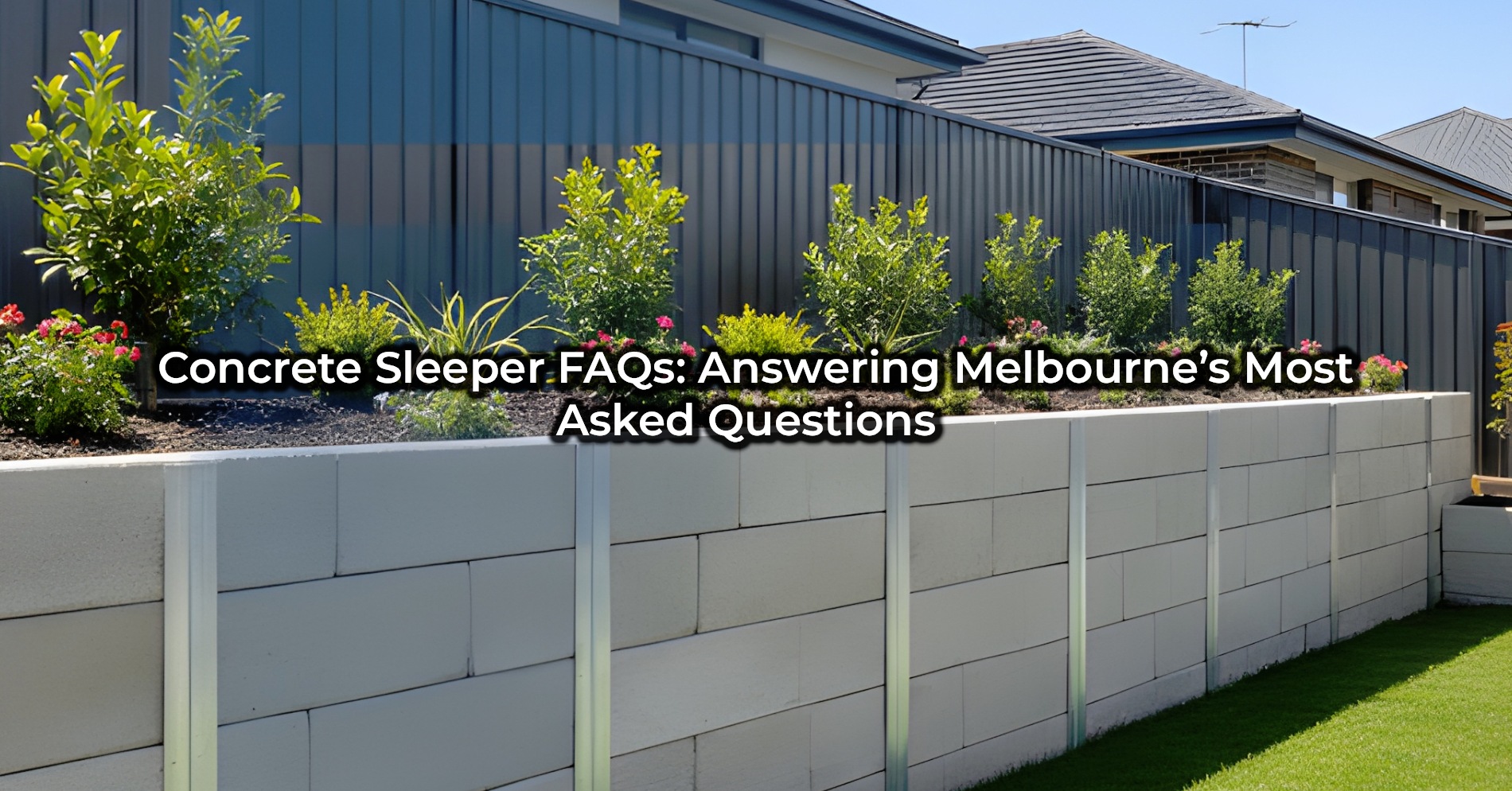
Concrete Sleeper FAQs: Answering Melbourne’s Most Asked Questions
Concrete sleepers have become a go-to solution for Melbourne homeowners, landscapers, and builders seeking durable, low-maintenance, and stylish outdoor structures. From retaining walls and garden edging to boundary fences and raised beds, precast concrete sleepers offer unmatched strength—especially when made with 50 MPa high-strength concrete, like those from FPM Building Supplies .
Yet, despite their growing popularity, many Melburnians still have questions:
Are they too heavy for DIY?
Do they crack in clay soil?
Can I paint them?
What posts should I use?
At FPM Building Supplies , we’ve answered thousands of these queries from clients across Melbourne—from Brunswick to Frankston, Epping to the Mornington Peninsula. In this comprehensive FAQ guide, we address the most common questions we receive—backed by engineering insight, local climate knowledge, and real-world experience.
Whether you’re planning your first garden bed or managing a commercial landscaping project, this guide gives you the clarity you need to move forward with confidence.
Table of Contents
Toggle1. What Are Concrete Sleepers Made Of?
Our concrete sleepers are precast using a premium 50 MPa concrete mix, far stronger than standard 20–25 MPa concrete used in driveways or footpaths. This high-strength formulation includes:
- General Purpose Cement (AS3972 compliant)
- High-grade aggregates (crushed rock and sand)
- Controlled water-cement ratio for low permeability
- Optional iron oxide pigment (for charcoal finish)
All units are cast in precision steel molds and cured in temperature-controlled chambers to ensure consistent strength and finish.
👉 Learn more about the advantages of 50 MPa concrete .
2. Plain or Charcoal: Which Finish Should I Choose?
This is one of our most frequent questions—and the answer depends on your design goals.
| Finish | Natural grey | Sleek dark grey |
| Customisation | Can be painted or stained | Pre-finished; no painting needed |
| UV Resistance | Good (if sealed) | Excellent (integral pigment) |
| Best For | Rustic gardens, heritage homes, budget projects | Modern homes, commercial spaces, low-maintenance looks |
👉 Compare them in detail: Plain vs Charcoal Concrete Sleepers .
3. How Much Do Concrete Sleepers Weigh?
A standard 2.4m x 200mm x 75mm sleeper weighs approximately 85kg. This weight:
- Adds stability (resists wind uplift)
- Requires two people or mechanical aid to lift safely
- Is not suitable for single-person DIY without proper equipment
👉 Read Understanding Concrete Sleeper Weight for safe handling tips.
4. Can I Install Concrete Sleepers Myself?
Yes—but with preparation. Many Melbourne homeowners successfully install sleepers for garden beds, edging, and low fences. However:
- Walls over 600mm often require engineering or council approval
- Retaining walls need proper drainage and deep post footings
- Always use galvanised steel posts—never timber
We recommend:
- Working with a partner
- Using Rapid Set Concrete for fast post anchoring
- Following our Complete Installation Guide
For complex projects, consult a professional.
5. What Type of Posts Should I Use?
Galvanised steel posts are essential—timber will rot, and untreated steel will rust. FPM offers four types:
| H Post (100x100UC) | Retaining walls, tall fences (>1m), commercial use | Shop Now |
| C Post (100x50mm) | Garden edging, residential fencing (<1.8m) | Shop Now |
| Corner Post | 90° angles, gate supports | Shop Now |
| 45-Degree Post | Sloped terrain, driveways, tiered gardens | Shop Now |
All are hot-dip galvanised for 50+ year corrosion resistance—even in coastal zones.
6. Do Concrete Sleepers Crack in Melbourne’s Clay Soil?
Not if installed correctly. Melbourne’s reactive clay expands when wet and shrinks when dry, which can shift poorly anchored structures. To prevent cracking:
- Dig post holes to 800mm–1m depth
- Use H Posts for walls over 600mm
- Include gravel drainage behind retaining walls
- Allow slight movement with expansion gaps
Our 50 MPa concrete is less prone to micro-cracking than standard mixes, making it ideal for clay-prone suburbs like Keilor or Werribee.
👉 See How to Fence on Clay Soil (via relevant blog context).
7. How Long Do Concrete Sleepers Last?
With proper installation, 50+ years. Unlike timber (10–15 years) or PVC (20–25 years), concrete sleepers:
- Resist rot, pests, and fire
- Don’t warp or fade (charcoal finish)
- Require zero maintenance beyond occasional rinsing
This longevity makes them a smart long-term investment.
8. Can I Paint or Stain Concrete Sleepers?
- Plain sleepers: Yes! They accept exterior-grade concrete paint or stain. Clean thoroughly and use a primer for best adhesion.
- Charcoal sleepers: Not necessary—the colour is integral, not surface-applied. However, you can apply a clear sealant for extra stain resistance.
👉 Get creative with Top 10 Landscaping Ideas Using Plain Sleepers .
9. Do I Need Council Approval for a Concrete Sleeper Wall?
In Victoria:
- Walls under 600mm: Usually no permit required
- Walls 600mm–1m: May need a planning permit (check with your council)
- Walls over 1m: Often require engineering certification and building permit
Always verify with your local council before starting.
10. How Do I Prevent Water Buildup Behind a Retaining Wall?
Drainage is critical. Without it, hydrostatic pressure will bulge or collapse your wall. Install:
- Agricultural (ag) pipe at the base
- Geotextile fabric to wrap the pipe
- 150–300mm of clean gravel behind the wall
This system directs water away safely—essential for Melbourne’s wet winters.
11. Are Concrete Sleepers Eco-Friendly?
Yes. Our sleepers support sustainable construction by:
- Reducing deforestation (vs. timber)
- Being 100% recyclable at end-of-life
- Requiring no chemical treatments
- Minimising waste through precise factory production
👉 Read about the Environmental Benefits of Precast Concrete .
12. Can I Cut Concrete Sleepers to Size?
Yes—but with the right tools:
- Use a diamond blade angle grinder or wet-cut concrete saw
- Wear PPE: goggles, respirator, gloves
- Clamp the sleeper securely before cutting
- Smooth edges with a rubbing stone
For large projects, consider ordering custom lengths (1.5m, 1.8m, 2.1m) from FPM.
13. What’s the Difference Between H Posts and C Posts?
- H Posts (100x100UC): Square profile, high load capacity—ideal for retaining walls and tall fences
- C Posts (100x50mm): Channel profile, lighter weight—perfect for residential fencing and garden edging
👉 Full comparison: H Posts vs C Posts .
14. How Deep Should Post Holes Be?
Follow the 1/3 rule:
Post hole depth = 1/3 of total post length
Example: For a 2.4m post with 1.8m above ground, dig 800mm deep.
In clay or high-wind areas, go deeper (up to 1m).
15. Can I Use Concrete Sleepers for a Fire Pit?
Yes—and it’s highly recommended. Concrete is non-combustible, unlike timber or composites. Build a circular or square frame using sleepers, and reinforce corners with galvanised steel brackets or 45-degree posts.
👉 See Innovative Uses Beyond Landscaping .
16. How Do I Maintain Concrete Sleepers?
Minimal upkeep required:
- Rinse with water 1–2 times per year
- Remove algae or moss with mild detergent
- Inspect posts annually for shifting
- Reapply sealant to plain sleepers every 3–5 years (optional)
Full guide: How to Maintain Concrete Sleepers .
17. Why Choose FPM Building Supplies?
As a locally owned business in Epping (3076), we offer:
✅ Australian-made 50 MPa concrete sleepers
✅ Hot-dip galvanised steel posts (AS/NZS 4680 compliant)
✅ Fast Melbourne delivery
✅ Expert trade and DIY support
✅ Bulk pricing for contractors
We’re proud to be Melbourne’s trusted source for high-quality concrete solutions .
Final Thoughts
Concrete sleepers are a smart, stylish, and sustainable choice for Melbourne properties—but only when you have the right information. By addressing these most-asked questions, we hope to empower you to build with confidence, safety, and long-term value.
At FPM Building Supplies, we’re more than a supplier—we’re your partner in creating outdoor spaces that last for generations.
Got more questions? We’re here to help.
Contact FPM Building Supplies
- Visit us: 32 Fullarton Dr, Epping VIC 3076
- Phone: +61 431 235 919 or +61 421 370 700
- Email: contact@fpmbuildingsupplies.com.au
- Website: https://fpmbuildingsupplies.com.au/
- Explore more: FPM Blog Library