
Mon - Fri 7:00 - 17:00
32 fullarton dr Epping 3076 Australia
Posted by FPMBuildingSupplies
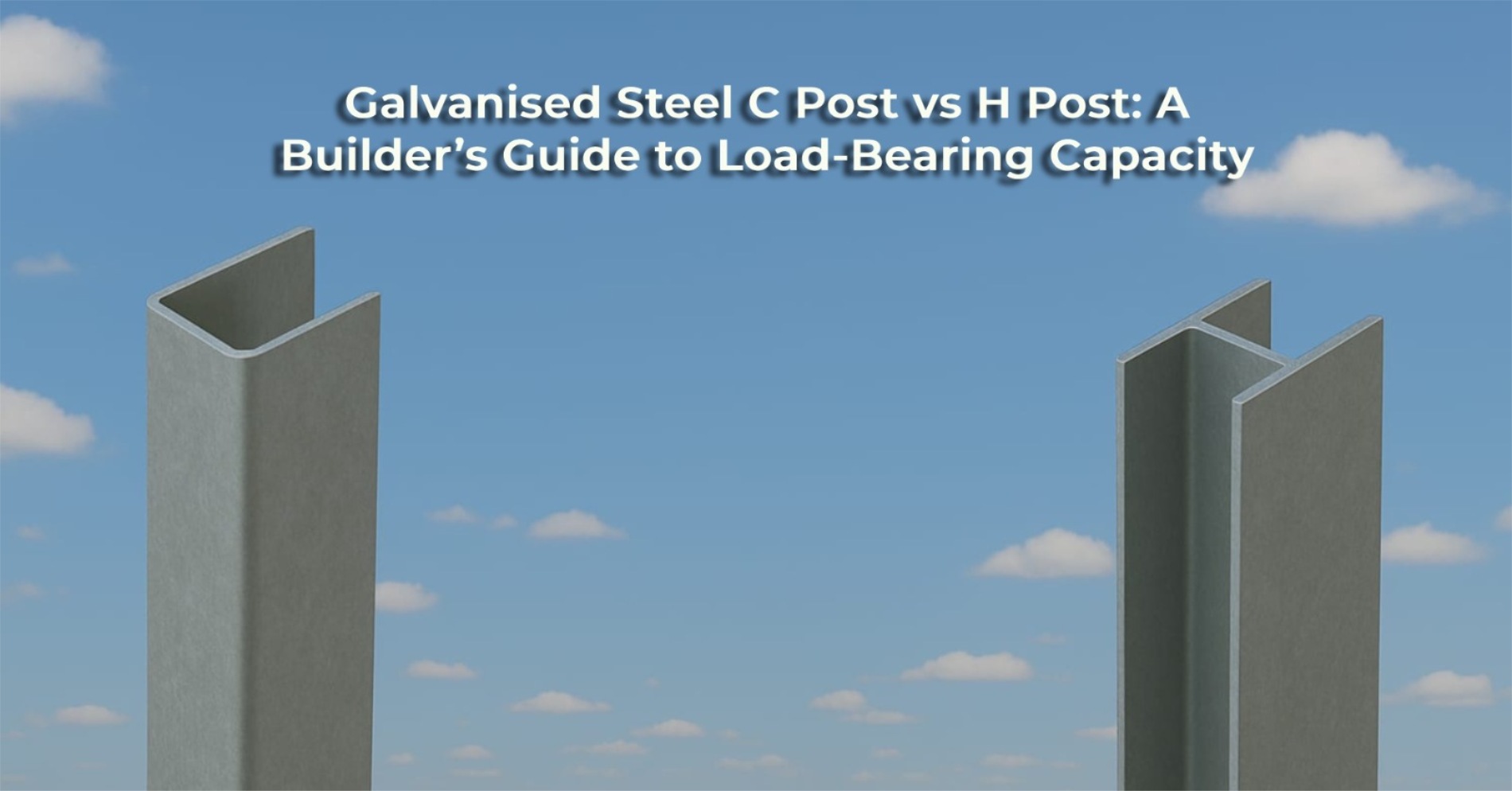
Galvanised Steel C Post vs H Post: A Builder’s Guide to Load-Bearing Capacity
When it comes to building durable fences, retaining walls, or structural frameworks, selecting the right galvanised steel post is essential for ensuring strength and longevity. Among the most commonly used options are the Galvanised Steel C Post (100x50mm) and the Galvanised Steel H Post (100x100UC) . While both offer excellent corrosion resistance and durability, their load-bearing capabilities differ significantly.
At FPM Building Supplies , we understand that builders need clarity when choosing materials. In this detailed guide, we’ll compare the C Post and H Post in terms of design, strength, applications, and how to choose based on your project’s requirements. Whether you’re working on a residential fence or a commercial boundary wall, this article will help you make an informed decision.
Table of Contents
ToggleUnderstanding Galvanised Steel Posts
Galvanised steel posts are essential components in modern construction due to their corrosion resistance , strength , and longevity . The galvanisation process involves coating steel with zinc, protecting it from rust and environmental damage. This makes them ideal for outdoor use in various conditions—from coastal environments to industrial settings.
Two of the most widely used types are:
- C Post (100x50mm) – Lightweight yet strong, ideal for moderate support needs.
- H Post (100x100UC) – Heavy-duty support for tall fences and large-scale builds.
Shop Galvanised Steel C Posts | Explore Galvanised Steel H Posts
1. Structural Design and Dimensions
The structural design of a post directly impacts its load-bearing capacity. Let’s examine the key differences:
Galvanised Steel C Post (100x50mm)
- Shape : U-shaped channel
- Dimensions : 100mm wide x 50mm deep
- Weight : Lighter than H posts
- Material Thickness : Varies depending on manufacturing standards
This post is designed for light-to-medium duty applications. Its open-channel structure allows for easy attachment of fencing panels, trellises, or lightweight concrete sleepers.
Galvanised Steel H Post (100x100UC)
- Shape : H-shaped with two flanges connected by a web
- Dimensions : 100mm x 100mm UC section
- Weight : Heavier than C posts
- Material Thickness : Thicker walls for enhanced strength
The H post is built for heavy-duty applications , such as tall fences, retaining walls, and agricultural enclosures where high wind pressure or heavy loads are expected.
Learn More About Post Shapes and Sizes | View Product Specifications
2. Load-Bearing Capacity Explained
Load-bearing capacity refers to the maximum weight or force a post can support without failing. This is crucial when designing fences, retaining walls, or any structure requiring vertical support.
C Post Load-Bearing Features
- Ideal for Shorter Fences : Best suited for fences up to 1.8m in height.
- Moderate Wind Resistance : Performs well in low-wind areas.
- Suitable for Garden Edging and Light Retaining Walls : Can support light soil pressure when paired with plain concrete sleepers.
However, because of its thinner profile and single-flange design, the C post has lower torsional rigidity , making it less suitable for extreme weather or high-load applications.
H Post Load-Bearing Features
- Designed for Tall Structures : Supports fences up to 3m or more.
- Superior Wind Resistance : The double-flange design enhances stability in windy conditions.
- Excellent Soil Retention Support : Ideal for retaining walls, especially when using charcoal concrete sleepers.
- Commercial Use : Frequently used in security fencing, industrial sites, and agricultural enclosures.
The H post’s superior cross-sectional area allows it to handle greater lateral forces, making it the go-to choice for demanding builds.
Read How to Build Strong Retaining Walls | Compare C Post vs H Post
3. Applications and Project Suitability
Choosing between a C post and an H post largely depends on the nature of your build. Below is a breakdown of common applications and which post suits them best.
Residential Fencing
- C Post : Perfect for backyard fences, garden edging, and pool surrounds where heights don’t exceed 1.8m.
- H Post : Recommended for taller fences, especially in windy areas or when using heavier materials like concrete sleepers.
Shop Plain Concrete Sleepers for Residential Builds | Use Charcoal Sleepers for Modern Appeal
Garden Frameworks and Trellises
- C Post : Offers sufficient support for lightweight structures like pergolas, garden beds, and vine supports.
- H Post : Overkill for simple garden structures but useful for freestanding pergolas or shade structures exposed to the elements.
Explore Garden Bed Ideas Using Concrete Sleepers | Read About Trellis Installation Tips
Retaining Walls
- C Post : Suitable for small retaining walls under 600mm in height.
- H Post : Essential for taller retaining walls (over 1m), providing necessary reinforcement against soil pressure.
Master Retaining Wall Construction | Get Expert Advice on Retaining Walls
Industrial and Commercial Fencing
- C Post : Limited to temporary or light-duty commercial fencing.
- H Post : The standard for permanent perimeter fencing around warehouses, factories, and rural properties due to its superior strength.
Shop for Commercial Fencing Solutions
4. Wind Load and Environmental Stress
Wind load is a critical factor in determining which post to use. Builders must consider regional climate and exposure when selecting between C and H posts.
C Post and Wind Resistance
- Best for Low-Wind Areas : Coastal regions or open fields may require additional bracing with C posts.
- Not Ideal for Large Gaps : Requires closer spacing to prevent flexing.
H Post and Wind Resistance
- Engineered for High-Wind Zones : The H shape distributes wind pressure evenly across the structure.
- Less Flex Under Pressure : Provides superior performance in gusty conditions.
Discover Durable Corner Support for Windy Environments | Learn About Wind-Resistant Materials
5. Soil Type and Foundation Requirements
The type of soil and ground composition also influences post selection.
Sandy or Loose Soils
- C Post : May require deeper installation or additional support due to lower anchoring capability.
- H Post : Better suited due to increased surface area and weight distribution.
Clay or Rocky Soils
- C Post : Sufficient for lighter structures in stable soils.
- H Post : Preferred for long-term stability and minimal movement in expansive clay soils.
Read About Soil Considerations in Construction | Contact Us for Site-Specific Advice
6. Installation and Compatibility with Other Materials
Both C and H posts are compatible with a range of fencing materials including wire mesh, timber panels, and concrete sleepers.
C Post Installation Benefits
- Lightweight and Easy to Handle : Reduces labor time and effort.
- Easier to Transport : Especially beneficial for DIY builders or remote locations.
- Cost-Effective : Lower material cost compared to H posts.
H Post Installation Benefits
- Higher Stability : Ideal for difficult terrain or challenging wind conditions.
- Long-Term Investment : Although more expensive upfront, they reduce the need for future maintenance.
- Better Anchoring Options : Works well with rapid-set concrete for secure foundations.
Use Rapid Set Concrete for Secure Installations | Buy Rapid Set Concrete Online
7. Maintenance and Longevity
Both posts are galvanised, offering excellent protection against rust and corrosion. However, their maintenance needs vary slightly based on usage.
C Post Maintenance
- Inspection Frequency : Every 2–3 years
- Common Issues : Potential bending in high-wind zones
- Repair Ease : Simple replacement if damaged
H Post Maintenance
- Inspection Frequency : Every 3–5 years
- Common Issues : Minimal due to robust design
- Repair Ease : More complex due to size, but lasts longer overall
Understand Concrete Sleeper Weight and Durability | Read Our Blog on Long-Lasting Fencing
8. Cost Considerations
While performance is crucial, budget often plays a role in material selection.
C Post – Cost-Effective Choice
- Lower Material Cost : Suitable for smaller projects or those on a tight budget.
- DIY Friendly : Reduces labor costs and installation time.
- Bulk Discounts Available : Contact us for competitive pricing on bulk orders.
H Post – Premium Investment
- Higher Upfront Cost : Reflects superior strength and longevity.
- Reduced Replacement Costs : Lasts longer, minimizing long-term expenses.
- Commercial Pricing : Ideal for large-scale developments or multi-acre fencing projects.
View Product Catalogue | Request a Quote for Your Project
9. Sustainability and Eco-Friendliness
Both C and H posts are made from recyclable steel, supporting sustainable construction practices. However, the H post’s extended lifespan means fewer replacements over time, reducing material waste.
- C Post : Recyclable and efficient for short-to-midterm projects.
- H Post : Environmentally responsible for long-term installations.
Read About Our Commitment to Green Practices | Explore Eco-Friendly Landscaping
10. Real-World Case Studies
Let’s take a look at real-life examples of where each post excels:
Case Study 1: Residential Backyard Fence
A homeowner in Melbourne installed a 1.5m fence using C posts spaced every 2 meters. The lightweight design made installation easier and more affordable. The fence remains sturdy even after five years.
Case Study 2: Industrial Perimeter Fencing
A warehouse in Geelong required a 2.4m security fence along its perimeter. Due to high wind exposure and the need for long-term durability, H posts were selected. They provide reliable support for wire mesh and have endured extreme weather without bending or warping.
See More Customer Success Stories | Read About Fencing Projects
11. Which One Should You Choose?
Here’s a quick comparison to help you decide:
| Feature | C Post (100x50mm) | H Post (100x100UC) |
| Load-Bearing Capacity | Moderate | High |
| Ideal Height Range | Up to 1.8m | Up to 3m or more |
| Wind Resistance | Low to Medium | High |
| Soil Pressure Tolerance | Light | Heavy |
| Installation Difficulty | Easy | Requires more tools and expertise |
| Cost | Affordable | Higher initial investment |
| Reusability | Yes, for smaller jobs | Yes, for long-term builds |
For most residential and small commercial builds, the C post is sufficient. For taller fences, retaining walls, or high-stress environments, the H post is the clear winner.
Why Builders Trust FPM for Quality Products | Contact Us for Custom Orders
12. Installation Tips for Maximum Performance
Proper installation ensures optimal load-bearing performance. Here are some tips for installing both types of posts:
For C Posts
- Use every 2–2.5 meters for fences under 1.8m.
- Pair with plain concrete sleepers for garden borders.
- Ensure alignment before securing with Rapid Set Concrete .
Shop Plain Concrete Sleepers | Learn About Rapid Set Concrete
For H Posts
- Space every 2–3 meters for fences above 2m.
- Use in conjunction with charcoal concrete sleepers for added visual appeal and strength.
- Deep post holes (at least one-third the post height) ensure maximum stability.
Explore Charcoal Concrete Sleeper Uses | Read Installation Guides
13. Why FPM Building Supplies Stands Out
At FPM Building Supplies , we pride ourselves on delivering premium galvanised steel products tailored to meet diverse customer needs. Here’s why builders choose us:
- Australian-Made Quality : All our steel posts are manufactured locally to strict quality control standards.
- Consistent Strength Across Batches : Each post undergoes rigorous testing to ensure uniformity and reliability.
- Expert Support : Our team provides personalized guidance to help you select the right product for your project.
- Fast Delivery : Based in Epping, Melbourne, we offer fast shipping across Australia.
Visit Our Website | Read About Our Manufacturing Standards
Final Thoughts
Whether you’re constructing a residential garden fence or a commercial boundary wall, understanding the load-bearing differences between Galvanised Steel C Posts and H Posts is crucial. The C Post offers a lightweight, cost-effective solution for smaller builds, while the H Post delivers unmatched strength for larger, more demanding structures.
At FPM Building Supplies , we’re committed to helping builders make smart, sustainable choices. Explore our full range of galvanised steel posts and precast concrete solutions to find the perfect match for your next project.
Shop Now at FPM Building Supplies | Read More About Choosing the Right Post
SEO Keywords
- Galvanised steel C post vs H post
- Load-bearing capacity of steel posts
- Galvanised steel fencing
- FPM Building Supplies
- Concrete sleeper support
- Melbourne building supplies
- H post vs C post
- Galvanised steel corner post
- Precast concrete and steel posts
Internal Links
- Home
- About Us
- Galvanised Steel C Post
- Galvanised Steel H Post
- Plain Concrete Sleepers
- Charcoal Concrete Sleepers
- Rapid Set Concrete
- General Purpose Cement
- Blog Page
- Why Choose Us
- Contact Us
External Links
Conclusion
Choosing between Galvanised Steel C Posts and H Posts ultimately comes down to your project’s specific load-bearing requirements. Whether you’re building a small garden fence or a commercial-grade enclosure, understanding these differences ensures long-term success.
At FPM Building Supplies , we offer both C Posts and H Posts , ensuring you get the right support for your application. With our expert advice and premium materials, your build will stand strong for years to come.
Ready to start your next project? Visit FPM Building Supplies today and let us help you make the right choice.
Shop Galvanised Steel Posts Online | Read Our Blog on Sustainable Builds