
Mon - Fri 7:00 - 17:00
32 fullarton dr Epping 3076 Australia
Posted by FPMBuildingSupplies
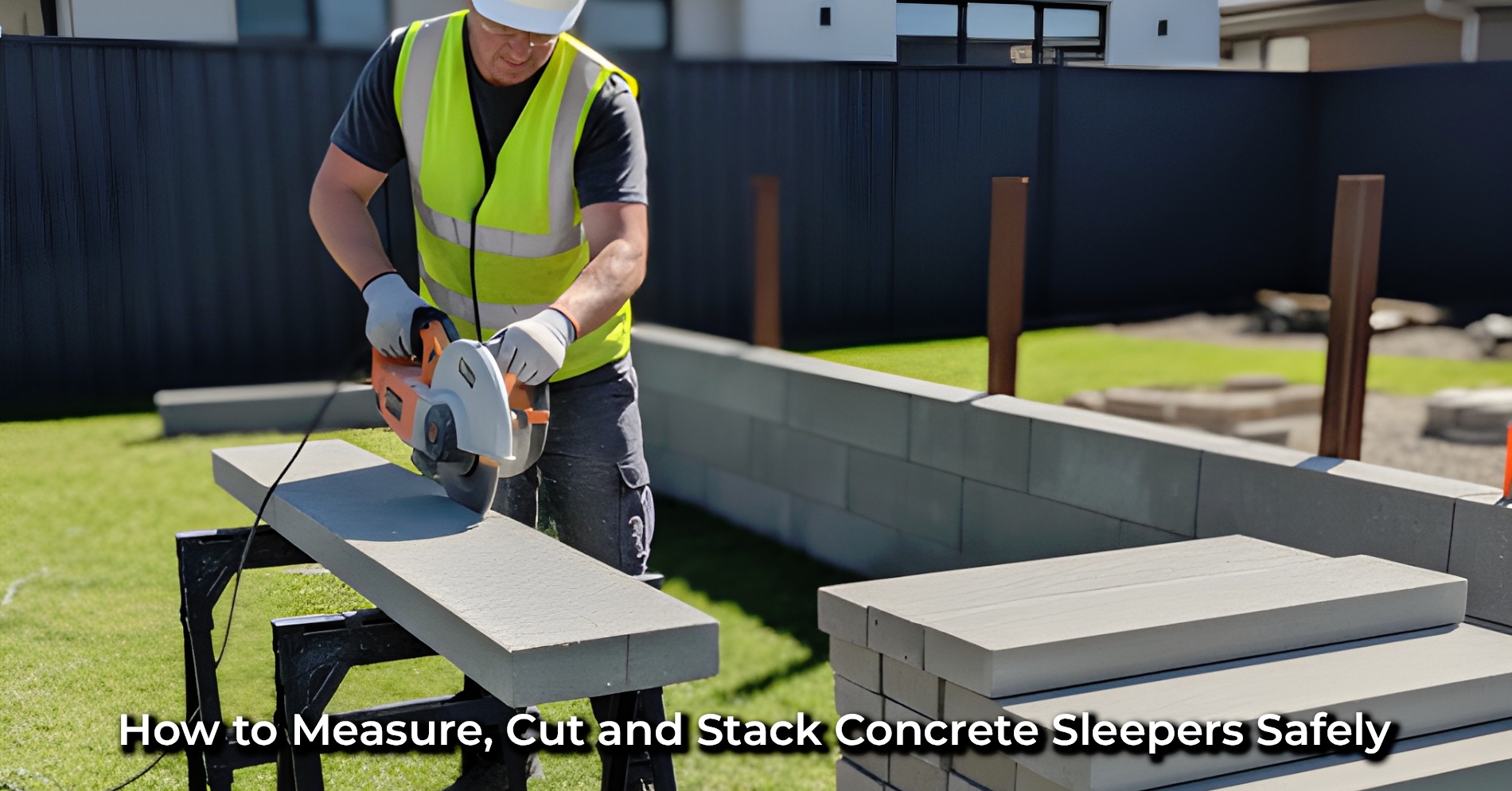
How to Measure, Cut and Stack Concrete Sleepers Safely
Working with concrete sleepers is one of the most effective ways to build durable retaining walls, raised garden beds, boundary fences, and modern landscape features. However, their strength and density—especially the 50 MPa precast sleepers from FPM Building Supplies —also demand respect, preparation, and proper technique. Unlike timber, concrete doesn’t bend, split easily, or forgive errors. Mishandling can lead to serious injury, structural failure, or costly waste.
At FPM Building Supplies , we’ve seen both stunning successes and preventable mistakes on job sites across Melbourne. The difference often comes down to one thing: safety and precision in measuring, cutting, and stacking.
This guide provides a professional, step-by-step approach to handling concrete sleepers—from accurate measurement and clean cutting to stable stacking and secure installation. Whether you’re using plain concrete sleepers for a rustic garden bed or charcoal sleepers for a sleek commercial wall, these practices will keep you safe and your project on track.
Table of Contents
ToggleWhy Safety Matters with Concrete Sleepers
Concrete sleepers are heavy (a standard 2.4m x 75mm unit weighs ~85kg), rigid, and brittle under impact. Common risks include:
- Back strain or muscle injury from improper lifting
- Foot injuries from dropped units
- Eye damage from flying debris during cutting
- Structural collapse from unstable stacking or poor alignment
Following safe handling protocols isn’t just about compliance—it’s about protecting yourself, your team, and your investment.
👉 Understand why concrete sleeper weight matters before you begin.
Phase 1: Accurate Measurement
✅ 1. Plan Your Layout First
Before measuring, sketch your design:
- Wall length and height
- Corner locations
- Gate or access points
- Slope adjustments (stepped or terraced)
Use graph paper or a landscaping app for precision.
✅ 2. Use the Right Tools
- Steel tape measure (not fabric—concrete edges can fray it)
- Chalk line or laser level for long, straight references
- Carpenter’s square for 90° corners
- Marking crayon or paint pen (standard pencils won’t show on concrete)
✅ 3. Account for Post Spacing
FPM sleepers are 2.4m long, designed to fit between posts spaced 2.4m apart (centre-to-centre).
- Measure from the centre of one post to the next
- Deduct 100mm total (50mm per side) if posts have flanges or brackets
- For corners, measure to the inside face of the corner post
✅ 4. Add Tolerance for Cuts
Always measure twice, cut once. Include:
- 5–10mm expansion gap between sleepers in long walls
- Extra 25mm on cut pieces to allow for fine-tuning during fit-up
✅ 5. Mark Clearly and Permanently
- Use a paint pen or carpenter’s crayon
- Draw a double line on both top and side faces
- Label pieces (e.g., “NW Corner – Top Layer”) to avoid confusion
Phase 2: Safe Cutting Techniques
Most FPM sleepers come in standard 2.4m lengths, but custom cuts are often needed for gates, curves, or tight spaces.
✅ 6. Choose the Right Cutting Tool
| Diamond blade angle grinder | Small cuts, notches, or bevels | Wear full PPE; use dust extraction |
| Wet-cut concrete saw | Clean, straight cuts (ideal for pros) | Reduces silica dust; requires water supply |
| Abrasive cut-off saw | Quick field cuts | Generates heat and sparks—keep away from flammables |
Never use a standard masonry blade on a circular saw—concrete is too dense and may shatter the blade.
✅ 7. Essential Safety Gear for Cutting
- ANSI-approved safety goggles (not just glasses)
- N95 or P2 respirator (concrete dust contains crystalline silica—a known carcinogen)
- Heavy-duty gloves (cut-resistant)
- Hearing protection (grinders exceed 100 dB)
- Steel-toed boots
Work in a well-ventilated area, and never cut indoors without proper dust control.
✅ 8. Cutting Best Practices
- Secure the sleeper: Clamp it to a stable workbench—never hold it by hand
- Score first: Make a light pass to create a guide groove
- Cut slowly: Let the blade do the work; forcing it causes kickback
- Cool the blade: Pause every 15–20 seconds to prevent overheating
- Smooth edges: Use a rubbing stone or angle grinder with flap disc to remove sharp burrs
Pro Tip: Wet the cut line lightly before cutting—it reduces dust and cools the blade.
✅ 9. Minimise Cutting When Possible
- Design your layout to use full-length sleepers where feasible
- Place cuts at less visible locations (e.g., behind posts or at ends)
- Order custom lengths from FPM for large projects (1.5m, 1.8m, 2.1m available)
Phase 3: Safe Lifting and Handling
✅ 10. Never Lift Alone
A 2.4m sleeper weighs ~85kg—well above safe manual handling limits. Always:
- Use two people with clear communication (“lift on three”)
- Bend knees, keep back straight, lift with legs
- Carry close to the body, not at arm’s length
✅ 11. Use Mechanical Aids
For frequent handling, consider:
- Sleeper trolley with rubber wheels and cradles
- Mini excavator or telehandler for large projects
- Pallet jack if sleepers are on a pallet
FPM sleepers are palletised for easy forklift handling—ask about delivery options.
✅ 12. Clear the Path
- Remove tripping hazards (hoses, tools, debris)
- Ensure firm, level ground
- Mark drop zones before moving units
Phase 4: Stable and Secure Stacking
Improper stacking is a leading cause of on-site accidents.
✅ 13. On-Site Storage Before Installation
- Store on level, compacted ground—never on soil or grass
- Place timber bearers (100x50mm) under each end and middle
- Stack no higher than 1.2m (3–4 layers max)
- Align layers perfectly—no overhangs
- Keep stacks away from edges, slopes, or high-traffic zones
✅ 14. During Installation: Temporary Stacking
- Never lean sleepers vertically against walls or posts—they can fall
- If stacking mid-installation, use wooden chocks to prevent rolling
- Limit to 2 layers unless braced
✅ 15. Stacking for Multi-Layer Walls
For retaining walls or raised beds:
- Stagger joints like brickwork (avoid vertical seams)
- Use galvanised steel H posts (100x100UC) every 2.4m for vertical support
- Insert heavy-duty brackets between layers if required
- Check level and plumb after each layer
👉 See how to create a tiered garden bed for stacking examples.
Phase 5: Integration with Support Systems
Sleepers must be paired with the right posts for stability.
✅ 16. Choose the Correct Post Type
| Retaining walls >600mm | Galvanised Steel H Post (100x100UC) | Maximum load-bearing capacity |
| Garden edging / low fences | Galvanised Steel C Post (100x50mm) | Lightweight, cost-effective |
| Corners & gates | Galvanised Steel Corner Post | Reinforces high-stress junctions |
| Slopes & angles | Galvanised Steel 45-Degree Post | Maintains alignment on inclines |
All FPM steel posts are hot-dip galvanised for 50+ year corrosion resistance.
✅ 17. Secure Sleepers Properly
- Slide sleepers onto posts—no hammering (can crack edges)
- Use a rubber mallet for gentle seating
- For double-layer walls, use M10 bolts or heavy-duty brackets
- Leave 5–10mm gaps between sleepers for thermal expansion
Phase 6: Common Mistakes to Avoid
❌ Cutting Without PPE
Silica dust exposure can cause silicosis, a fatal lung disease. Always wear a respirator.
❌ Measuring from the Wrong Point
Measuring to the outside of a post instead of the centre leads to misalignment.
❌ Stacking on Uneven Ground
Sleepers can roll or topple—causing crush injuries.
❌ Forcing a Cut
Pushing too hard on a grinder can cause kickback or blade shatter.
❌ Ignoring Weight Limits
Attempting to lift alone risks hernias, spinal injury, or dropped loads.
👉 Avoid these errors with our Mastering Concrete Sleeper Installation Guide .
Real-World Example: A Safe DIY Project
A homeowner in Preston built a 15m x 600mm retaining wall using FPM products. Their safe approach:
- Measured layout with laser level and marked with paint
- Ordered 12 plain sleepers and 7 H Posts
- Cut 2 sleepers for end fits using a wet saw with full PPE
- Lifted with a neighbour using proper technique
- Stacked only 2 high during installation
- Secured with Rapid Set Concrete and checked level after each layer
Result: Completed in 3 days, zero injuries, and a wall that’s stood strong for 4+ years.
Why FPM Building Supplies Supports Safe Practices
At FPM, safety is built into our products and advice:
✅ Consistent dimensions reduce measuring errors
✅ Precast quality minimises need for on-site cutting
✅ Clear product specs help with planning
✅ Expert support for safe installation
We’re proud to be Melbourne’s trusted source for high-quality concrete solutions .
Final Safety Checklist Before You Begin
- ☐ Wear safety goggles, respirator, gloves, and steel-toed boots
- ☐ Use two people to lift each sleeper
- ☐ Measure from post centre-to-centre
- ☐ Mark cuts clearly on both sides
- ☐ Clamp sleeper before cutting
- ☐ Store on level ground with timber bearers
- ☐ Use correct post type for your application
- ☐ Never stack higher than 1.2m
Get Started Safely Today
Ready to build with confidence and care?
- Shop our sleepers:
- Choose your posts:
- Need help? Contact our team
- Visit us: 32 Fullarton Dr, Epping VIC 3076
- Call: +61 431 235 919 or +61 421 370 700
- Email: contact@fpmbuildingsupplies.com.au
Explore more guides in our Blogs .
Final Thoughts
Measuring, cutting, and stacking concrete sleepers doesn’t have to be dangerous—but it does require respect, preparation, and the right techniques. By following these professional guidelines, you protect yourself, ensure precision, and build structures that last for decades.
At FPM Building Supplies, we’re committed to your success and safety. Because when you work smart and safe, your project doesn’t just get built—it endures.
Measure accurately. Cut safely. Stack securely. Build with FPM.