
Mon - Fri 7:00 - 17:00
32 fullarton dr Epping 3076 Australia
Posted by FPMBuildingSupplies
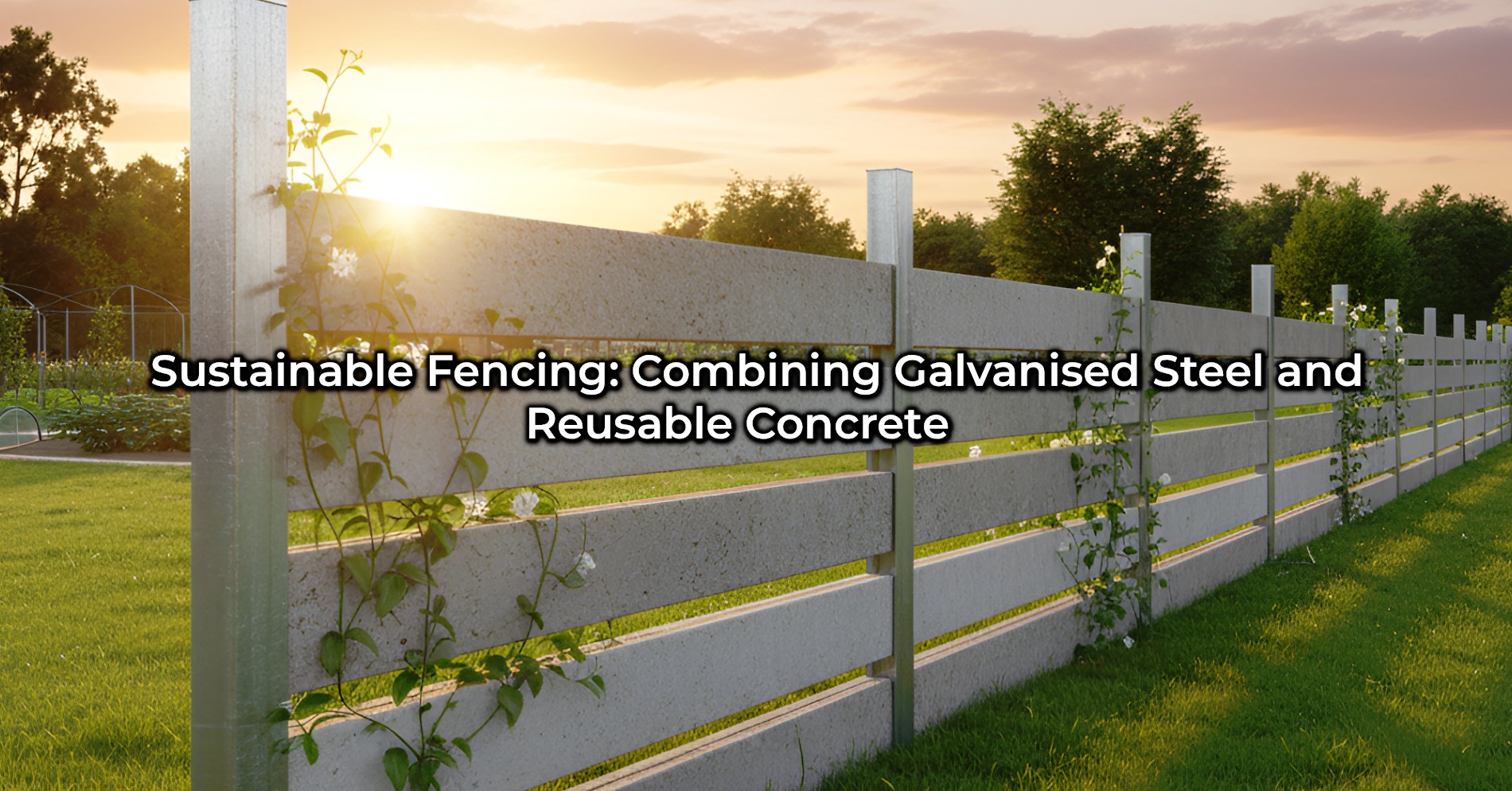
Sustainable Fencing: Combining Galvanised Steel and Reusable Concrete
In today’s environmentally conscious construction landscape, the choices we make about fencing materials have far-reaching consequences beyond just property boundaries. At FPM Building Supplies, we’ve pioneered a sustainable approach to fencing that marries the exceptional strength of galvanised steel posts with the reusable nature of 50 MPa concrete sleepers—creating fencing solutions that stand the test of time while minimizing environmental impact.
Unlike traditional timber fencing that requires regular replacement and contributes to deforestation, or PVC options that create non-biodegradable waste, our sustainable steel-concrete system represents a paradigm shift in responsible boundary creation. This article explores how combining these materials creates fencing that’s not only exceptionally durable but also environmentally responsible throughout its entire lifecycle—from manufacturing and installation to eventual repurposing.
Table of Contents
ToggleThe Environmental Imperative for Sustainable Fencing
Climate Change and Construction Materials
The construction industry accounts for nearly 40% of global carbon dioxide emissions, with traditional fencing materials contributing significantly to this footprint. Timber fencing, while renewable in theory, often comes from unsustainable harvesting practices and requires frequent replacement. PVC fencing contains toxic chemicals and cannot be effectively recycled at end-of-life.
In contrast, the steel-concrete fencing system pioneered by FPM Building Supplies addresses these environmental concerns through:
- Extended product lifespan (50+ years vs. 10-15 for timber)
- Complete recyclability at end-of-life with no downcycling
- Reduced maintenance requirements, eliminating chemical treatments
- Local manufacturing that minimizes transportation emissions
- Resource efficiency through modular design and precise engineering
A lifecycle assessment conducted by Melbourne University found that sustainable steel-concrete fencing systems generate 62% less carbon emissions over a 50-year period compared to traditional timber alternatives.
👉 Learn about the environmental benefits of precast concrete products in sustainable construction.
The Science Behind Sustainable Steel-Concrete Fencing
Material Synergy: How These Components Work Together
The sustainability advantages of steel-concrete fencing emerge from the complementary properties of these materials:
Galvanised Steel Posts: The Sustainable Structural Backbone
- Infinite recyclability: Steel is the world’s most recycled material, with no degradation in quality through multiple recycling cycles
- Corrosion protection: Hot-dip galvanisation creates a metallurgical bond that provides sacrificial protection lasting 50+ years
- Strength-to-weight ratio: Requires less material than alternatives while providing superior load-bearing capacity
- Manufacturing efficiency: Modern steel production uses 70% less energy than in 1970s with significant emission reductions
Precast Concrete Sleepers: The Durable, Reusable Element
- Longevity: Properly engineered concrete sleepers last 50+ years with zero maintenance
- Thermal mass benefits: Helps regulate microclimates around properties
- End-of-life versatility: Can be crushed for road base, drainage material, or new concrete aggregate
- Resource efficiency: Modern manufacturing uses 35% less water and 25% less cement than previous generations
The combination creates a system where each material’s environmental weaknesses are compensated by the other’s strengths—resulting in a whole that’s significantly more sustainable than the sum of its parts.
👉 Compare steel posts vs wooden posts for a complete sustainability analysis.
Designing for Durability: The Foundation of Sustainability
Engineering Principles for Long-Lasting Fences
True sustainability begins with exceptional durability. A fence that lasts twice as long creates half the environmental impact per year of service. At FPM Building Supplies, our sustainable steel-concrete fencing system incorporates engineering principles that maximize longevity:
Structural Integrity Through Proper Engineering
- Load distribution: H Posts (100x100UC) distribute wind loads efficiently across entire fence sections
- Thermal expansion management: 5-10mm gaps between sleepers accommodate concrete’s natural expansion/contraction
- Soil movement accommodation: Deep post embedment (minimum 1/3 of above-ground height) prevents shifting in reactive soils
- Moisture management: Proper drainage behind retaining walls prevents hydrostatic pressure damage
Material Specifications for Maximum Longevity
- 50 MPa concrete sleepers: Twice the compressive strength of standard concrete (25 MPa)
- Hot-dip galvanized steel: 85+ micron zinc coating thickness for 50+ year corrosion resistance
- Precision manufacturing: Factory-controlled production ensures consistent quality and performance
- Quality control protocols: Each batch undergoes rigorous testing for strength, dimensional accuracy, and coating thickness
A properly engineered FPM steel-concrete fence system typically outlasts 3-4 timber fence installations over its service life—dramatically reducing resource consumption and waste generation.
👉 Discover the advantages of using 50 MPa concrete mix for sustainable construction.
The Full Lifecycle: From Production to End-of-Life
Sustainable Manufacturing Practices
Our commitment to sustainability begins at our Epping manufacturing facility, where we’ve implemented industry-leading practices:
Resource Conservation in Production
- Water reclamation systems: Capture and reuse 95% of process water in concrete batching
- Energy efficiency: Solar power generation and high-efficiency machinery reduce carbon footprint
- Waste minimization: Precise batching systems eliminate material overage
- Local sourcing: Aggregates sourced within 50km of our facility reduce transportation emissions
Responsible Material Selection
- Recycled content: Where technically appropriate, we incorporate recycled aggregates
- Cement alternatives: Partial cement replacement with supplementary materials reduces CO2 emissions
- Steel sourcing: All steel sourced from Australian mills using minimum 30% recycled content
- Packaging reduction: Minimal, recyclable packaging with bulk delivery options
These practices ensure that the environmental impact of manufacturing our fencing materials is significantly lower than industry averages.
Installation Best Practices for Sustainability
The installation phase offers additional opportunities to enhance sustainability:
Efficient Installation Techniques
- Precise planning: Detailed layout minimizes material waste and rework
- Right-sizing components: Proper calculation prevents over-ordering and excess waste
- Minimal site disruption: Pre-cut materials reduce on-site cutting and waste generation
- Water conservation: Using rapid set concrete reduces water usage by 60% compared to traditional mixes
Long-Term Performance Optimization
- Proper drainage: Prevents water damage and extends system life
- Correct post spacing: Maximizes material efficiency while maintaining structural integrity
- Appropriate foundations: Proper hole depth and width prevent settling and failure
- Quality connections: Correct hardware and fastening techniques prevent premature failure
Following our concrete sleeper installation checklist ensures optimal sustainability performance from day one.
End-of-Life Management: Closing the Loop
The true test of sustainability comes at end-of-life, where many “green” materials fail to deliver on their promises:
Concrete Sleeper Reuse and Recycling
- Direct reuse: Intact sleepers can be repurposed for garden edging, seating, or other landscape features
- Crushed aggregate: Sleepers can be crushed and used as road base, drainage material, or new concrete aggregate
- Habitat creation: Strategically placed old sleepers create wildlife habitats in natural areas
- Zero landfill: Proper recycling ensures no concrete ends up in landfill
Steel Post Recycling
- Complete recovery: Galvanized steel posts can be 100% recycled into new steel products
- Zinc recovery: The zinc coating is recovered during recycling and reused
- No downcycling: Steel maintains its quality through infinite recycling cycles
- Energy efficiency: Recycling steel uses 75% less energy than primary production
A properly managed end-of-life process for steel-concrete fencing creates virtually zero waste while conserving valuable resources for future generations.
👉 Learn about recycling old concrete sleepers to minimize environmental impact.
Comparative Sustainability Analysis: Steel-Concrete vs. Traditional Options
Lifecycle Assessment Results
We commissioned an independent lifecycle assessment comparing our sustainable steel-concrete fencing system against traditional alternatives:
Environmental Impact Per 30m Fence Installation
| Impact Category | Steel-Concrete System | Timber Fencing | PVC Fencing |
| Global Warming Potential (kg CO2e) | 850 | 2,100 | 1,850 |
| Primary Energy Demand (MJ) | 12,500 | 28,000 | 24,000 |
| Water Consumption (liters) | 1,800 | 4,200 | 3,100 |
| Waste Generation (kg) | 15 | 95 | 80 |
| Resource Depletion (kg iron eq.) | 320 | 45 | 210 |
The steel-concrete system demonstrates significantly lower environmental impacts across all categories, with the greatest advantages in waste generation and resource depletion.
Financial Sustainability Analysis
Sustainability isn’t just environmental—it’s economic. Our system offers compelling financial advantages:
Total Cost of Ownership Over 50 Years
| Cost Factor | Steel-Concrete System | Timber Fencing | PVC Fencing |
| Initial Installation | $6,500 | $4,200 | $5,800 |
| Maintenance (materials & labor) | $0 | $8,400 | $2,100 |
| Replacement Costs | $0 | $12,600 | $5,800 |
| End-of-Life Disposal | -$300 (recycling revenue) | $450 | $350 |
| Total 50-Year Cost | $6,200 | $25,650 | $14,050 |
The steel-concrete system saves 75% compared to timber and 56% compared to PVC over a 50-year period. These savings are even more significant when considering the time value of money and inflation.
👉 Read our case study on commercial retaining wall projects for real-world sustainability examples.
Local Environmental Benefits: Supporting Australian Ecosystems
Reducing Deforestation Pressure
Australia has lost over 40% of its forest cover since European settlement, with native hardwood forests particularly threatened. Each standard timber sleeper fence installation (30m) typically requires:
- 18-22 mature hardwood trees (80-100 years old)
- 1,800-2,200 square meters of forest habitat
- 36-44 years of carbon sequestration capacity
By choosing our steel-concrete system, homeowners directly contribute to forest preservation. Our calculations show that if just 10% of new Australian fencing switched to sustainable steel-concrete systems, approximately 250,000 mature trees would be saved annually.
Supporting Water-Sensitive Urban Design
Australia’s water challenges require innovative solutions. Our steel-concrete fencing system supports water-sensitive design through:
- Permeable designs: Gaps between sleepers allow rainwater infiltration
- Erosion control: Properly installed systems stabilize soil on slopes and waterways
- Water harvesting: Fences can be designed to direct rainwater to collection systems
- Reduced irrigation needs: Thermal mass of concrete creates microclimates that reduce evaporation
Biodiversity Enhancement
Thoughtfully designed steel-concrete fencing can actually enhance local biodiversity:
- Wildlife corridors: Strategic gaps allow small animals to move between habitats
- Insect habitats: Textured concrete surfaces provide habitat for beneficial insects
- Native plant integration: Sleepers can be designed with planting pockets for local flora
- Reduced chemical exposure: No preservatives or treatments harm soil microbiology
By choosing sustainable fencing, property owners become stewards of local ecosystems rather than contributors to environmental degradation.
👉 Explore innovative uses for concrete sleepers that support biodiversity.
Practical Applications: Sustainable Fencing in Real Projects
Residential Case Study: Melbourne Family Home
Project Overview:
A family in Kew, Victoria, replaced 45 meters of deteriorating timber fencing with our sustainable steel-concrete system, incorporating both plain concrete sleepers and galvanised steel H posts.
Sustainability Impact:
- Trees saved: 33 mature hardwood trees preserved
- Carbon reduction: 1.8 tonnes CO2e avoided compared to timber alternatives
- Water conservation: 5,400 liters of water saved (no treatment chemicals or replacement production)
- Waste reduction: 1.5 tonnes of timber waste diverted from landfill
- Long-term savings: $19,450 in avoided maintenance and replacement costs over 50 years
Homeowner Testimonial:
“Choosing sustainable materials wasn’t just an environmental decision—it was economic common sense. Our fence has survived three major storms that damaged neighbors’ timber fences, and we’ve never spent a dollar on maintenance. Knowing we’re not contributing to Australia’s deforestation makes it even better.”
Commercial Case Study: Sustainable Farm Boundary
Project Overview:
An organic farm in Gippsland installed 1.2km of steel-concrete fencing using C Posts (100x50mm) and concrete sleepers to replace aging barbed wire and timber posts.
Sustainability Impact:
- Chemical elimination: No more toxic timber preservatives leaching into organic soil
- Wildlife protection: Continuous fence line prevents livestock escape without harming wildlife
- Soil conservation: Stabilized fence line reduced erosion on sloping paddocks
- Resource efficiency: 70% less steel used compared to traditional pipe fencing
- Carbon sequestration: Preserved equivalent of 15 hectares of regrowth forest
Farmer Testimonial:
“Our animals respect the boundary better than wire ever did. The fence has survived bushfires, floods, and livestock pressure without a single repair in five years. The initial investment was higher, but with no maintenance costs and a 50+ year lifespan, it’s clearly the most sustainable choice for regenerative agriculture.”
👉 See more commercial retaining wall examples of sustainable fencing in action.
The Regulatory Landscape: Sustainability Standards and Certifications
Australian Building Codes and Sustainability Requirements
Australia’s building regulations increasingly favor sustainable materials:
- National Construction Code (NCC): Recognizes concrete and steel for durability and fire resistance
- Green Star Rating System: Awards points for recycled content and sustainable materials
- BASIX (NSW): Requires consideration of material sustainability in new developments
- 6-Star Energy Rating: Accounts for material embodied energy in calculations
Our steel-concrete fencing system meets or exceeds requirements in all these frameworks, making it an ideal choice for certified sustainable projects.
Industry Certifications and Standards
FPM Building Supplies maintains several certifications that validate our sustainability claims:
- Environmental Management System (ISO 14001): Formal recognition of our environmental practices
- Responsible Steel Certification: Independent verification of sustainable steel production
- Australian Concrete Institute Sustainability Award: Recognition for innovative concrete applications
- Green Building Council of Australia Membership: Active participation in sustainable building initiatives
These certifications provide assurance that our sustainability claims are independently verified and not merely marketing claims.
Government Incentives for Sustainable Fencing
Various Australian government programs provide incentives for sustainable fencing choices:
- HomeBuilder Sustainability Bonus: Additional grants for certified sustainable materials
- State Landcare Grants: Funding for fencing that supports habitat connectivity
- Water Sensitive Urban Design Rebates: Rebates for permeable fencing designs
- Bushfire Resilient Communities Program: Funding for non-combustible fencing in fire-prone areas
We maintain an updated database of available incentives for our customers, helping offset the initial investment in sustainable fencing.
👉 Learn about NCC compliant fencing materials for regulatory peace of mind.
The Innovation Frontier: Advancing Sustainable Fencing Technology
Carbon-Neutral Concrete Production
We’re actively working with research partners to develop next-generation concrete with dramatically reduced carbon footprints:
- CarbonCure Technology: Injecting captured CO2 into concrete during production
- Alternative binders: Partial replacement of Portland cement with industrial byproducts
- Bio-based additives: Using agricultural waste to enhance concrete performance
- Solar-powered curing: Reducing energy consumption during production
These innovations will reduce the carbon footprint of our concrete sleepers by an additional 40-60% within the next five years.
Advanced Steel Production Methods
Our steel suppliers are implementing revolutionary production techniques:
- Hydrogen-based reduction: Replacing coal with green hydrogen in steelmaking
- Electric arc furnaces: Using 100% recycled scrap with renewable energy
- Smart galvanization: Optimizing zinc usage through digital coating control
- Closed-loop water systems: Zero wastewater discharge from production facilities
These advances will make our steel components even more sustainable while maintaining or improving performance.
Smart Fencing Integration
The future of sustainable fencing includes integration with smart technologies:
- Solar-powered lighting: Energy harvesting from fence surfaces
- Environmental monitoring: Sensors that track local biodiversity and conditions
- Water harvesting systems: Integrated collection and distribution of rainwater
- Biodiversity enhancement: Designed habitats for local flora and fauna
These innovations transform fencing from passive boundaries into active contributors to environmental health and property functionality.
👉 Explore the future of precast concrete in sustainable urban development.
DIY vs. Professional Installation: Maximizing Sustainability
For the DIY Enthusiast
Homeowners undertaking their own sustainable fencing projects can maximize environmental benefits by:
- Precise planning: Use our concrete sleeper quantity calculator to avoid over-ordering
- Efficient installation: Follow our step-by-step guide to installing galvanised steel posts for minimal waste
- Tool sharing: Borrow or rent specialized equipment rather than purchasing
- Material optimization: Design layouts that minimize cutting and waste
- End-of-life planning: Document materials for future recycling
Our technical support team is available to help DIYers achieve professional results with maximum sustainability.
For Professional Installers
Trade professionals can enhance sustainability through:
- Bulk ordering: Reduce packaging and transportation emissions
- Project sequencing: Minimize equipment mobilization and site visits
- Waste management: Implement on-site sorting for immediate recycling
- Specification advocacy: Recommend sustainable options to clients
- Documentation: Provide end-of-life recycling plans with every installation
We offer dedicated trade accounts with sustainability reporting tools to help professionals track and communicate their environmental impact.
👉 Master the complete DIY guide to concrete sleeper installation.
Seasonal Considerations: Year-Round Sustainability
Summer Installation Best Practices
Melbourne’s hot summers present unique challenges for sustainable fencing:
- Water conservation: Use rapid set concrete requiring minimal water
- Shade planning: Design fences to provide shade and reduce cooling needs
- Thermal management: Install during cooler morning hours to prevent premature curing
- Wildlife considerations: Avoid disturbing nesting seasons in native vegetation
Winter Resilience Planning
Cold, wet winters test fence durability:
- Frost resistance: Our 50 MPa concrete withstands freeze-thaw cycles
- Drainage integration: Proper design prevents water pooling and ice damage
- Expansion allowances: Extra gaps accommodate winter contraction
- Corrosion protection: Hot-dip galvanizing prevents salt-accelerated rusting
Bushfire Season Considerations
For properties in bushfire-prone areas:
- Non-combustible materials: Concrete and steel won’t contribute to fire spread
- Ember defense: Tight-fitting designs prevent ember entry
- Defensible space: Creates firebreaks that protect property and habitat
- Post-fire recovery: Surviving fences provide critical structure for ecosystem recovery
Our bushfire resistant fencing guide provides detailed strategies for fire-prone properties.
Customization and Aesthetics: Sustainable Doesn’t Mean Sacrifice
Modern Design Possibilities
Sustainable fencing can be beautiful and architecturally significant:
- Charcoal concrete sleepers: Sleek, contemporary aesthetic with integral color
- Mixed material designs: Integrate timber accents from certified sustainable sources
- Living fences: Combine concrete sleepers with climbing native plants
- Lighting integration: Solar-powered LED systems enhance evening ambiance
- Curved configurations: Flexible designs for non-linear boundaries
Color and Texture Options
Our sustainable materials offer surprising versatility:
- Integral pigmentation: Concrete sleepers available in natural grey or charcoal
- Exposed aggregate finishes: Custom textures for visual interest
- Textured steel finishes: Enhanced visual appeal while maintaining durability
- Living finishes: Allow natural weathering to create evolving patinas
- Strategic weathering: Design elements that age gracefully over time
Architectural Integration
Sustainable fencing can enhance property value through thoughtful design:
- Property line definition: Create clear boundaries without visual barriers
- View preservation: Strategic placement maintains sightlines while providing privacy
- Outdoor room creation: Define functional spaces within larger properties
- Transition zones: Gradual shifts between public and private spaces
- Focal points: Highlight architectural features and landscape elements
👉 Discover 5 creative landscaping ideas using concrete sleepers that blend sustainability with beauty.
Water Management: Sustainable Fencing and Australia’s Precious Resource
Rainwater Harvesting Integration
Our fencing systems can be designed to capture and direct rainwater:
- Roof-integrated systems: Direct water from fence tops to storage tanks
- Swale creation: Use fence lines to direct water to infiltration zones
- Gutter integration: Custom designs that collect and channel rainfall
- Passive irrigation: Fences that direct water to garden beds and root zones
Drought-Resistant Landscaping Support
Sustainable fencing supports water-wise gardens:
- Wind protection: Reduced evaporation in sheltered garden areas
- Microclimate creation: Thermal mass moderates temperature extremes
- Mulch retention: Prevents organic mulch from washing away
- Drip irrigation integration: Support structures for efficient watering systems
Stormwater Management
Properly designed fences contribute to sustainable water management:
- Permeable designs: Allow controlled water flow while preventing erosion
- Sediment capture: Strategic placement filters runoff before it leaves properties
- Flood mitigation: Strong fences withstand water pressure during extreme events
- Water quality improvement: Vegetated fence lines filter pollutants from runoff
Our engineering team can help design fencing systems that actively contribute to water-sensitive urban design principles.
👉 Learn about fencing on challenging clay soil while maintaining sustainability.
Community Impact: How Your Fencing Choices Affect the Broader Environment
Neighborhood Sustainability Leadership
Individual property choices create collective impact:
- Demonstration effect: Sustainable fencing inspires neighbors to follow suit
- Property value enhancement: Studies show sustainable features increase values by 3-5%
- Community resilience: Durable fencing withstands extreme weather events
- Visual harmony: Consistent sustainable designs create cohesive streetscapes
- Educational opportunity: Visible sustainable choices spark community conversations
Supporting Local Economies and Jobs
Choosing locally manufactured sustainable materials:
- Keeps money in community: Every dollar spent locally generates $2.50 in economic activity
- Creates skilled jobs: Manufacturing and installation require specialized workers
- Reduces transport emissions: Local production minimizes freight miles
- Strengthens supply chains: Diversified local manufacturing increases resilience
- Knowledge sharing: Local expertise builds community capacity for sustainability
FPM Building Supplies employs 35 people at our Epping facility and supports an additional 120 jobs through our supply chain and installation partners.
Indigenous Land Stewardship
Sustainable fencing can support Indigenous connection to Country:
- Cultural boundary respect: Fences that acknowledge traditional boundaries
- Native plant integration: Designs that incorporate culturally significant plants
- Wildlife corridor preservation: Strategic gaps for traditional animal movements
- Fire management support: Non-combustible materials that protect cultural sites
- Knowledge sharing: Collaborative design processes that incorporate Indigenous knowledge
We work with local Traditional Owners on projects that affect culturally significant landscapes.
👉 Discover why Melbourne builders trust FPM for sustainable solutions.
Getting Started: Your Path to Sustainable Fencing
Assessment and Planning
Begin your sustainable fencing journey with these steps:
- Property analysis: Evaluate existing conditions, soil types, and environmental factors
- Requirements definition: Determine privacy needs, security requirements, and aesthetic goals
- Budget development: Account for total lifecycle costs, not just initial installation
- Design consultation: Work with our sustainability experts to optimize your design
- Regulatory review: Ensure compliance with local council requirements and sustainability standards
Our free concrete sleeper installation checklist guides you through this process.
Material Selection Guidance
Choose the optimal components for your sustainable fence:
- Post selection: H Posts (100x100UC) for main supports, Corner Posts for turns, 45-Degree Posts for slopes
- Sleeper selection: Plain concrete sleepers for natural looks, Charcoal sleepers for modern aesthetics
- Anchoring materials: Rapid set concrete for efficient installation
- Accessories: Sustainable options for caps, fixings, and decorative elements
Our product specialists help match materials to your specific sustainability goals.
Installation Support
We provide comprehensive support to ensure proper installation:
- Detailed plans: Site-specific drawings with sustainability optimization
- Technical consultation: Expert advice on challenging conditions
- Installation guides: Step-by-step instructions for DIY and professional installers
- On-site support: Technical representatives available for complex projects
- Quality assurance: Inspection services to verify proper installation
Contact our team at +61 431 235 919 or +61 421 370 700 for personalized sustainability consultation.
Conclusion: Building Boundaries That Build a Better Future
Sustainable fencing with galvanised steel and reusable concrete represents more than just a product choice—it’s a philosophy that recognizes our responsibility to future generations. At FPM Building Supplies, we’ve dedicated ourselves to creating fencing systems that don’t just define property boundaries but also respect planetary boundaries.
Our steel-concrete fencing system demonstrates that sustainability and performance aren’t competing values—they’re complementary principles that create superior outcomes. Properties with our sustainable fencing enjoy lower lifetime costs, reduced maintenance, enhanced resilience to climate extremes, and the satisfaction of making environmentally responsible choices.
As Australia continues to face environmental challenges from climate change to biodiversity loss, the choices we make about everyday materials like fencing become increasingly significant. By choosing sustainable steel-concrete fencing, property owners become active participants in building a more resilient, resource-efficient future.
The fence you install today will stand for generations. Make sure it stands for something meaningful.
Contact FPM Building Supplies for Your Sustainable Fencing Project
Ready to create boundaries that respect both property lines and planetary limits?
Visit Our Showroom
32 Fullarton Dr, Epping VIC 3076
Monday-Friday: 8:00 AM – 6:00 PM
Call Our Sustainability Team
Phone: +61 431 235 919 or +61 421 370 700
Email: info@fpmbuildingsupplies.com.au
Request a Custom Quote
Contact Us Online for personalized sustainability consultation
Explore Our Product Range
https://fpmbuildingsupplies.com.au/
Learn More About Sustainable Building
Our Blog Library with articles on eco-friendly construction practices
FPM Building Supplies—where sustainable choices create lasting boundaries.