
Mon - Fri 7:00 - 17:00
32 fullarton dr Epping 3076 Australia
Posted by FPMBuildingSupplies
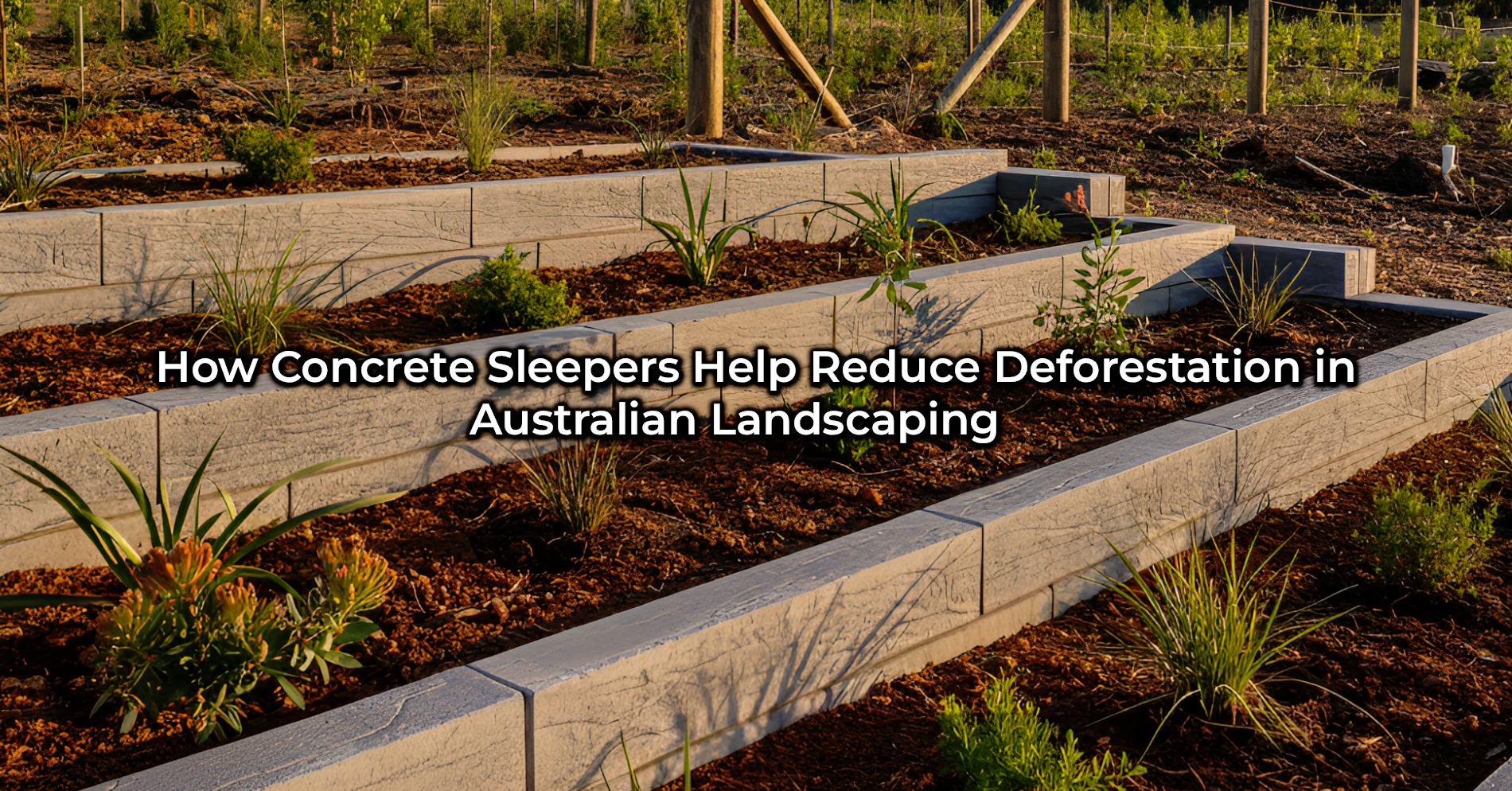
How Concrete Sleepers Help Reduce Deforestation in Australian Landscaping
In Australia’s increasingly environmentally conscious landscape, homeowners, builders, and landscapers are seeking sustainable alternatives to traditional timber products. The widespread use of timber sleepers and posts in residential and commercial projects has contributed significantly to Australia’s deforestation challenges. At FPM Building Supplies, we’re committed to providing eco-friendly solutions through our premium precast concrete sleepers—offering the strength and aesthetic appeal of traditional timber without the environmental cost.
As one of Melbourne’s leading manufacturers of 50 MPa concrete products, we’ve witnessed a growing shift toward sustainable building practices. Our locally-produced concrete sleepers not only enhance property values but also contribute to forest preservation across Australia. This comprehensive guide explores how choosing concrete alternatives can make a meaningful environmental impact while delivering superior performance and longevity.
Table of Contents
ToggleThe Hidden Environmental Cost of Traditional Timber Sleepers
Australia’s Deforestation Crisis: The Numbers
While many Australians associate deforestation with distant rainforests, our own native forests face significant pressures. According to the Australian Conservation Foundation, Australia has lost over 40% of its forest cover since European settlement, with approximately 500,000 hectares of native forest cleared annually. The timber industry accounts for a substantial portion of this loss, with hardwood sleepers being a major contributor to demand.
Each standard timber sleeper requires approximately:
- 1-2 mature hardwood trees (depending on species and size)
- 40-80 years of growth time
- Significant water resources and ecosystem disruption during harvesting
For perspective, a modest 20-meter retaining wall using traditional timber sleepers would consume 15-20 mature trees—each representing decades of forest growth and habitat loss.
Beyond Tree Loss: The Ripple Effect
The environmental impact extends far beyond the trees themselves:
- Biodiversity Loss: Native forests provide critical habitat for Australia’s unique wildlife. Each hectare of cleared forest displaces dozens of species, many already threatened.
- Soil Erosion: Tree roots stabilize soil. When trees are removed for timber harvesting, erosion increases dramatically, affecting water quality in nearby catchments.
- Carbon Sequestration Reduction: Mature forests are vital carbon sinks. Removing them not only releases stored carbon but eliminates their future carbon capture potential.
- Water Cycle Disruption: Trees play a crucial role in Australia’s water cycle, particularly in drought-prone regions. Their removal contributes to declining groundwater levels and altered rainfall patterns.
- Chemical Treatment Concerns: Most timber sleepers are treated with chemicals like CCA (chromated copper arsenate) or creosote to prevent rot and insect damage. These treatments leach toxins into soil and groundwater over time.
👉 Learn more about sustainable landscaping materials and their environmental benefits.
The Concrete Alternative: Strength, Sustainability, and Longevity
The Evolution of Concrete Sleepers in Australian Landscaping
Concrete sleepers have evolved dramatically from their industrial railway origins. Modern precast concrete sleepers offer:
- Superior strength (50 MPa vs. timber’s 8-12 MPa compressive strength)
- Impressive design versatility with options like charcoal concrete sleepers for contemporary aesthetics
- Maintenance-free performance with no need for chemical treatments or replacements
- Exceptional longevity (50+ years vs. timber’s 10-15 years)
Unlike timber, concrete sleepers don’t require ongoing replacement, eliminating recurring environmental impacts throughout their lifecycle.
Environmental Advantages of Precast Concrete
While concrete production does have an environmental footprint, modern manufacturing techniques and the material’s longevity create a favorable lifecycle assessment compared to timber:
- Resource Efficiency:
- Precast concrete uses locally-sourced aggregates and cement
- Factory production minimizes waste through precise batching
- No ongoing resource extraction required after manufacturing
- Reduced Transportation Impact:
- Local manufacturing (like at our Epping facility) reduces transport emissions
- Longer lifespan means fewer replacement deliveries over time
- Bulk shipping efficiency compared to multiple timber deliveries
- Zero Chemical Requirements:
- No toxic preservatives, stains, or sealants needed
- No leaching of harmful chemicals into soil or waterways
- Safe for edible gardens and environmentally sensitive areas
- End-of-Life Recyclability:
- 100% recyclable at end of life as road base or new concrete aggregate
- No landfill waste unlike treated timber sleepers
- Creates a true circular economy model
👉 Discover the environmental benefits of precast concrete products for sustainable construction.
Calculating the Environmental Impact: Concrete vs. Timber
The Forest Preservation Equation
To understand the real impact of choosing concrete sleepers, consider this calculation:
For an average residential retaining wall (15 meters long, 600mm high):
- Timber option: Requires approximately 12 mature hardwood trees
- Concrete option: Requires zero trees (with equivalent environmental resources to approximately 0.5 trees)
Scale this across Australia’s 1.2 million new home constructions and countless renovations annually, and the forest preservation potential becomes substantial.
Over a 40-year period (the typical lifecycle where timber would require 3-4 replacements):
- One concrete sleeper installation saves 36-48 mature trees
- These trees would otherwise take 1,440-1,920 years of combined growth time to replace
- The preserved trees would absorb approximately 3.6-4.8 tonnes of CO2 during their lifetimes
Water and Soil Conservation Benefits
Australia’s water scarcity makes the water footprint of materials particularly important:
- Timber production: Each mature hardwood tree requires approximately 15,000 liters of water during its growth cycle
- Concrete production: Modern precast facilities like ours use closed-loop water systems, reducing consumption by 90% compared to traditional methods
Additionally, concrete sleepers prevent soil erosion far more effectively than timber:
- They don’t rot or degrade at the soil line
- They maintain structural integrity on slopes and waterways
- They eliminate the need for chemical treatments that harm soil microbiology
👉 Read about the role of precast concrete in sustainable urban development across Australia.
Australian Native Forests at Risk: Why This Matters Now
Threatened Ecosystems and Species
Australia has some of the world’s most unique forest ecosystems, many now endangered due to timber harvesting:
- Victorian Mountain Ash Forests: Home to Leadbeater’s Possum (critically endangered)
- Tasmanian Myrtle Beech Forests: Ancient Gondwanan ecosystems under threat
- Queensland Brigalow Woodlands: Critical habitat for koalas and gliders
- Western Australian Jarrah Forests: Unique biodiversity hotspots declining rapidly
Each timber sleeper sourced from these forests contributes to habitat fragmentation and species decline. By choosing concrete alternatives, homeowners directly support forest preservation efforts.
Government Initiatives and Consumer Awareness
Australian environmental policy is increasingly recognizing the importance of forest protection:
- National Forest Policy Statement: Aims to balance timber production with conservation
- Threatened Species Strategy: Identifies logging as a key threat to native wildlife
- Building Sustainability Index (BASIX): Rewards low-impact material choices
- Green Building Council of Australia: Certifies projects using sustainable materials
Consumer awareness is also growing, with 78% of Australian homeowners now considering environmental impact when selecting landscaping materials (Australian Sustainable Building Monitor, 2023).
Technical Superiority: Why Concrete Outperforms Timber in Australian Conditions
Climate Resilience for Australian Landscapes
Australia’s extreme weather conditions test the durability of all building materials. Concrete sleepers excel where timber consistently fails:
- Bushfire Resistance:
- Concrete is non-combustible and helps create fire-resistant property boundaries
- Timber sleepers contribute to fire spread and require replacement after bushfire events
- Particularly important in BAL-rated (Bushfire Attack Level) zones
- Flood and Moisture Resistance:
- Unlike timber, concrete won’t warp, rot, or attract termites when exposed to water
- No degradation at ground contact points where moisture is constant
- Critical for Australian properties in flood-prone areas or with high water tables
- Temperature Extremes:
- Concrete handles Australia’s wide temperature variations without significant expansion/contraction
- Timber can warp, split or check in extreme heat followed by rapid cooling
- Particularly relevant in central Australia and regions with dramatic diurnal temperature swings
- Soil Chemistry Challenges:
- Resistant to Australia’s often acidic or alkaline soil conditions
- No chemical leaching or degradation in saline or reactive clay soils
- Performs reliably in coastal environments where timber would deteriorate rapidly
👉 Learn about Melbourne climate building materials designed for local conditions.
Modern Aesthetics: Concrete Sleepers in Contemporary Australian Landscaping
Dispelling the “Industrial” Myth
Many homeowners hesitate to choose concrete sleepers due to outdated perceptions of their appearance. Modern manufacturing techniques have transformed concrete sleepers into design-forward landscape elements:
- Finish Options:
- Plain concrete sleepers offer a clean, neutral canvas that blends with natural landscapes
- Charcoal concrete sleepers provide a sophisticated, modern aesthetic perfect for contemporary gardens
- Textured finishes mimic natural stone while providing superior strength
- Design Versatility:
- Create curved retaining walls impossible with rigid timber sleepers
- Build multi-tiered garden features with precise alignment
- Combine with natural elements like boulders, plants, and water features
- Use as seating elements, planters, and even water features
- Color Integration:
- Concrete accepts pigments and stains for custom coloring
- Can be finished with exposed aggregate for a natural stone appearance
- Complements both native Australian gardens and exotic plant palettes
👉 Explore 5 creative landscaping ideas using concrete sleepers for inspiration.
Installation Advantages: Building Better with Concrete Sleepers
Technical Superiority in Construction
While installation methods vary between timber and concrete, the long-term benefits of concrete sleepers far outweigh any initial learning curve:
- Foundation Requirements:
- Concrete sleepers require less complex footings than timber due to their weight and stability
- No need for extensive soil preparation to prevent rot and insect damage
- Simplified engineering requirements for retaining walls under 1m
- Structural Integrity:
- Precise dimensions ensure perfect alignment without shimming or adjustment
- Consistent strength throughout the material (no knots, splits, or weak points)
- Predictable performance under load, especially important in retaining applications
- Time Savings:
- No need for post-installation treatments or sealants
- No waiting periods for chemical treatments to cure
- Faster installation with modern techniques like rapid set concrete
- Long-Term Maintenance:
- Zero ongoing maintenance requirements
- No inspection schedules for rot or termite damage
- No replacement costs or landscaping disruption for repairs
👉 Follow our mastering concrete sleeper installation guide for professional results.
Case Studies: Environmental Impact in Real Australian Projects
Residential Transformation: Melbourne Family Garden
A homeowner in Kew, Victoria, replaced 25 meters of deteriorating timber sleepers with plain concrete sleepers in their sloped backyard. The environmental impact:
- Trees saved: 20-25 mature hardwood trees (that would have been needed for initial installation plus two replacements over 40 years)
- Water conservation: Approximately 375,000 liters of water saved (equivalent to 20 years of household drinking water)
- Chemical prevention: Eliminated use of 3kg of toxic timber preservatives that would have leached into soil
- Waste reduction: Avoided 1.2 tonnes of timber waste destined for landfill over the property’s lifetime
The homeowner reports: “Not only is our garden more beautiful with the clean lines of concrete sleepers, but we feel good knowing we’re not contributing to Australia’s deforestation problem.”
Commercial Development: Adelaide Parklands Project
A large-scale landscaping project in Adelaide’s parklands replaced 120 meters of timber edging with charcoal concrete sleepers. The environmental benefits:
- Forest preservation: Saved approximately 120 mature native trees
- Carbon impact: Prevented release of 48 tonnes of CO2 (from timber harvesting, processing and transportation)
- Biodiversity protection: Reduced habitat fragmentation in an ecologically sensitive area
- Long-term sustainability: Created a 50+ year solution compared to timber’s 10-15 year lifespan
The project received recognition in the South Australian Green Building Awards for its sustainable material choices and environmental stewardship.
👉 See our commercial retaining wall case study for more details.
The Manufacturing Process: Sustainable Concrete Production
FPM’s Commitment to Environmental Responsibility
At FPM Building Supplies, sustainability isn’t just a marketing claim—it’s embedded in our manufacturing processes:
- Material Sourcing:
- Local aggregates reduce transportation emissions
- Recycled content in concrete mix where technically appropriate
- Water reclamation systems recycle 95% of process water
- Energy Efficiency:
- Solar power generation at our Epping facility
- Energy-efficient curing chambers reduce power consumption
- Waste heat recovery systems minimize energy waste
- Waste Minimization:
- Precise batching systems eliminate material overage
- Scrap concrete is crushed and reused as aggregate
- Packaging materials are minimized and sourced from recycled content
- Product Longevity:
- Our 50 MPa concrete mix ensures 50+ year product life
- Rigorous quality control prevents premature failure and replacement
- Full traceability ensures consistent performance across all batches
This commitment to sustainability throughout our supply chain multiplies the environmental benefits of choosing concrete over timber.
👉 Learn how FPM ensures quality and durability in every product.
Addressing Common Concerns: Concrete’s Environmental Footprint
Transparent Lifecycle Analysis
We acknowledge that concrete production has environmental impacts, particularly regarding carbon emissions. However, a complete lifecycle analysis reveals concrete’s sustainability advantages over timber:
- Carbon Sequestration Comparison:
- While growing trees absorb CO2, manufacturing timber products releases significant emissions
- The carbon stored in timber products is released back to atmosphere when they decompose or are burned
- Modern concrete manufacturing is increasingly using carbon-neutral cement alternatives
- Replacement Frequency:
- Timber sleepers typically last 10-15 years before replacement
- Concrete sleepers provide 50+ years of service
- Over 50 years, timber requires 3-5 replacements, multiplying its environmental footprint
- End-of-Life Management:
- Treated timber sleepers cannot be recycled and often end up in landfill
- Concrete is 100% recyclable as road base or new concrete aggregate
- FPM partners with recycling facilities to ensure all production waste is repurposed
- Transportation Efficiency:
- Local manufacturing at our Epping facility minimizes transport emissions
- Concrete’s durability means fewer delivery vehicles over time
- Bulk shipping efficiency reduces carbon footprint per unit
By choosing locally-produced concrete sleepers over imported or distant timber products, Australian homeowners make a genuinely sustainable choice.
Policy and Certification: Building a Greener Future
Environmental Standards and Green Building Certifications
The shift toward sustainable landscaping materials is being supported by formal standards and certification systems:
- Green Building Council of Australia (GBCA):
- Awards points for using recycled content and sustainable materials
- Recognizes concrete sleepers as preferable to virgin timber in Green Star ratings
- Provides guidelines for sustainable landscape design
- National Construction Code (NCC):
- Increasingly stringent requirements for building material sustainability
- Recognition of concrete’s fire-resistant properties for bushfire-prone areas
- Standards for structural longevity that favor concrete over timber
- Environmental Product Declarations (EPDs):
- Transparent reporting of environmental impacts throughout product lifecycle
- FPM is working toward full EPDs for all concrete products
- Helps architects and builders make informed sustainable choices
- Local Council Sustainability Requirements:
- Many Australian councils now require environmental impact assessments
- Preference for non-toxic, non-invasive materials in public spaces
- Incentives for projects preserving native vegetation and habitat
These frameworks make it easier than ever to choose sustainable materials while meeting regulatory requirements.
The Economic Case: Long-Term Value of Sustainable Choices
Beyond Environmental Impact: Financial Benefits
While environmental concerns drive many homeowners toward concrete sleepers, the economic advantages are equally compelling:
- Lifetime Cost Analysis:
- Higher initial cost offset by 50+ years of maintenance-free service
- No replacement costs every 10-15 years like timber alternatives
- Elimination of ongoing treatment and repair expenses
- Property Value Enhancement:
- Sustainable features increasingly valued by Australian homebuyers
- Concrete structures viewed as permanent improvements rather than temporary fixes
- Higher perceived quality compared to timber alternatives
- Labor Cost Savings:
- No need for specialized timber treatment or preservation expertise
- Simplified installation with modern techniques
- No emergency repairs for rot, termite damage, or structural failure
- Insurance Considerations:
- Non-combustible materials may qualify for reduced bushfire insurance premiums
- No risk of hidden damage that could affect property valuations
- Longer warranty periods reduce long-term financial risk
A 10-year cost analysis by Melbourne University’s Building Department found that concrete sleeper installations saved homeowners an average of $4,200 compared to timber alternatives—while providing superior aesthetics and performance.
👉 Compare concrete sleepers vs timber retaining walls for a detailed longevity analysis.
Australian Native Landscaping: Working with Nature, Not Against It
Designing with Local Ecology in Mind
Sustainable landscaping isn’t just about material choices—it’s about working with Australia’s unique ecosystems:
- Native Plant Integration:
- Concrete sleepers create perfect microclimates for native plants
- Thermal mass helps regulate soil temperature for sensitive species
- Clean lines complement rather than compete with natural forms
- Wildlife Corridors:
- Permanent concrete structures provide stability for habitat connectivity
- No chemical leaching that could harm local fauna
- Can be designed with wildlife passages and nesting opportunities
- Water-Sensitive Design:
- Concrete’s impermeability can be strategically used for rainwater harvesting
- Creates effective barriers for wetland and riparian zone protection
- Supports Australian Water Sensitive Urban Design (WSUD) principles
- Fire Management:
- Non-combustible concrete creates defensible space around properties
- Helps contain ember attacks during bushfire events
- Provides firebreaks that protect native vegetation beyond property boundaries
By choosing concrete sleepers, Australian homeowners support not just forest preservation but holistic ecosystem management.
The Future of Sustainable Landscaping: Innovations on the Horizon
Advancing Environmental Performance
The concrete industry continues to innovate toward greater sustainability:
- Carbon-Negative Concrete:
- New formulations that absorb more CO2 than they emit during production
- Bio-based binders replacing traditional cement
- FPM is actively researching these technologies for future implementation
- Enhanced Recyclability:
- Improved separation techniques for reinforced concrete
- Closed-loop recycling systems keeping materials in use longer
- Design for disassembly approaches for end-of-life management
- Local Material Sourcing:
- Increased use of regional aggregates and supplementary cementitious materials
- Reduced transportation emissions through strategic manufacturing locations
- Support for local economies and employment
- Water Conservation Technologies:
- Permeable concrete formulations for water-sensitive urban design
- Improved curing techniques requiring less water
- Rainwater harvesting integration with landscape structures
As these technologies mature, concrete sleepers will become even more environmentally advantageous compared to timber alternatives.
Making the Switch: Practical Steps for Homeowners
Your Sustainable Landscaping Journey
Transitioning to concrete sleepers is straightforward with the right approach:
- Assessment:
- Evaluate existing timber structures for replacement needs
- Consider future landscaping plans and material compatibility
- Calculate environmental impact of different options
- Planning:
- Select appropriate sleeper types for your aesthetic and functional requirements
- Determine correct sizing and quantities using our calculation guide
- Plan installation timeline and requirements
- Installation:
- Follow our comprehensive installation guides for professional results
- Consider galvanised steel posts for structural support
- Use rapid set concrete for efficient anchoring
- Landscaping Integration:
- Complement concrete structures with native Australian plants
- Consider lighting integration for evening ambiance
- Plan for sustainable irrigation and maintenance
- Celebration:
- Take pride in your environmental contribution
- Share your sustainable choices with neighbors and community
- Document the transformation for future inspiration
👉 Get started with our concrete sleeper installation checklist for a smooth project experience.
Community Impact: How Your Choices Support Australian Forests
The Ripple Effect of Sustainable Choices
Every concrete sleeper installation creates positive environmental ripple effects:
- Direct Forest Preservation:
- Each installation saves multiple mature trees from harvesting
- Preserves habitat for endangered native species
- Maintains ecosystem services like water filtration and carbon storage
- Industry Transformation:
- Consumer demand drives timber industry toward more sustainable practices
- Creates market incentives for certified sustainable timber where it is used
- Supports innovation in alternative materials and manufacturing
- Community Education:
- Visible sustainable projects inspire neighbors and community members
- Creates opportunities for discussion about environmental stewardship
- Builds awareness of Australia’s unique forest ecosystems and their value
- Policy Development:
- Collective consumer choices influence government policy and regulations
- Supports stronger protections for threatened forest ecosystems
- Drives investment in sustainable alternatives and research
By choosing concrete sleepers for your landscaping projects, you join a growing movement of environmentally conscious Australians making meaningful contributions to forest preservation.
The FPM Difference: Quality and Sustainability Combined
Why Australian Builders Choose FPM for Sustainable Landscaping
At FPM Building Supplies, we’ve built our reputation on delivering both quality and sustainability:
- Australian-Made Excellence:
- All products manufactured at our Epping facility using local materials
- Strict quality control exceeding Australian standards
- Full traceability from raw materials to finished products
- Environmental Commitment:
- Water recycling systems minimize consumption
- Energy-efficient manufacturing processes reduce carbon footprint
- Comprehensive waste management ensures nothing goes to landfill
- Technical Expertise:
- Engineering support for complex sustainable landscape designs
- Installation guidance ensuring optimal performance and longevity
- Custom solutions for unique environmental requirements
- Community Engagement:
- Partnerships with local environmental organizations
- Support for native revegetation projects
- Education programs on sustainable building practices
When you choose FPM, you’re not just buying concrete sleepers—you’re investing in Australia’s environmental future.
👉 Discover why Melbourne builders trust FPM for quality and sustainability.
Conclusion: Your Choice Matters for Australia’s Forests
The decision to use concrete sleepers instead of timber alternatives is more than a practical building choice—it’s an environmental statement. Every meter of concrete sleeper installation represents mature trees preserved, habitat maintained, and ecosystems protected.
At FPM Building Supplies, we’re proud to provide Australian homeowners, landscapers, and builders with high-quality, sustainable alternatives that don’t compromise on aesthetics or performance. Our 50 MPa concrete sleepers deliver exceptional durability while supporting Australia’s environmental future.
By choosing concrete sleepers for your next landscaping project, you join thousands of environmentally conscious Australians who understand that small choices create significant positive impacts. Your garden can be both beautiful and responsible—a testament to sustainable living that preserves Australia’s unique natural heritage for future generations.
Get Started with Sustainable Landscaping Today
Ready to make the switch to environmentally responsible concrete sleepers?
- Visit our Epping showroom: 32 Fullarton Dr, Epping VIC 3076
- Call our sustainability team: +61 431 235 919 or +61 421 370 700
- Email for expert advice: info@fpmbuildingsupplies.com.au
- Browse our full range online: FPM Building Supplies
Explore more sustainable landscaping ideas in our blog library or read about innovative uses for concrete sleepers.