
Mon - Fri 7:00 - 17:00
32 fullarton dr Epping 3076 Australia
Posted by FPMBuildingSupplies
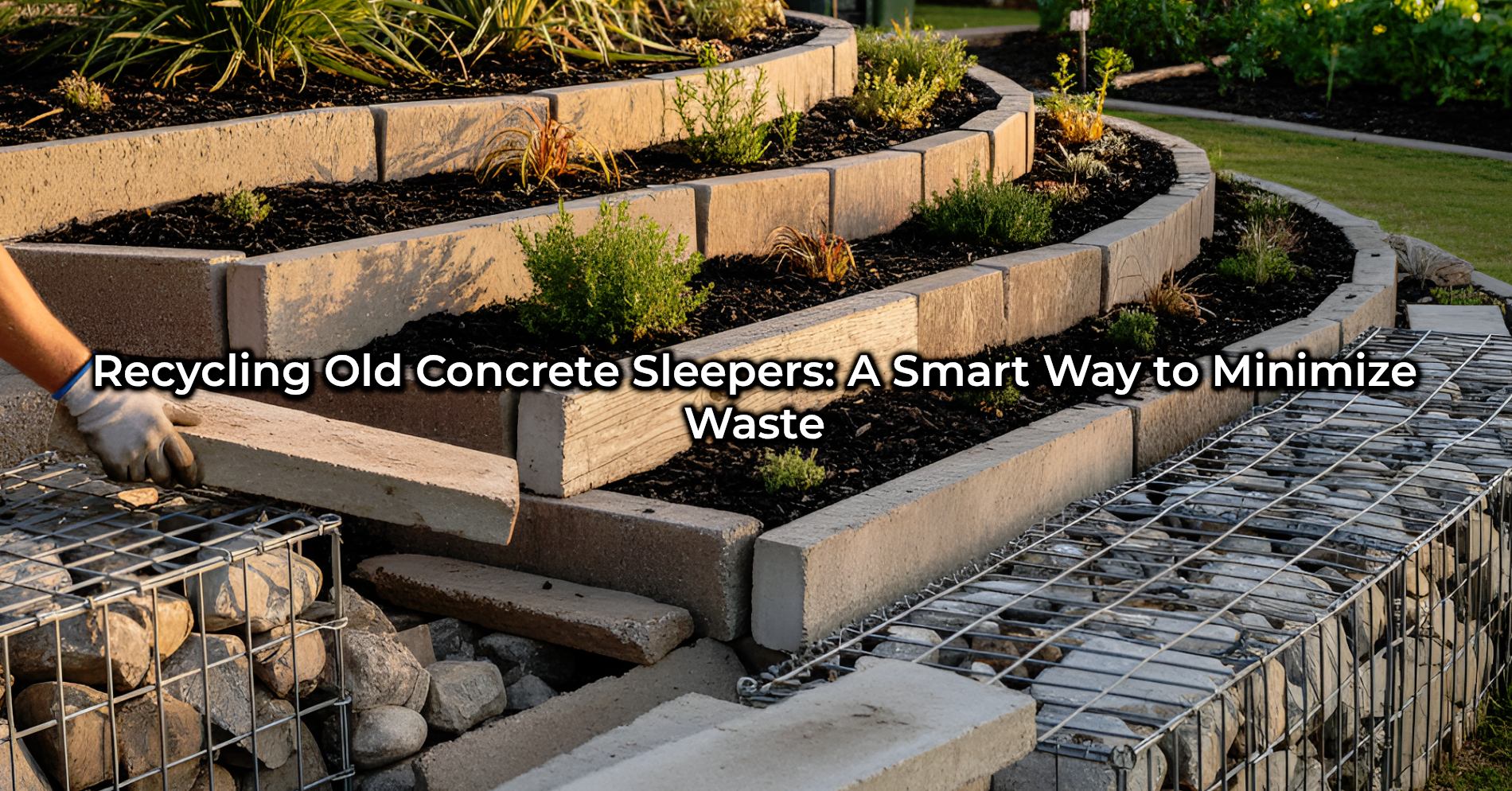
Recycling Old Concrete Sleepers: A Smart Way to Minimize Waste
Concrete sleepers have become a cornerstone of Australian landscaping and construction projects, offering unmatched durability, strength, and aesthetic versatility. But what happens when these robust materials reach the end of their primary lifecycle? At FPM Building Supplies, we believe in responsible stewardship of resources from production through to disposal. As one of Melbourne’s leading manufacturers of 50 MPa concrete sleepers, we understand that sustainability doesn’t end when a project is completed—it extends to the entire product lifecycle.
Unlike timber alternatives that decompose or end up in landfill, concrete sleepers present unique opportunities for recycling and repurposing. The environmental benefits of precast concrete products extend far beyond their installation phase, with proper recycling practices significantly reducing construction waste and preserving valuable resources.
In this comprehensive guide, we’ll explore the smartest approaches to recycling old concrete sleepers across Australian homes and construction sites. Whether you’re renovating a garden, demolishing an old retaining wall, or managing construction waste on a commercial project, understanding your recycling options helps minimize environmental impact while potentially creating value from materials that would otherwise be discarded.
As Australia increasingly focuses on circular economy principles and sustainable building practices, the responsible management of concrete waste has never been more important. With landfill space at a premium and environmental regulations tightening nationwide, recycling concrete sleepers isn’t just an eco-friendly choice—it’s becoming an economic and regulatory necessity.
Table of Contents
ToggleThe Environmental Impact of Concrete Waste in Australia
Understanding the Scale of the Problem
Australia generates approximately 20 million tonnes of construction and demolition waste annually, with concrete products representing one of the largest components. When concrete sleepers end up in landfill instead of being recycled, the environmental consequences are significant:
- Resource depletion: Manufacturing new concrete requires substantial quantities of virgin aggregates, cement, and water
- Landfill pressure: Concrete is heavy and takes up significant space in already overburdened landfill sites
- Carbon emissions: Concrete production contributes approximately 8% of global CO2 emissions; unnecessary new production increases this footprint
- Water contamination: Landfilled concrete can alter soil pH and potentially leach minerals into groundwater over time
According to Sustainability Victoria, only about 45% of construction waste in Australia is currently diverted from landfill, despite the fact that concrete is one of the most recyclable building materials available.
The Lifecycle Advantage of Concrete Sleepers
One of the most significant environmental advantages of concrete sleepers over timber alternatives is their extended functional lifespan. While timber sleepers typically last 10-15 years before requiring replacement (and often end up in landfill), quality concrete sleepers like those manufactured by FPM Building Supplies can provide 50+ years of service.
This longevity creates a crucial sustainability advantage:
- Reduced replacement frequency: Fewer new materials need to be manufactured over time
- Lower maintenance requirements: No chemical treatments, sealants, or preservatives needed
- Conservation of forests: One concrete sleeper installation can save multiple mature trees that would be required for initial installation plus subsequent replacements
- Minimal waste generation: The extended service life means less frequent disposal events
When concrete sleepers finally do reach end-of-life, they don’t simply become waste—they become valuable resources for new construction applications.
Methods for Recycling Concrete Sleepers: A Practical Guide
Professional Concrete Recycling Services
For homeowners and builders with significant quantities of old concrete sleepers, professional recycling services offer the most efficient solution. These specialized facilities use industrial crushing equipment to break down concrete into reusable aggregate.
The concrete recycling process typically involves:
- Collection and transportation: Old sleepers are collected and transported to recycling facilities
- Crushing and screening: Concrete is crushed to specific sizes and screened to remove contaminants
- Separation: Steel reinforcement (if present) is magnetically separated and also recycled
- Processing: The crushed concrete is processed into various aggregate sizes for different applications
- Distribution: Recycled concrete aggregate (RCA) is distributed for use in new construction projects
Benefits of professional recycling services:
- Proper handling of large, heavy materials
- Compliance with environmental regulations
- Documentation for sustainability reporting
- Volume discounts for large projects
- Transportation logistics managed by professionals
FPM Building Supplies partners with several certified concrete recyclers in the Melbourne area and can provide recommendations based on your project size and location. Contact our team at 32 Fullarton Dr, Epping VIC 3076 or call +61 431 235 919 for local recycling partner information.
DIY Crushing and Processing for Small Projects
Homeowners with just a few old concrete sleepers may consider DIY recycling options. While not suitable for large volumes, small-scale processing can work for garden projects and minor landscaping needs.
DIY concrete recycling methods include:
- Manual breaking: Using sledgehammers, pry bars, and chisels to break sleepers into smaller pieces
- Small electric demolition hammers: Available for hire from equipment rental companies
- Screening: Using wire mesh screens to separate fine and coarse aggregate
- Washing: Removing dirt and debris to prepare aggregate for reuse
Important safety considerations for DIY concrete recycling:
- Always wear appropriate PPE: safety glasses, gloves, steel-toed boots, and dust masks
- Work in well-ventilated areas to avoid silica dust inhalation
- Break concrete on stable surfaces to prevent dangerous ricochets
- Wet the concrete before breaking to reduce dust generation
- Check for steel reinforcement that could damage tools or cause injury
For guidance on safe handling practices, refer to our comprehensive safe concrete sleeper handling guide.
Creative Reuse Ideas for Old Concrete Sleepers
Functional Landscaping Applications
Rather than recycling old sleepers immediately, many can be creatively repurposed for new landscaping features. This “upcycling” approach extends their useful life while adding unique character to outdoor spaces.
Functional reuse ideas include:
- Garden edging and borders: Smaller pieces make excellent garden edging that won’t rot or warp
- Stepping stones and pathways: Cut sleepers can create durable stepping stones for garden paths
- Water feature foundations: Heavy concrete pieces provide stable bases for pond liners and water features
- Raised vegetable beds: Repurposed sleepers can create new raised garden beds (ensure they’re free from contaminants)
- Erosion control barriers: Placed strategically, old sleepers can help prevent soil erosion on slopes
For inspiration, explore our gallery of 5 creative landscaping ideas using concrete sleepers.
Architectural and Design Features
Concrete’s aesthetic versatility makes old sleepers perfect for creating striking design elements in both residential and commercial spaces.
Design-oriented reuse applications include:
- Outdoor furniture: With proper finishing, concrete sleepers can become benches, tables, and planters
- Feature walls: Vertical installations create striking textured walls for gardens and courtyards
- Stair treads: Cut sections can serve as durable, industrial-chic stair treads
- Fire pit surrounds: The non-combustible nature of concrete makes it ideal for fire pit construction
- Art installations: Sculptural arrangements can transform functional materials into artistic statements
Discover more design possibilities in our guide to innovative uses for concrete sleepers beyond landscaping.
Proper Disposal Methods for Non-Recyclable Concrete
Identifying Contaminated Concrete Sleepers
Not all concrete sleepers are suitable for standard recycling due to contamination. Sleepers that have been exposed to certain chemicals, oils, or hazardous materials require special handling.
Common contamination concerns include:
- Sleepers used in industrial settings with chemical exposure
- Concrete that has absorbed petroleum products or solvents
- Sleepers treated with certain preservatives or sealants
- Concrete from sites known to have soil contamination
When in doubt about contamination, consult with a professional recycling service or environmental specialist before proceeding with disposal or recycling.
Authorized Disposal Facilities
For concrete sleepers that cannot be recycled or reused, proper disposal at authorized facilities is essential to protect the environment and comply with regulations.
Types of authorized disposal facilities:
- Construction and demolition waste facilities: Specially designed for building materials
- Landfill sites with C&D waste sections: Segregated areas for construction debris
- Hazardous waste facilities: For contaminated concrete requiring special handling
- Transfer stations: Collection points that sort and direct waste to appropriate facilities
Always verify that disposal facilities are licensed to accept concrete waste and obtain documentation of proper disposal for your records, especially for commercial projects.
FPM Building Supplies maintains a list of authorized disposal facilities across Victoria and can provide guidance on appropriate options for your specific situation. Contact our team at info@fpmbuildingsupplies.com.au for current facility recommendations.
The FPM Building Supplies Commitment to Sustainable Concrete Practices
Closed-Loop Manufacturing: Our Environmental Promise
At FPM Building Supplies, sustainability is integrated into our manufacturing processes from the ground up. Our commitment to environmental responsibility extends beyond product quality to encompass the entire lifecycle of our concrete sleepers.
Our sustainable manufacturing practices include:
- Water recycling systems: Our Epping facility uses closed-loop water systems that capture and reuse 95% of process water
- Energy efficiency initiatives: Solar power generation and energy-efficient equipment reduce our carbon footprint
- Waste minimization protocols: Precise batching systems prevent material overage and waste generation
- Recycled content utilization: Where technically appropriate, we incorporate recycled aggregates into our concrete mix
- End-of-life planning: We design products with recyclability in mind and maintain partnerships with concrete processors
Unlike many competitors who outsource production or import materials, our local manufacturing ensures full visibility and control over environmental practices throughout the supply chain.
Product Design for Longevity and Recyclability
Every FPM concrete sleeper is engineered with sustainability in mind. Our design philosophy emphasizes creating products that last longer and can be effectively recycled at end-of-life.
Key design features for sustainability include:
- 50 MPa concrete mix: Higher strength ensures longer service life, reducing replacement frequency
- Minimal reinforcement: When required, we use fully recyclable steel in minimal quantities
- Standardized dimensions: Uniform sizing simplifies future recycling and repurposing
- Chemical-free manufacturing: No toxic additives or treatments that could contaminate recycled material
- Durability testing: Rigorous quality control ensures products meet or exceed their expected lifespan
This commitment to responsible design reflects our understanding that true sustainability encompasses the entire product lifecycle—from raw material extraction through manufacturing, use, and ultimate recycling.
For more information on our quality standards, read about how FPM ensures quality and durability in every product.
Case Studies: Successful Concrete Sleeper Recycling Projects
Residential Renovation: Melbourne Garden Transformation
Project overview: A homeowner in Kew was renovating their sloped backyard, replacing a deteriorating timber retaining wall with modern concrete sleepers from FPM Building Supplies.
Sustainable approach: Rather than sending the old concrete sleepers from a previous installation to landfill, the homeowner worked with a local recycler to process the material on-site.
Process and outcome:
- 12 old concrete sleepers were broken into smaller pieces using hydraulic equipment
- The crushed material was screened and used as base course for new pathways
- Fine aggregate was mixed with soil for garden beds
- The project diverted approximately 2.4 tonnes of concrete from landfill
- The homeowner saved $380 in disposal fees and new aggregate costs
Homeowner testimonial: “I was surprised at how easily the old sleepers could be transformed into useful material for my new garden. Working with FPM’s recycling recommendations made the process straightforward and environmentally responsible.”
Commercial Development: Dandenong Community Park
Project overview: A council-funded park renovation in Dandenong required the removal of aged concrete sleepers from pathways and garden borders.
Sustainable approach: The project team implemented a comprehensive waste management plan with concrete recycling as a cornerstone element.
Process and outcome:
- 45 tonnes of old concrete sleepers were collected and transported to a certified recycling facility
- The material was processed into three grades of recycled aggregate
- Coarse aggregate was used for road base in the park’s parking area
- Medium aggregate was incorporated into new concrete for park furniture
- Fine material was used as fill for landscaping areas
- The project achieved 98% waste diversion from landfill
- Carbon emissions were reduced by an estimated 32 tonnes compared to using virgin materials
Project manager insight: “The initial planning for concrete recycling added about 3% to our project timeline, but the environmental benefits and community goodwill far outweighed this minor delay. FPM Building Supplies provided excellent guidance on the recycling process and helped us connect with reliable processing partners.”
Navigating Regulations and Standards for Concrete Recycling in Australia
National and State Environmental Regulations
Australia’s approach to construction waste management involves multiple layers of regulation at federal, state, and local levels. Understanding these requirements is essential for proper concrete sleeper disposal and recycling.
Key regulatory frameworks include:
- National Waste Policy: Sets Australia’s strategic direction for waste management and resource recovery
- State Environmental Protection Acts: Establish legal requirements for waste handling in each state
- Local council waste management bylaws: Specify disposal requirements and restrictions at the municipal level
- Work Health and Safety regulations: Govern safe handling practices for heavy materials
The trend across Australia is toward increased regulation of construction waste, with many states implementing landfill levies to discourage disposal and encourage recycling. In Victoria, the landfill levy currently stands at $79.58 per tonne for metropolitan areas, making recycling increasingly cost-effective.
Certification Standards for Recycled Concrete
Not all recycled concrete aggregate (RCA) is created equal. Australian Standards provide specifications for using recycled materials in different applications.
Relevant standards include:
- AS 4489.1: Test methods for determining the properties of recycled materials
- AS 2758.1: Aggregate for concrete, including specifications for recycled content
- AS 1141: Methods for sampling and testing aggregates
- AS 2870: Residential slabs and footings, with provisions for recycled materials
When working with recycled concrete, ensure that processing facilities comply with relevant standards and can provide certification documentation for your specific application. FPM Building Supplies can recommend certified recyclers who meet these requirements.
For commercial projects requiring engineering sign-offs, documentation of recycled material compliance becomes particularly important.
Economic Benefits of Concrete Sleeper Recycling
Cost Analysis: Recycling vs. Disposal
While environmental considerations often drive recycling decisions, the economic benefits are increasingly compelling. A comprehensive cost analysis typically reveals significant savings through proper concrete sleeper recycling.
Typical cost comparison for 10 concrete sleepers (approximately 1.5 tonnes):
| Cost Factor | Landfill Disposal | Professional Recycling | DIY Recycling |
| Collection/Transport | $85 | $65 | $0 (owner-provided) |
| Processing Fees | N/A | $40 | $0 |
| Disposal Levies | $119 (at $79.58/tonne) | $0 | $0 |
| New Material Costs (if replaced) | $0 | $0 | $220 (for new aggregate) |
| Total Cost | $204 | $105 | $220 |
This simplified analysis demonstrates that professional recycling services can cost less than half of landfill disposal when landfill levies are factored in. DIY recycling may appear cost-effective but requires significant labor, time, and equipment considerations.
For larger projects, the economic case for recycling becomes even stronger, with volume discounts and potential revenue from selling high-quality recycled aggregate.
Resource Recovery Potential and Market Value
The market for recycled concrete aggregate (RCA) continues to grow across Australia, creating economic opportunities from materials that were once considered waste.
Current market values for recycled concrete materials:
- Road base material: $18-25 per tonne
- General fill material: $12-18 per tonne
- Construction aggregate (processed): $35-50 per tonne
- Decorative landscaping rock: $60-85 per tonne
For construction companies and demolition contractors, properly processed concrete can transform from a disposal cost into a revenue stream. Even homeowners with significant quantities can often find local landscapers or contractors willing to take quality recycled material at no cost or even for a small payment.
The growing emphasis on sustainable building practices, including Green Star and other certification systems, further increases demand for verified recycled materials, improving market opportunities for properly processed concrete.
Best Practices for Planning Concrete Sleeper Recycling Projects
Pre-Project Assessment and Planning
Successful concrete sleeper recycling begins with thorough planning before demolition or removal begins. Taking time to assess options and create a strategy pays dividends in efficiency, cost savings, and environmental impact.
Essential pre-project steps include:
- Quantity assessment: Calculate the volume of concrete sleepers to be removed
- Condition evaluation: Determine if sleepers contain contaminants or reinforcement
- Reuse potential analysis: Identify opportunities to repurpose intact sleepers
- Local recycling options research: Identify certified processors in your area
- Cost-benefit comparison: Analyze disposal versus recycling costs
- Timeline integration: Build recycling processes into project schedules
- Documentation preparation: Arrange for necessary permits and tracking
For larger projects, FPM Building Supplies offers free consultation services to help develop comprehensive recycling plans. Our team can provide estimates, connect you with recycling partners, and ensure your project meets all regulatory requirements.
Storage and Handling Guidelines for Recycling Preparation
Proper handling and storage of concrete sleepers awaiting recycling significantly impacts the efficiency and cost-effectiveness of the process.
Best practices for storage and handling:
- Segregation: Keep concrete separate from other waste materials to prevent contamination
- Accessibility: Store materials in easily accessible locations for collection vehicles
- Stability: Stack sleepers securely to prevent dangerous collapses
- Weather protection: Cover materials if storing for extended periods to prevent excessive moisture absorption
- Documentation: Maintain records of materials removed and their final disposition
- Safety protocols: Implement clear safety procedures for handling heavy concrete pieces
FPM Building Supplies provides detailed concrete sleeper handling guidelines to ensure safe practices during removal, storage, and preparation for recycling.
Community Initiatives and Collaborative Recycling Programs
FPM Building Supplies Community Recycling Partnership Program
Recognizing that sustainable practices require community-wide commitment, FPM Building Supplies has established partnerships with local councils, community groups, and environmental organizations to promote concrete recycling across Melbourne and Victoria.
Program highlights include:
- Community collection days: Quarterly events where residents can drop off old concrete sleepers for recycling
- School education programs: Teaching the next generation about sustainable building practices
- Landcare collaborations: Supporting habitat restoration projects using recycled concrete
- Reclaimed material libraries: Making processed recycled concrete available to community projects
- Industry workshops: Sharing best practices with builders, landscapers, and developers
Since launching in 2021, our partnership program has diverted over 850 tonnes of concrete from landfill while supporting 23 community projects across metropolitan Melbourne.
To participate in upcoming community recycling events, visit our events page or contact our sustainability team at +61 421 370 700.
Industry Collaboration for Greater Impact
FPM Building Supplies recognizes that meaningful environmental progress requires collaboration across the construction industry. We actively participate in industry initiatives to improve concrete recycling rates and develop better sustainable practices.
Our industry partnerships include:
- Concrete Institute of Australia: Contributing to research on improved recycling techniques
- Master Builders Association Victoria: Developing guidelines for sustainable demolition practices
- Sustainable Business Council: Sharing best practices and setting industry standards
- Materials Recycling Association: Advocating for improved infrastructure and policies
Through these collaborations, we’re helping drive systemic change that makes concrete recycling more accessible, affordable, and effective across the Australian construction sector.
The Future of Concrete Recycling: Innovations and Emerging Technologies
Advanced Processing Technologies
The concrete recycling industry continues to evolve with new technologies that improve efficiency, quality, and applications for recycled materials.
Emerging processing innovations include:
- Automated sorting systems: Using AI and robotics to identify and separate concrete types
- Fine grinding technologies: Creating ultra-fine recycled concrete powder for cement replacement
- Carbon capture processing: Technologies that permanently sequester carbon dioxide in recycled concrete
- Enhanced contaminant removal: Advanced washing and separation systems for cleaner recycled aggregate
- Portable crushing units: Mobile processing that reduces transportation emissions and costs
FPM Building Supplies maintains close relationships with technology providers and regularly evaluates new equipment and processes to incorporate the most effective recycling innovations into our supply chain.
Design for Disassembly and Future Recycling
The construction industry is increasingly embracing “design for disassembly” principles that make materials easier to separate and recycle at end-of-life. This forward-thinking approach creates buildings and landscapes that can be efficiently deconstructed rather than demolished.
Key design considerations for future recyclability:
- Material separation: Using compatible but separable materials that can be cleanly divided at end-of-life
- Connection methods: Choosing mechanical fasteners over adhesives for easier disassembly
- Modular design: Creating systems that can be partially replaced rather than entirely removed
- Documentation: Maintaining material inventories and assembly records for future recyclers
- Standardization: Using common dimensions and specifications to increase reuse potential
As manufacturers, FPM Building Supplies is incorporating these principles into product development, creating concrete sleepers that are easier to repurpose, process, and recycle when their primary service life ends.
Practical Guide: Your Step-by-Step Concrete Sleeper Recycling Plan
Step 1: Assess Your Concrete Sleeper Situation
Before taking action, thoroughly evaluate what you’re working with:
- Quantity: Measure or count the number of sleepers
- Condition: Check for cracks, breaks, or contamination
- Location: Determine accessibility for removal
- Timeline: Establish when removal must occur
- Budget: Set parameters for recycling costs
For accurate assessment guidance, refer to our detailed guide on understanding concrete sleeper weight and handling requirements.
Step 2: Evaluate Your Options
Based on your assessment, consider the most appropriate recycling approach:
- Intact re-use: Can sleepers be cleaned and used in another project?
- Creative repurposing: Could they become garden features or architectural elements?
- Professional recycling: Is there enough volume to warrant a specialized service?
- Community programs: Are there local initiatives that could accept the material?
- Landfill disposal: As a last resort when other options aren’t viable
Our team at FPM Building Supplies can help evaluate these options based on your specific situation. Contact us at 32 Fullarton Dr, Epping VIC 3076 or call +61 431 235 919 for personalized advice.
Step 3: Prepare for Removal and Processing
Once you’ve chosen your recycling path, proper preparation ensures efficient execution:
- Clear the area: Remove vegetation, soil, and debris from around sleepers
- Safety first: Ensure proper PPE and equipment for safe handling
- Plan access: Arrange for vehicle access if using professional services
- Documentation: Prepare any required permits or disposal certificates
- Timing: Schedule removal to avoid weather disruptions
- Neighbors: Inform adjacent properties about upcoming work
For detailed safety guidelines, consult our comprehensive mastering concrete sleeper installation guide, which includes removal safety protocols.
Step 4: Execute and Document Your Recycling Plan
Implementation is the critical phase where planning meets action:
- Follow your plan: Adhere to established processes and timelines
- Adapt as needed: Be prepared to adjust for unexpected challenges
- Document everything: Keep records of materials processed and final disposition
- Safety monitoring: Continuously assess for hazards during removal
- Quality control: Ensure recycled materials meet required specifications if being reused
For commercial projects requiring environmental reporting, FPM Building Supplies can provide template documentation to ensure compliance with sustainability reporting requirements.
Step 5: Evaluate and Improve Future Practices
After completing your recycling project, take time to assess the process and identify improvements:
- Cost analysis: Compare actual versus projected recycling costs
- Environmental impact: Calculate waste diverted from landfill
- Process efficiency: Identify bottlenecks or complications
- Lessons learned: Document challenges and solutions for future reference
- Sharing knowledge: Contribute insights to community recycling initiatives
This continuous improvement approach helps refine recycling practices and contributes to industry knowledge about best methods for concrete sleeper recycling in Australia.
Conclusion: Choosing Sustainability Through Concrete Recycling
Recycling old concrete sleepers represents more than just responsible waste management—it’s a tangible commitment to sustainable building practices that benefit our communities, environment, and future generations. At FPM Building Supplies, we’ve witnessed firsthand how proper concrete recycling transforms what was once considered waste into valuable resources that support new construction and landscaping projects across Australia.
The journey from demolition to recycling to reuse creates a closed-loop system that conserves natural resources, reduces landfill burden, and minimizes the carbon footprint of construction activities. By choosing to recycle concrete sleepers rather than discard them, Australian homeowners, builders, and developers play an active role in creating a more sustainable built environment.
As industry leaders in precast concrete manufacturing, we understand that our responsibility extends beyond creating high-quality products. It includes supporting our customers through the entire product lifecycle—from initial selection and installation through to eventual recycling and repurposing. This comprehensive approach to sustainability reflects our commitment to being not just suppliers of building materials, but partners in creating better, more environmentally responsible structures and landscapes.
Whether you’re managing a single residential garden renovation or a large commercial development project, the principles of concrete sleeper recycling remain consistent: assess your options thoughtfully, prepare thoroughly, execute safely, and document meticulously. By following these practices and leveraging the resources available through FPM Building Supplies and our recycling partners, you can ensure that your concrete waste becomes someone else’s valuable resource.
Together, we can build a more sustainable Australia—one concrete sleeper at a time.
Get Started with Concrete Sleeper Recycling Today
Ready to implement sustainable practices for your old concrete sleepers? FPM Building Supplies offers comprehensive support through every step of the recycling process.
Contact us for:
- Personalized recycling consultation
- Local recycler recommendations
- Transportation logistics support
- Documentation assistance
- Creative reuse ideas and guidance
Visit our showroom:
32 Fullarton Dr, Epping VIC 3076
Open: Monday – Friday, 8:00 AM – 6:00 PM
Call our recycling specialists:
+61 431 235 919
+61 421 370 700
Email inquiries:
info@fpmbuildingsupplies.com.au
Explore more sustainable building resources:
https://fpmbuildingsupplies.com.au/blogs/
For bulk recycling projects, ask about our commercial recycling program and volume-based pricing options. FPM Building Supplies—where quality meets sustainability.