
Mon - Fri 7:00 - 17:00
32 fullarton dr Epping 3076 Australia
Posted by FPMBuildingSupplies
The Ultimate 2026 Fencing Strategy: 9 Powerful Techniques Professionals Use to Prevent Sagging
Table of Contents
ToggleIntroduction: Why Your Fence Sags (And How to Stop It for Good)
You’ve probably seen it before. That once-straight fence line now leaning like the Tower of Pisa. Posts that once stood proud now bowing under the weight of time and weather. It’s frustrating, isn’t it? You invested in a fence to define your space, protect your property, and add value to your home. So why does it seem like every fence eventually starts to sag?
The truth is, fence sagging isn’t inevitable. It’s usually the result of a few common mistakes that can be avoided with the right knowledge and techniques. In 2026, professional fencers aren’t just building fences; they’re engineering long-lasting boundaries that stand straight and strong for decades. At FPM Building Supplies, we’ve learned from the best, and we’re sharing the nine powerful techniques that professionals use to prevent fence sagging. You can explore our complete product range or learn more about why customers choose us for their fencing material needs. For personalised advice on your fencing project, our team is available at +61 421370700 to help guide your material selection.
This isn’t about quick fixes or temporary solutions. It’s about understanding the fundamentals of fence construction and applying proven strategies that work in Australian conditions. If you want to understand more about our company background, visit our about page for detailed information about our operations and commitment to quality. Understanding how to prevent fence sagging from the outset helps you build boundaries that remain straight and strong for generations.
Technique 1: Start with the Right Post Foundation
Why Foundation Depth Matters More Than You Think
The most common cause of fence sagging isn’t the fence itself—it’s the posts. And the most common post problem? Insufficient foundation depth. Think of your fence posts like tree roots: the deeper and wider they go, the more stable the structure above. For most Australian soils, professionals recommend embedding at least one-third of the post length in the ground. In sandy or loose soils, that might mean going even deeper. Our concrete sleeper installation guide covers installation fundamentals that apply to post foundation preparation. Understanding foundation depth helps you prevent the most common cause of fence sagging before you even start building.
The Concrete Mix That Makes a Difference
Not all concrete is created equal when it comes to setting posts. A weak mix can crack and crumble, allowing posts to shift. Professionals often use rapid-set concrete for fence posts because it achieves strength quickly and resists weathering. Our rapid-set concrete guide covers quick solutions for construction needs including post setting. Understanding concrete choices helps you create foundations that won’t fail under pressure.
The “Bell-Shape” Footing Trick
Here’s a pro secret: when digging post holes, make the bottom wider than the top. This “bell-shaped” footing creates a mechanical lock that resists upward movement from frost heave or soil expansion. It’s a simple technique that makes a dramatic difference in post stability. Our how to install a sloped retaining wall guide covers installation techniques applicable to stable foundation creation. Understanding footing design helps you prevent fence sagging from soil movement.
Technique 2: Choose Posts That Won’t Quit
Galvanised Steel vs. Timber: The Long-Term View
When it comes to preventing fence sagging, post material matters immensely. Timber posts, even treated ones, can rot, warp, or attract termites over time. Galvanised steel posts, on the other hand, offer exceptional strength and corrosion resistance. Our galvanised steel posts guide covers the full range of options available for different applications. Understanding material longevity helps you choose posts that won’t become the weak link in your fence.
H Posts vs. C Posts: Knowing the Difference
Not all steel posts are the same. H posts offer superior strength for corner positions, gate posts, and high-stress areas. C posts work well for standard fence lines with evenly distributed loads. Our galvanised steel H posts vs C posts guide helps you choose the right type for your fence. Understanding post types helps you prevent sagging by matching strength to need.
The Thickness Factor
Post wall thickness affects strength more than many people realise. A post with thicker walls can handle greater loads without bending. Professionals often specify posts with minimum wall thicknesses for high-wind or high-tension applications. Our galvanised steel posts the ultimate guide helps choose the right type for your fence. Understanding specifications helps you avoid under-specifying for your conditions.
Technique 3: Master the Art of Post Spacing
The Goldilocks Principle: Not Too Close, Not Too Far
Post spacing is a balancing act. Too close, and you’re wasting materials. Too far, and your fence panels can sag between posts. For most residential fencing, professionals recommend spacing posts between 2.4 to 3 metres apart. Our preventing fence sagging guide explains how spacing affects fence performance. Understanding spacing principles helps you prevent sagging through intelligent design.
Adjusting for Slope and Terrain
On sloped ground, post spacing might need adjustment. Professionals often use a technique called “stepping” or “racking” to follow the contour of the land while maintaining consistent panel heights. Our how to install a sloped retaining wall guide covers installation techniques applicable to sloped fencing. Understanding terrain adaptation helps you prevent sagging on challenging sites.
The Gate Post Exception
Gate posts bear extra weight and movement. Professionals always use heavier posts or additional bracing for gate positions. Our galvanised steel corner posts guide covers reinforced post applications suitable for high-stress areas. Understanding gate post requirements helps you prevent the most common sagging point in any fence.
Technique 4: Tension Is Everything
The Right Way to Stretch Wire and Mesh
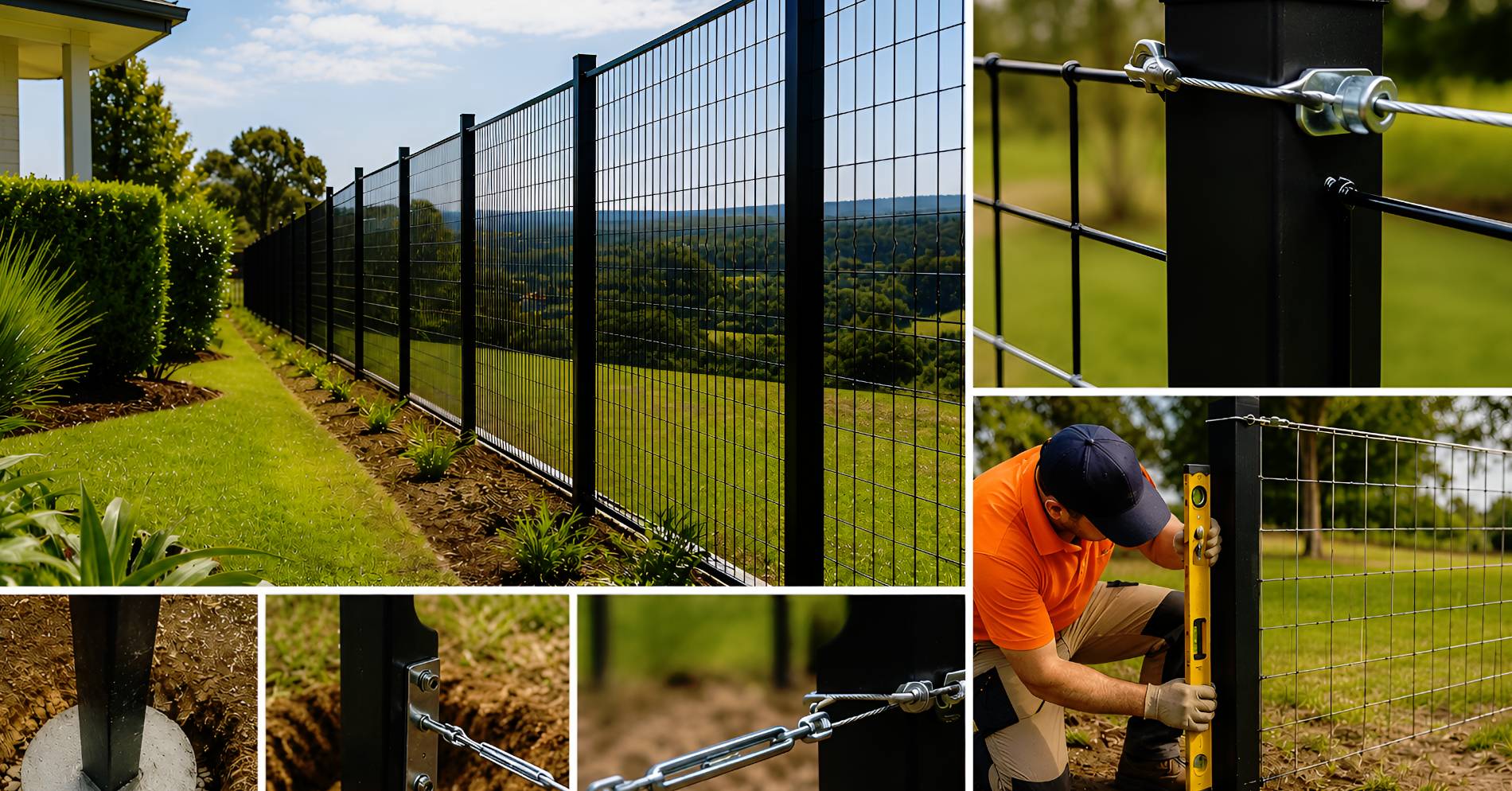
For wire or mesh fencing, proper tension is critical. Too loose, and the fence sags. Too tight, and you risk pulling posts inward. Professionals use come-alongs or fence stretchers to apply even, controlled tension. Our how to build a strong and long-lasting fence guide covers techniques for building sturdy fencing systems. Understanding tension application helps you prevent sagging in wire and mesh fences.
The Role of Strainers and Braces
Strainer posts and diagonal braces create a rigid framework that maintains tension over time. Professionals never skip these critical components, especially at corners and ends. Our galvanised steel 45-degree posts guide covers corner support for any project. Understanding bracing systems helps you prevent tension loss that leads to sagging.
Regular Tension Checks
Even the best-installed fence can lose tension over time. Professionals recommend annual tension checks, especially after extreme weather. Our how to maintain and extend the lifespan of your concrete sleepers guide provides practical maintenance tips applicable to fence tension maintenance. Understanding maintenance needs helps you prevent sagging through proactive care.
Technique 5: Protect Against the Elements
Drainage: The Unsung Hero of Fence Longevity
Water is fence public enemy number one. Poor drainage around posts leads to rot in timber and accelerated corrosion in steel. Professionals ensure proper drainage by sloping concrete footings away from posts and using gravel backfill. Our flood-proof concrete sleeper walls guide explores drainage strategies for water management. Understanding drainage helps you prevent the moisture damage that causes sagging.
UV Protection for Materials
Australia’s harsh sun can degrade fencing materials over time. Professionals choose UV-stable materials or apply protective coatings to extend fence life. Our Melbourne weather-resistant materials guide addresses regional material performance considerations. Understanding UV protection helps you prevent material degradation that leads to sagging.
Wind Load Considerations
In windy areas, fences act like sails, putting enormous pressure on posts. Professionals account for wind loads by using stronger posts, closer spacing, or wind-permeable designs. Our wind-resistant fence posts guide covers post specifications for windy conditions. Understanding wind resistance helps you prevent sagging from weather forces.
Technique 6: The Power of Proper Connections
Mechanical Fasteners vs. Nails
Nails can work loose over time. Professionals prefer mechanical fasteners like bolts, screws, or specialised fence clips that maintain their grip. Our securing concrete sleepers guide covers connection techniques that prevent common mistakes. Understanding connection methods helps you prevent sagging from loose fittings.
The Corner Connection Criticality
Corners bear the most stress in any fence system. Professionals use reinforced corner posts, diagonal bracing, or specialised corner connectors to handle these forces. Our galvanised steel corner posts guide covers corner post strength and versatility. Understanding corner reinforcement helps you prevent the most common failure point.
Regular Connection Inspections
Even the best connections can loosen over time. Professionals include connection checks in their maintenance routines. Our concrete sleeper FAQs Melbourne guide addresses common questions that arise during ongoing maintenance. Understanding inspection needs helps you prevent sagging through early intervention.
Technique 7: Soil-Specific Strategies
Clay Soil Solutions
Melbourne’s reactive clay soils swell when wet and shrink when dry, putting constant stress on fence posts. Professionals use deeper foundations, flexible connections, or soil stabilisation techniques to handle this movement. Our the ultimate guide to fencing on clay soil guide provides guidance for challenging soil conditions. Understanding clay soil challenges helps you prevent sagging from ground movement.
Sandy Soil Stabilisation
Sandy soils drain well but offer less holding power for posts. Professionals use wider footings, soil compaction, or chemical stabilisers to improve post hold in sandy conditions. Our erosion control solutions guide explores vegetation management and erosion control that supports soil stability. Understanding sandy soil challenges helps you prevent post loosening that leads to sagging.
Rocky Terrain Adaptations
In rocky areas, digging deep post holes can be challenging. Professionals use rock anchors, surface-mounted posts, or specialised drilling equipment to achieve secure installations. Our rocky terrain installation guide covers installation techniques for challenging ground conditions. Understanding rocky terrain solutions helps you prevent sagging when traditional digging isn’t possible.
Technique 8: The Maintenance Mindset
The Annual Fence Check-Up
Professionals don’t wait for fences to sag before taking action. They perform annual inspections checking post stability, connection tightness, and material condition. Our how to maintain and extend the lifespan of your concrete sleepers guide provides practical maintenance tips applicable to fence systems. Understanding maintenance scheduling helps you prevent sagging through proactive care.
Seasonal Preparation
Different seasons bring different challenges. Professionals prepare fences for summer heat, winter cold, and spring rains with season-specific maintenance tasks. Our Melbourne climate building materials guide explores how climate affects building material choices. Understanding seasonal preparation helps you prevent weather-related sagging.
The Repair-Don’t-Replace Philosophy
When issues do arise, professionals often repair rather than replace. A leaning post might be re-set. A loose connection might be tightened. Our how to repair a leaning retaining wall guide covers repair techniques applicable to fence repair. Understanding repair techniques helps you prevent minor issues from becoming major sagging problems.
Technique 9: Professional Planning and Installation
The Value of Professional Design
Before a single post is dug, professionals plan fence layouts considering terrain, soil, wind patterns, and intended use. This upfront planning prevents problems down the line. Our creative concrete sleeper designs guide provides inspiration for design possibilities that consider multiple factors. Understanding design planning helps you prevent sagging through intelligent layout.
Quality Installation Practices
Even the best materials can fail if installed poorly. Professionals follow proven installation methods, use proper tools, and adhere to manufacturer specifications. Our mastering concrete sleeper installation guide covers professional installation standards. Understanding installation quality helps you prevent sagging from poor workmanship.
When to Call in the Experts
Some projects benefit from professional installation. Complex terrain, high fences, or critical applications might warrant expert help. Our FPM large project supplies guide explains how we support clients with substantial material requirements. Understanding when to seek help helps you prevent sagging through expert installation.
Putting It All Together: Your 2026 Fencing Action Plan
Step 1: Assess Your Site
Evaluate soil type, slope, wind exposure, and intended fence use. This assessment informs all other decisions.
Step 2: Choose Quality Materials
Select posts, panels, and fasteners rated for your conditions. Don’t compromise on critical components.
Step 3: Plan Your Layout
Mark post locations, account for gates and corners, and plan for proper drainage.
Step 4: Install with Precision
Follow proven techniques for post setting, tensioning, and connection. Take your time to get it right.
Step 5: Maintain Proactively
Schedule regular inspections and address minor issues before they become major problems.
Compliance and Standards: Building to Code
Australian Building Standards
All fencing should comply with relevant Australian Standards for structural safety and building code requirements where applicable. These standards ensure fences are created safely and effectively, especially for boundary and safety applications. You can reference Standards Australia for authoritative information on construction standards affecting your project. Understanding compliance helps you prevent sagging by building to proven specifications.
National Construction Code Considerations
The National Construction Code provides framework information affecting structural requirements for fencing, particularly for retaining walls, boundary fences, and safety barriers. You can reference the National Construction Code for regulatory framework information. Understanding code requirements helps you prevent sagging through regulatory-compliant construction.
Conclusion: Straight Fences, Peace of Mind
Preventing fence sagging isn’t about one magic trick. It’s about understanding the system—posts, foundations, connections, materials, and maintenance—and applying proven techniques at each stage. The nine techniques professionals use in 2026 aren’t secrets; they’re fundamentals applied with care and knowledge.
At FPM Building Supplies, we’re committed to providing the quality materials and expert advice that make these techniques possible. Whether you’re a DIY enthusiast or a professional builder, we’re here to help you create fences that stand straight and strong for decades.
Take the time to plan properly, choose quality materials, install with care, and maintain proactively. Your future self will thank you every time you glance at that straight, sturdy fence line.
For more information about our fencing products and expert advice for your project, visit our main website or call our team at +61 431235919. Let’s build something that lasts—together. You can also reach out via our contact page for specific inquiries.