
Mon - Fri 7:00 - 17:00
32 fullarton dr Epping 3076 Australia
Posted by FPMBuildingSupplies
Organic Waste Management: Durable Concrete Sleeper Composting Systems
Table of Contents
ToggleIntroduction
Turning kitchen scraps and garden waste into nutrient-rich compost represents one of the most rewarding ways to reduce household waste while creating valuable fertilizer for your garden, and organic waste management through well-designed composting systems makes this process efficient, odour-free, and accessible for homeowners across Australia. Whether you’re working with a small suburban backyard in Melbourne’s eastern suburbs, a rural property in the Yarra Valley, or a coastal garden with limited space, organic waste management requires careful planning to create composting systems that remain functional, durable, and attractive throughout years of use. At FPM Building Supplies, we’ve seen growing interest from customers who want composting solutions that combine environmental benefits with the durability and low maintenance that concrete sleepers provide. You can explore our complete product range or learn more about why customers choose us for their construction material needs. For personalised advice on your composting project, our team is available at +61 421370700 to help guide your material selection process.
The truth is, organic waste management involves much more than simply piling garden waste in a corner and hoping it decomposes. Effective composting requires proper aeration, moisture control, containment, and accessibility that well-designed concrete sleeper systems can provide. This guide breaks down everything you need to know about building concrete sleeper composting systems, helping you create outdoor composting spaces that support environmental sustainability while remaining practical for regular use. We’ll cover composting principles, design options, construction techniques, maintenance requirements, and long-term benefits. If you want to understand more about our company background, visit our about page for detailed information about our operations and commitment to quality. Understanding organic waste management from the outset helps you create composting systems that remain functional and effective throughout generations of use.
Understanding Organic Waste Management Principles
What Is Organic Waste Management?
Organic waste management refers to systematic approaches for collecting, processing, and converting organic materials including food scraps, garden waste, and plant matter into useful compost that enriches soil health. This approach reduces landfill waste while creating valuable garden resources from materials that would otherwise be discarded. Our sustainable landscaping materials guide explains environmental benefits that align with organic waste management objectives. Organic waste management should never create odour or pest problems, as well-designed systems contain waste effectively while supporting decomposition. Understanding these principles helps you create composting systems that support environmental health while remaining neighbour-friendly.
Why Composting Matters
Composting plays crucial roles in waste reduction, soil health improvement, and greenhouse gas emission reduction by diverting organic materials from landfill where they would produce methane during decomposition. Home composting systems contribute to broader environmental goals while providing gardeners with free, nutrient-rich soil amendments. You can reference research resources like the USC Library Guide for authoritative information on environmental studies affecting waste management practices. Organic waste management through composting creates closed-loop systems where garden waste returns to benefit garden soil. Understanding composting importance helps justify system investments through environmental as well as practical benefits.
Household Waste Reduction Benefits
Household waste reduction through composting significantly decreases the volume of rubbish sent to landfill, reducing council waste collection costs and environmental impact from waste transportation. Australian households generate substantial organic waste that composting systems can process locally. Our recycling concrete sleepers Australia guide covers disposal and recycling options that complement waste reduction goals. Organic waste management with home composting addresses waste challenges at the source rather than relying on council collection systems. Understanding waste reduction benefits helps you appreciate the broader impact of home composting systems.
Concrete Sleeper Advantages for Composting Systems
Durability and Longevity Benefits
Concrete sleepers offer exceptional durability that supports organic waste management by creating stable composting structures that last decades without replacement. This longevity reduces disturbance to composting processes that occurs when bins require frequent maintenance or replacement. Our concrete sleeper life cycle guide examines how concrete sleepers perform over decades of use. Organic waste management benefits from concrete sleeper longevity because stable systems allow composting processes to continue uninterrupted over time. Understanding durability advantages helps justify material investments that deliver environmental value over decades.
Moisture and Pest Resistance
Unlike timber alternatives, concrete sleepers resist moisture absorption that leads to rot and decay in composting environments where constant moisture is present for decomposition. This resistance also prevents pest infestation that can occur with deteriorating timber composting bins. Our concrete sleepers vs timber retaining walls guide compares material longevity that informs composting bin material selection. Organic waste management with moisture-resistant materials protects composting systems from deterioration while maintaining structural integrity. Understanding moisture considerations helps you create long-lasting composting systems.
Temperature Stability for Composting
Concrete sleepers provide thermal mass that helps maintain consistent temperatures within composting bins, supporting the microbial activity essential for effective decomposition throughout seasonal changes. This temperature stability accelerates composting processes compared to thin-walled alternatives. Our thermal mass benefits guide covers thermal advantages applicable to composting systems. Organic waste management with temperature-stable materials creates optimal conditions for microbial decomposition year-round. Understanding thermal benefits helps you create efficient composting systems that work through all seasons.
Designing Effective Composting Systems
Single Bin Systems for Small Spaces
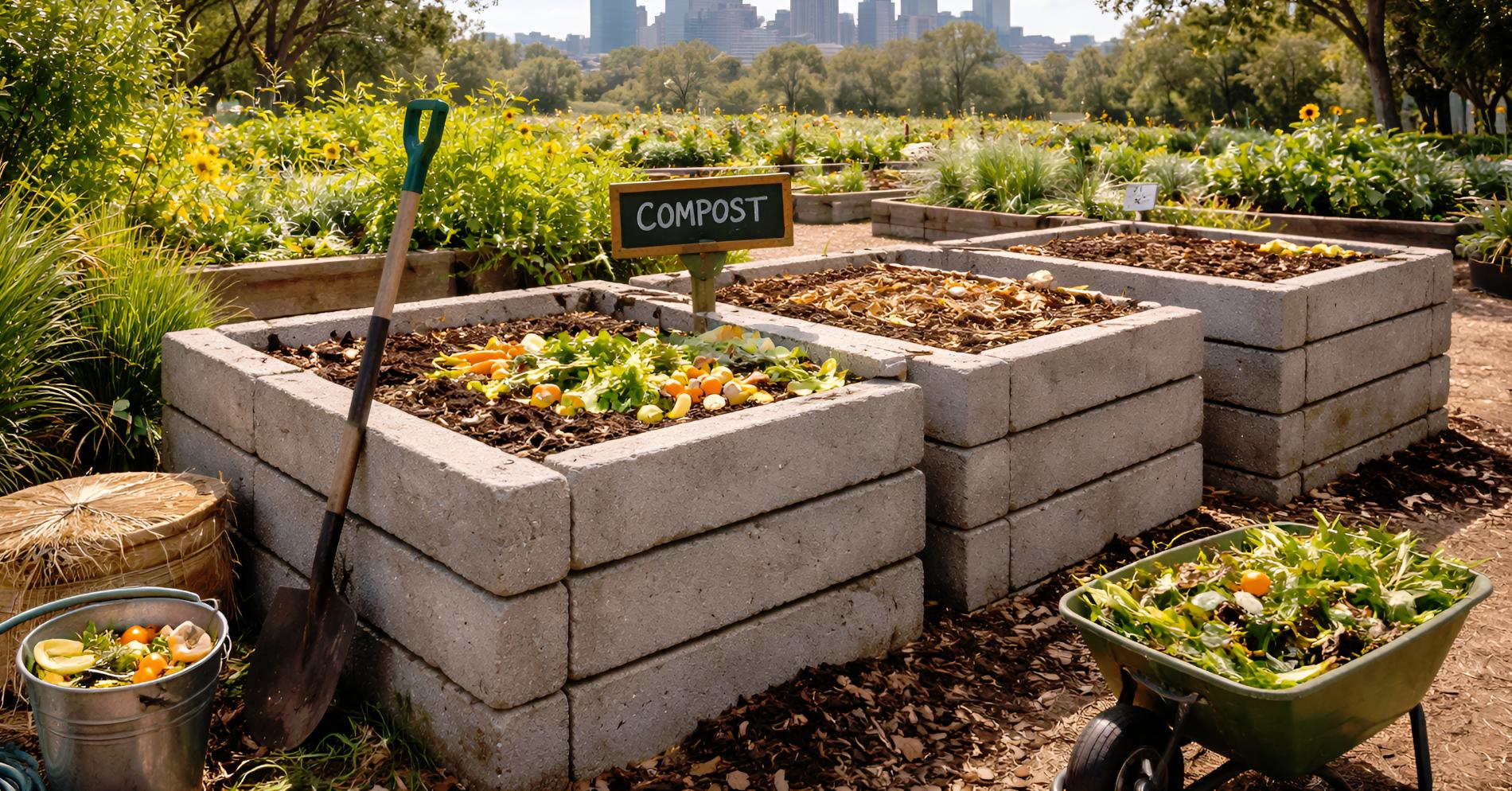
Single bin composting systems using concrete sleepers work well for smaller gardens where space limitations require compact waste management solutions that still process household organic waste effectively. These systems typically measure 1 metre square and accommodate average household waste volumes. Our how to build a raised vegetable garden guide provides construction guidance applicable to composting bin design. Organic waste management with single bins suits households with limited garden space while still diverting waste from landfill. Understanding single bin design helps you create appropriate systems for small properties.
Multi-Bay Composting Systems
Multi-bay composting systems using concrete sleepers enable continuous composting by allowing different decomposition stages across multiple bays while maintaining ongoing waste processing capacity. This approach maximises composting efficiency for larger households or properties generating substantial organic waste. Our multi-level retaining wall systems guide explores tiered applications that inform multi-bay design. Organic waste management through multi-bay systems creates comprehensive waste processing that handles ongoing waste generation without interruption. Understanding multi-bay design helps you create efficient systems for larger waste volumes.
Accessible Design Features
Accessible design features including removable front panels, hinged lids, and appropriate bin heights enable easy addition of waste materials and removal of finished compost without excessive bending or lifting. These features support regular system use and maintenance. Our concrete sleeper safety procedures guide covers safety considerations that apply to composting system access. Organic waste management with accessible features ensures systems remain usable for all household members regardless of physical capabilities. Understanding accessibility helps you create user-friendly composting systems.
Construction Techniques for Composting Bins
Foundation Preparation Requirements
Foundation preparation ensures composting bins remain stable and level throughout their service life without shifting that could compromise structural integrity or create access problems. Proper foundations prevent movement that could damage bin connections. Our concrete sleeper installation checklist provides comprehensive guidance for proper installation with accurate alignment. Organic waste management systems demand careful attention to foundation preparation because movement compromises both functionality and appearance. Taking time to prepare proper foundations prevents costly corrections after installation completes.
Ventilation Integration
Ventilation integration ensures adequate airflow through composting bins to support aerobic decomposition that prevents odours while accelerating waste breakdown into usable compost. Proper ventilation prevents anaerobic conditions that create unpleasant smells. Our concrete sleeper irrigation design guide explores how airflow integrates with concrete sleeper installations. Organic waste management with proper ventilation ensures composting proceeds efficiently without odour problems that could disturb neighbours. Understanding ventilation requirements helps you create odour-free composting systems.
Drainage Considerations
Drainage considerations prevent water accumulation within composting bins that could create anaerobic conditions and slow decomposition processes while potentially creating liquid runoff problems. Proper drainage maintains optimal moisture levels. Our flood-proof concrete sleeper walls guide explores drainage strategies for water management. Organic waste management with proper drainage ensures composting bins maintain appropriate moisture without waterlogging. Understanding drainage requirements helps you create balanced composting environments.
Location and Siting Considerations
Sun and Shade Balance
Sun and shade balance affects composting bin performance, with partial shade often ideal for maintaining consistent moisture and temperature conditions that support microbial activity without excessive drying. Location selection significantly impacts system effectiveness. Our Melbourne climate building materials guide explores how climate affects building material choices including composting system placement. Organic waste management considers sun exposure because location affects composting speed and moisture retention. Understanding sun balance helps you site bins for optimal performance.
Accessibility for Regular Use
Accessibility for regular use ensures composting bins remain convenient for daily waste addition and periodic turning, encouraging consistent system use rather than abandonment due to inconvenience. Convenient location supports ongoing waste management habits. Our designing modern garden pathways guide explores pathway design that influences accessibility. Organic waste management with accessible location ensures systems integrate smoothly into daily household routines. Understanding accessibility helps you create systems that actually get used regularly.
Neighbour Considerations
Neighbour considerations address potential concerns about odour, appearance, and pest attraction that could affect neighbour relationships when composting systems are installed near property boundaries. Thoughtful siting prevents neighbour complaints. Our acoustic barrier solutions guide explores barrier applications that inform screening decisions. Organic waste management with neighbour consideration creates systems that benefit your household without creating neighbourhood tensions. Understanding neighbour concerns helps you site bins appropriately.
Maintenance Requirements for Composting Systems
Regular Turning Schedules
Regular turning schedules introduce oxygen into composting materials, accelerating decomposition while preventing anaerobic conditions that create odours and slow the composting process significantly. Turning frequency affects composting speed. Our how to maintain concrete sleepers guide provides practical maintenance tips applicable to composting systems. Organic waste management with regular turning ensures composting proceeds efficiently without odour problems. Understanding turning requirements helps you maintain active composting systems.
Moisture Level Monitoring
Moisture level monitoring ensures composting materials maintain appropriate dampness similar to a wrung-out sponge, supporting microbial activity without creating waterlogged conditions that slow decomposition. Moisture affects composting speed significantly. Our concrete sleeper FAQs Melbourne guide addresses common questions that arise during ongoing maintenance. Organic waste management with moisture monitoring creates optimal conditions for microbial decomposition. Understanding moisture requirements helps you maintain effective composting environments.
Material Balance Management
Material balance management ensures appropriate ratios of green materials (nitrogen-rich) and brown materials (carbon-rich) that support efficient decomposition without odour or pest problems. Balance affects composting quality. Our creative concrete sleeper projects guide showcases various applications that demonstrate design possibilities. Organic waste management with material balance ensures composting proceeds efficiently without problems. Understanding balance requirements helps you create quality compost consistently.
Cost Considerations and Value Analysis
Initial Investment Requirements
Organic waste management systems require thoughtful budget planning that accounts for quality materials and proper construction from project start. Initial costs may exceed cheap alternatives but deliver better long-term value through extended service life. Our fencing ROI calculation guide helps you understand return on investment for quality materials. Organic waste management viewed as long-term investment justifies quality material selections that perform reliably for decades. Understanding total cost of ownership helps justify initial investment in appropriate composting systems.
Waste Disposal Cost Savings
Waste disposal cost savings accumulate over time as composting reduces household rubbish volumes, potentially enabling smaller waste bins and reduced council waste collection fees for participating households. These savings offset system costs. Our low-cost high-impact landscaping guide helps maximise value within budget limitations. Organic waste management with waste reduction creates ongoing savings that improve system economics over time. Understanding savings helps justify composting investments through financial as well as environmental returns.
Compost Value Creation
Compost value creation provides free, nutrient-rich soil amendments that would otherwise require purchase from garden suppliers, creating additional economic benefits from organic waste management systems beyond waste reduction. Quality compost improves garden productivity. Our concrete sleeper life cycle guide examines how concrete sleepers perform over decades of use. Organic waste management benefits from compost creation because it reduces garden input costs while improving soil health. Understanding compost value helps justify system investments through multiple benefit streams.
Environmental and Sustainability Benefits
Landfill Waste Reduction
Organic waste management through composting significantly reduces landfill waste volumes, extending landfill lifespans while reducing environmental impacts from waste transportation and decomposition methane emissions. This benefit addresses critical waste challenges. Our environmental benefits of precast concrete guide explains sustainability advantages that align with waste reduction objectives. Organic waste management with landfill reduction creates environmental benefits that extend beyond individual properties. Understanding landfill benefits helps justify composting through broader environmental contributions.
Soil Health Improvement
Compost from organic waste management systems improves soil structure, water retention, and nutrient availability while supporting beneficial soil organisms that enhance garden productivity and plant health naturally. Healthy soil supports healthy plants. Our sustainable concrete steel construction guide explores sustainable building practices that incorporate environmental considerations. Organic waste management with soil improvement creates gardens that require fewer chemical inputs while producing healthier plants. Understanding soil benefits helps justify composting through garden productivity improvements.
Carbon Footprint Reduction
Composting reduces carbon footprints by preventing methane emissions from landfill decomposition while sequestering carbon in garden soils through compost application, contributing to climate change mitigation at household scales. This benefit addresses climate challenges. Our sustainable landscaping materials guide explains environmental benefits that align with climate objectives. Organic waste management with carbon reduction creates climate benefits from individual household actions. Understanding carbon benefits helps justify composting through climate action contributions.
Regional Considerations for Australian Composting
Melbourne and Victorian Requirements
Melbourne’s variable climate creates specific requirements for composting systems that withstand temperature fluctuations while maintaining decomposition activity throughout seasonal changes. Location affects composting performance. Our Melbourne weather-resistant materials guide addresses regional material performance considerations. Organic waste management accounts for local climate factors to ensure systems perform reliably in specific regional conditions. Understanding regional requirements prevents composting problems from climate-related challenges.
Coastal vs Inland Applications
Coastal composting applications face additional challenges from salt exposure and humidity, requiring appropriate material specifications for extended corrosion resistance in marine environments. Inland locations experience different conditions. Our coastal and inland building supplies guide covers regional variations in material requirements. Organic waste management adapts to coastal or inland conditions, ensuring systems perform well in specific environmental contexts. Regional adaptation prevents premature deterioration from location-specific environmental factors.
Bushfire Zone Considerations
Composting systems in bushfire-prone areas require careful siting and material selection to avoid creating fire hazards while maintaining waste management functionality during fire seasons. Safety considerations affect system design. Our flood mitigation retaining walls guide explores disaster mitigation applicable to various environmental risks. Organic waste management in bushfire zones balances waste management with fire safety requirements. Understanding fire risks helps create safe composting systems for fire-prone locations.
Compliance and Standards
Australian Building Standards
All composting structures should comply with relevant Australian Standards for structural safety and building code requirements where applicable, ensuring systems are created safely and effectively on properties. These standards protect users. You can reference Standards Australia for authoritative information on construction standards affecting your project. Organic waste management ensures compliance while maintaining design flexibility for composting objectives. Working with compliant materials from the start prevents issues if inspections occur.
Council Waste Management Regulations
Council waste management regulations may affect composting system installation including size limitations, setback requirements, and odour control standards that vary between local government areas. Understanding local rules prevents compliance problems. The National Construction Code provides regulatory framework information affecting structural requirements. Organic waste management incorporates regulatory requirements without compromising composting objectives. Understanding regulations helps you create compliant composting systems.
Environmental Protection Requirements
Environmental protection requirements ensure composting systems don’t create runoff problems, odour issues, or pest attractions that could affect neighbours or local environments during operation. These requirements protect communities. Our concrete sleeper irrigation design guide explores how drainage integrates with concrete sleeper installations. Organic waste management with environmental protection ensures systems benefit households without creating neighbourhood problems. Understanding environmental requirements helps you create responsible composting systems.
Common Mistakes to Avoid
Inadequate Ventilation Planning
Insufficient ventilation planning creates composting systems that develop odour problems from anaerobic decomposition, discouraging continued system use and creating neighbour complaints that could require system relocation. Ventilation design must match system size and waste volumes. Our concrete sleeper irrigation design guide explores how airflow integrates with concrete sleeper installations. Organic waste management prioritises ventilation because airflow determines odour levels. Understanding ventilation requirements prevents odour problems from poor system design.
Poor Location Selection
Selecting locations without considering accessibility, sun exposure, and neighbour proximity creates composting systems that become inconvenient to use or create conflicts that undermine waste management objectives. Location affects system success. Our creative concrete sleeper designs guide provides inspiration for design possibilities that consider multiple factors. Organic waste management carefully matches locations to applications, avoiding placements that create problems. Right location selection from the start prevents system abandonment from inconvenience.
Ignoring Maintenance Requirements
Designing composting systems without considering ongoing maintenance creates features that become burdens rather than assets for property owners when maintenance proves too demanding for household routines. Realistic maintenance planning ensures system sustainability. Our how to maintain concrete sleepers guide provides practical maintenance tips for extending product lifespan. Organic waste management should balance environmental ambition with practical maintenance realities. Understanding maintenance requirements prevents future frustration with high-care composting features.
Integration with Overall Garden Systems
Garden Bed Integration
Garden bed integration connects composting systems directly with vegetable gardens and planting areas where finished compost provides immediate benefits, creating efficient nutrient cycling within garden spaces. This integration maximises compost value. Our how to create a tiered garden bed guide provides guidance for garden bed applications. Organic waste management with garden integration creates closed-loop systems where waste becomes garden resource. Understanding integration helps you create efficient garden nutrient cycles.
Water System Coordination
Water system coordination ensures composting bins receive appropriate moisture from rainwater harvesting or irrigation systems without creating waterlogging problems that could slow decomposition processes. Water coordination supports composting efficiency. Our concrete sleeper irrigation design guide explores how water management integrates with concrete sleeper installations. Organic waste management with water coordination ensures composting maintains appropriate moisture without manual intervention. Understanding water coordination helps you create low-maintenance composting systems.
Aesthetic Integration
Aesthetic integration ensures composting systems complement rather than detract from garden appearance through screening, attractive materials, and thoughtful placement that maintains garden visual appeal. Appearance affects system acceptance. Our stylish concrete sleeper features guide covers design approaches that benefit from aesthetic applications. Organic waste management with aesthetic consideration creates systems that enhance rather than detract from garden beauty. Understanding aesthetics helps you create attractive composting systems.
Planning Your Composting Project
Site Assessment Process
Developing a thorough site assessment ensures organic waste management addresses all environmental and structural factors before construction begins. Include sun exposure, soil types, water access, and accessibility in your assessment planning. Our creative concrete sleeper designs guide provides inspiration for design possibilities. Organic waste management benefits from thorough assessment that considers how site conditions affect composting performance. Written assessments help communicate site requirements and ensure appropriate specifications throughout construction.
Timeline and Budget Planning
Realistic timeline and budget planning ensures your organic waste management project proceeds smoothly without unnecessary stress from unexpected costs. Factor in material delivery schedules, construction time, and seasonal considerations when setting project timelines. You can get in touch through our contact page to discuss your project timeline and receive personalised quotes. Organic waste management includes buffer time for construction and unexpected site conditions that may arise. Proper planning from the start leads to more predictable outcomes and reduces mid-project changes.
When to Seek Professional Help
Knowing when to seek professional advice prevents costly mistakes and ensures your project meets all structural and environmental requirements for composting systems. Complex sites, challenging conditions, and large-scale installations all benefit from expert input. Our team at FPM Building Supplies provides technical support and product guidance for organic waste management projects. Organic waste management recognises that professional advice upfront often saves money compared to correcting problems discovered later. Don’t hesitate to reach out when project complexity exceeds your experience level.
Success Stories and Case Studies
Residential Composting Transformations
Residential organic waste management demonstrates how concrete sleeper composting systems transform household waste into valuable garden resources while reducing landfill contributions and creating nutrient-rich soil amendments. Before and after comparisons show dramatic waste reduction. Our 5 creative landscaping ideas guide provides inspiration for residential applications. Organic waste management in residential settings creates memorable environmental contributions for families while reducing waste. Home composting systems become features that generate environmental value and garden benefits.
Community Garden Applications
Community gardens benefit from organic waste management that processes waste from multiple households while creating shared compost resources that benefit all garden participants through improved soil health. These projects demonstrate how individual efforts multiply through coordination. Our commercial boundary solutions guide covers commercial applications that may inform community decisions. Organic waste management in community settings creates civic assets that serve diverse users over generations. Community composting systems become landmarks that define neighbourhood environmental commitment.
School Education Gardens
School gardens offer opportunities for organic waste management that serve educational purposes while teaching students about waste reduction, decomposition, and nutrient cycling through hands-on composting experience. These gardens combine education with environmental outcomes. Our school playground safety guide covers safety considerations applicable to educational installations. Organic waste management in educational settings creates learning opportunities that inspire future environmental stewards. School composting systems become outdoor classrooms that teach waste management principles.
Conclusion
Organic waste management represents a meaningful opportunity to transform household waste into valuable garden resources while reducing environmental impact through composting systems that remain functional and attractive for decades. By selecting durable materials like concrete sleepers and planning carefully for composting needs, you create systems that thrive while supporting environmental health for generations. At FPM Building Supplies, we’re committed to providing quality products and expert support for organic waste management projects across Melbourne and surrounding regions. Our team understands the unique requirements of composting systems and stands ready to help you select products that meet your specific waste management needs.
Take time to plan thoroughly, consider long-term maintenance, and don’t hesitate to seek expert advice when needed. The investment in thoughtful organic waste management pays dividends through environmental benefits, waste reduction savings, and long-term satisfaction with your sustainable waste management features. For more information about our products and services, visit our main website or call our team at +61 431235919 to discuss your specific project requirements. We’re committed to helping you achieve durable, effective, and environmentally valuable composting outcomes from start to finish. Organic waste management ensures your household waste becomes sources of garden improvement and environmental benefit for years of sustainable waste management.