
Mon - Fri 7:00 - 17:00
32 fullarton dr Epping 3076 Australia
Posted by FPMBuildingSupplies
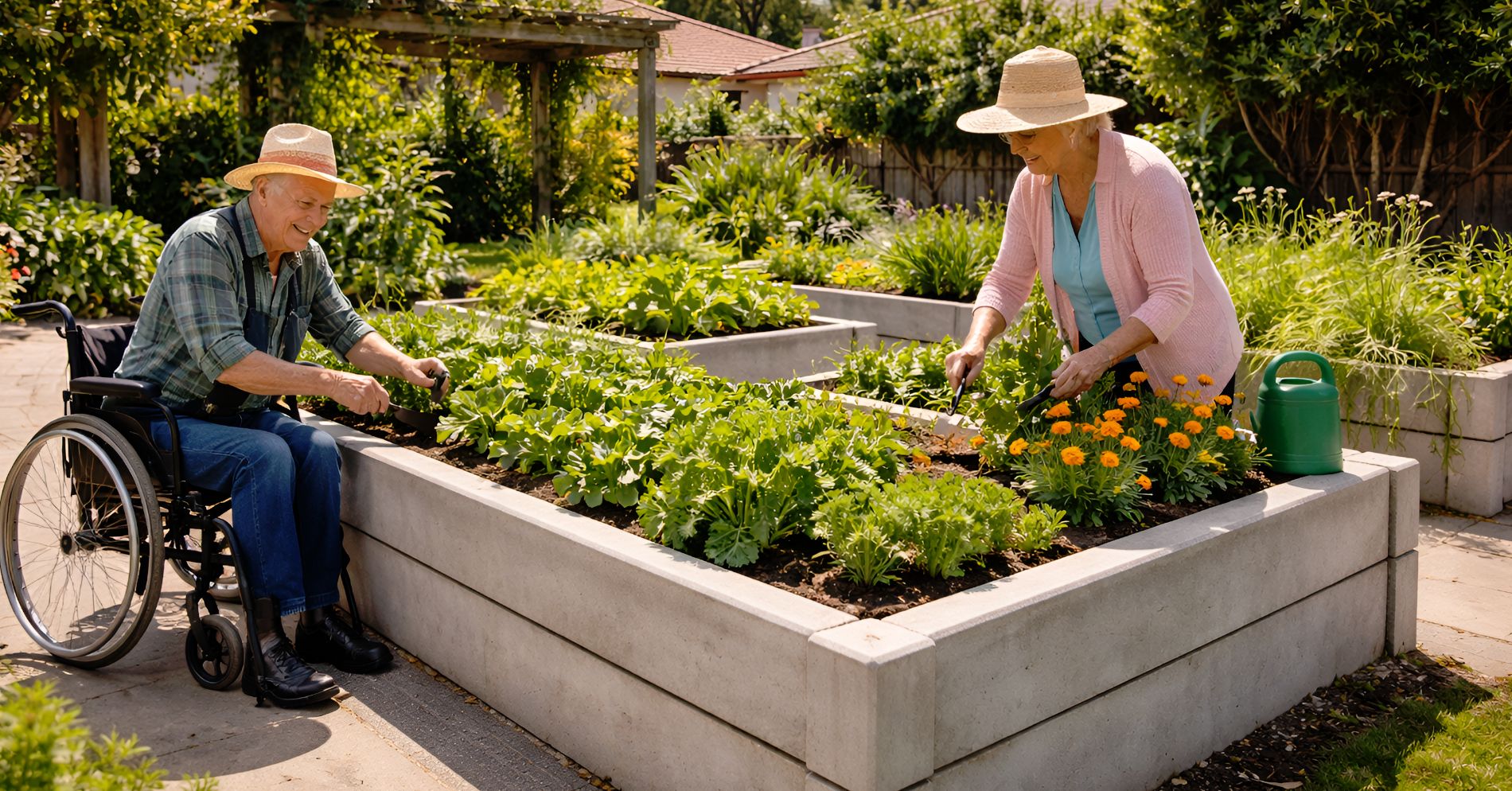
Accessible Garden Design: Concrete Sleeper Raised Beds for Seniors and Disabled Users
Table of Contents
ToggleIntroduction
Gardening brings joy, exercise, and fresh produce to people of all ages and abilities, but traditional garden beds often create barriers for seniors and disabled users who want to enjoy outdoor growing spaces. Accessible garden design removes these obstacles by creating raised beds that eliminate bending, reduce strain, and provide comfortable working heights for everyone. At FPM Building Supplies, we’ve helped countless customers create gardens that remain enjoyable throughout all life stages, regardless of physical limitations. You can explore our complete product range or learn more about why customers choose us for their construction material needs. For personalised advice on your accessible garden project, our team is available at +61 421370700 to help guide your material selection process.
The truth is, accessible garden design represents more than just accommodation; it creates inclusive spaces where everyone can participate in the therapeutic benefits of gardening. This guide breaks down everything you need to know about creating accessible gardens using concrete sleeper raised beds, helping you build outdoor spaces that work for all abilities. We’ll cover design principles, height considerations, installation techniques, and long-term maintenance strategies. If you want to understand more about our company background, visit our about page for detailed information about our operations and commitment to quality. Understanding accessible garden design from the outset helps you create landscapes that remain usable and enjoyable for generations.
What Is Accessible Garden Design?
Understanding Accessibility Principles
Accessible garden design focuses on creating outdoor spaces that people of all physical abilities can navigate, use, and enjoy without unnecessary barriers or difficulties. These principles consider mobility limitations, strength restrictions, and sensory needs when planning garden layouts and features. Our creative concrete sleeper projects guide showcases various applications that demonstrate accessible design possibilities. Accessible garden design should never sacrifice aesthetics for function, as beautiful spaces encourage use and provide therapeutic value. Understanding these principles helps you create gardens that welcome everyone regardless of physical capabilities.
Benefits for Seniors and Disabled Users
Raised beds created through accessible garden design provide numerous benefits including reduced bending, comfortable working heights, and easier maintenance access. Seniors can continue gardening activities without strain on backs, knees, and joints that traditional ground beds require. Our how to build a raised vegetable garden guide provides step-by-step instructions for raised bed construction. Accessible garden design enables disabled users to participate in gardening activities that might otherwise be impossible from standard ground level. Understanding these benefits helps justify investments in accessible features that improve quality of life.
Universal Design Concepts
Universal design concepts ensure accessible garden design works for the widest range of users without requiring specialised adaptations or separate facilities. Path widths, surface materials, and feature heights all consider diverse user needs from the planning stage. Our designing modern garden pathways guide explores pathway design that influences accessibility and movement. Accessible garden design using universal principles creates spaces where visitors of all abilities feel welcome and accommodated. Thinking beyond minimum requirements opens creative possibilities that enhance both beauty and usability.
Height and Dimension Considerations
Optimal Raised Bed Heights
Raised bed heights represent the most critical factor in accessible garden design, as incorrect heights create barriers rather than removing them. Standard accessible heights range from 600mm to 900mm for wheelchair users, while 450mm to 600mm works well for seniors who can stand but struggle with bending. Our plain concrete sleepers range provides building materials for various raised bed heights. Accessible garden design must consider specific user needs when determining appropriate bed heights for individual projects. Understanding height requirements ensures beds serve their intended accessibility purposes effectively.
Width and Reach Requirements
Bed widths must allow users to reach planting areas from paths without stepping into beds or overstretching comfortably. Maximum widths typically range from 1200mm for two-sided access to 600mm for one-sided access from paths or wheelchairs. Our how to calculate concrete sleeper quantity guide helps estimate materials accurately for your specific project. Accessible garden design considers reach limitations to ensure all planting areas remain accessible without strain. Understanding reach requirements prevents beds that look accessible but create new barriers in practice.
Path Width Specifications
Path widths between raised beds must accommodate wheelchairs, walkers, and mobility aids while allowing comfortable passage for multiple users. Minimum widths of 900mm work for single wheelchair passage, while 1500mm allows two wheelchairs to pass comfortably. Our concrete sleeper installation guide covers installation fundamentals that apply to accessible pathway construction. Accessible garden design includes adequate path widths because narrow paths create barriers even when beds themselves are accessible. Understanding path requirements ensures complete accessibility throughout garden spaces.
Material Selection for Accessible Gardens
Concrete Sleeper Advantages
Concrete sleepers offer exceptional benefits for accessible garden design including durability, stability, and low maintenance requirements that reduce ongoing care needs. Their weight provides inherent stability without requiring complex anchoring systems that complicate construction. Our concrete sleepers the foundation guide covers foundation applications where stability matters significantly. Accessible garden design benefits from concrete sleeper longevity because it reduces replacement frequency that could disrupt garden use. Understanding these advantages helps justify material investments that deliver value over decades.
Surface Texture and Safety
Surface textures on concrete sleepers affect grip and safety for users who may lean on beds for support during gardening activities. Textured finishes provide better traction than smooth surfaces, reducing slip risks in wet conditions. Our concrete sleeper safety procedures guide covers safety considerations that apply to accessible garden applications. Accessible garden design must consider surface safety because falls present serious risks for seniors and disabled users. Understanding texture options helps create beds that support users safely during gardening activities.
Colour and Visual Contrast
Colour choices affect visual accessibility for users with limited vision who rely on contrast to navigate garden spaces safely. Charcoal concrete sleepers provide strong contrast against green plants and light-coloured paths that aids navigation. You can compare finishes in our charcoal vs plain concrete sleepers guide to determine which suits your accessibility needs. Accessible garden design uses colour strategically to help users identify bed edges, path boundaries, and potential hazards. Understanding visual contrast helps create gardens that accommodate users with varying vision capabilities.
Construction Techniques for Accessibility
Foundation Preparation
Proper foundation preparation ensures accessible garden beds remain stable and level throughout their service life without shifting that could create trip hazards. Compacted base materials prevent settling that could change bed heights and compromise accessibility features. Our concrete sleeper installation checklist provides comprehensive guidance for proper installation with accurate alignment. Accessible garden design demands careful attention to foundation preparation because movement compromises both safety and accessibility. Taking time to prepare proper foundations prevents costly corrections after installation completes.
Edge Treatment for Safety
Edge treatments on raised beds affect safety and comfort for users who may contact bed edges during gardening activities. Smooth, rounded edges reduce injury risks compared to sharp corners that could cause cuts or bruises. Our securing concrete sleepers guide covers connection techniques that prevent common mistakes including sharp edge exposure. Accessible garden design includes edge treatment because safety features protect vulnerable users during regular garden use. Proper edge finishing ensures beds support users comfortably without creating injury risks.
Integration with Irrigation Systems
Irrigation integration reduces physical demands on users by automating watering tasks that might otherwise require carrying heavy containers or managing hoses. Drip systems and soaker hoses deliver water directly to plants without user intervention beyond initial system setup. Our concrete sleeper irrigation design guide explores how drainage integrates with concrete sleeper installations. Accessible garden design with automated irrigation reduces physical strain while ensuring plants receive consistent moisture. Understanding irrigation options helps create gardens that remain manageable for users with limited strength or mobility.
Ergonomic Considerations
Working Height Optimization
Working heights in accessible garden design must accommodate different user positions including standing, seated, and wheelchair-based gardening activities. Adjustable height beds or varied bed heights throughout gardens accommodate multiple users with different needs. Our creative concrete sleeper designs guide provides inspiration for design possibilities that consider ergonomic factors. Accessible garden design optimises working heights because comfortable positions reduce fatigue and enable longer gardening sessions. Understanding ergonomic requirements ensures gardens accommodate diverse user capabilities effectively.
Tool Storage Integration
Integrated tool storage reduces the need for users to carry tools long distances or bend to access ground-level storage areas. Built-in storage compartments or adjacent tool stations keep necessary equipment within easy reach during gardening activities. Our innovative uses for concrete sleepers guide explores versatile applications that support functional garden features. Accessible garden design includes tool storage because convenient access reduces physical strain and encourages garden use. Understanding storage needs helps create gardens that support efficient, comfortable gardening activities.
Seating and Rest Areas
Seating integrated into accessible garden design provides rest opportunities for users who need breaks during gardening activities without leaving the garden space. Built-in benches or adjacent seating areas enable users to garden at their own pace with available rest options. Our transform your backyard with concrete sleeper benches guide provides inspiration for seating applications. Accessible garden design with seating acknowledges that users have varying endurance levels that require accommodation. Understanding rest needs helps create gardens that users can enjoy without exhaustion.
Plant Selection for Accessible Gardens
Low-Maintenance Plant Choices
Plant selection in accessible garden design should prioritise low-maintenance varieties that reduce ongoing care requirements for users with limited energy or mobility. Perennial plants, native species, and drought-tolerant varieties all reduce maintenance demands significantly. Our sustainable landscaping materials guide explains environmental benefits that align with low-maintenance planting strategies. Accessible garden design considers plant maintenance because high-care plants create barriers for users with limited capacity. Understanding plant requirements helps create gardens that remain manageable throughout growing seasons.
Sensory Garden Elements
Sensory garden elements engage users through fragrance, texture, colour, and sound that provide therapeutic benefits beyond food production. Herbs, fragrant flowers, and textural plants all contribute to multi-sensory garden experiences. Our 5 creative landscaping ideas guide provides inspiration for residential applications including sensory features. Accessible garden design with sensory elements accommodates users with varying abilities to engage with garden spaces. Understanding sensory opportunities helps create gardens that provide therapeutic value for all users.
Harvesting Considerations
Plant placement should consider harvesting accessibility, with frequently harvested crops positioned for easiest access without reaching or stretching. Crop heights, harvest frequencies, and picking methods all affect accessibility for different users. Our how to build a raised vegetable garden guide provides guidance for vegetable garden construction with accessibility in mind. Accessible garden design positions plants strategically because difficult harvesting creates barriers to enjoying garden produce. Understanding harvesting needs helps create productive gardens that users can actually utilise.
Safety Features and Considerations
Trip Hazard Prevention
Trip hazard prevention represents a critical safety consideration in accessible garden design, as falls present serious risks for seniors and disabled users. Level surfaces, clear path edges, and consistent heights all reduce trip risks throughout garden spaces. Our concrete sleeper FAQs Melbourne guide addresses common questions that arise during accessible garden planning. Accessible garden design prioritises trip prevention because falls can have severe consequences for vulnerable users. Understanding trip hazards helps create gardens that users can navigate safely without constant vigilance.
Shade and Sun Protection
Adequate shade protects users from sun exposure during gardening activities, particularly important for seniors and users with certain medical conditions. Shade structures, tree plantings, or strategic bed placement all provide sun protection options. Our Melbourne weather-resistant materials guide addresses regional material performance considerations including UV exposure. Accessible garden design includes sun protection because heat and UV exposure affect vulnerable users more severely. Understanding sun management helps create gardens that remain comfortable and safe throughout summer months.
Emergency Access Considerations
Emergency access ensures users can exit garden spaces quickly if needed and that emergency services can reach users if accidents occur. Path widths, gate openings, and clear access routes all support emergency access requirements. The National Construction Code provides regulatory framework information affecting accessibility requirements. Accessible garden design considers emergency access because safety planning protects users during unexpected situations. Understanding emergency requirements ensures gardens remain safe even during crisis situations.
Maintenance and Long-Term Care
Reduced Maintenance Strategies
Accessible garden design should minimise ongoing maintenance requirements through material selection, plant choices, and system design that reduce care needs. Quality materials, appropriate plants, and efficient systems all contribute to reduced maintenance demands. Our how to maintain concrete sleepers guide provides practical maintenance tips for extending product lifespan. Accessible garden design with reduced maintenance ensures gardens remain usable as user capabilities change over time. Understanding maintenance requirements helps create sustainable gardens that don’t become burdens.
Seasonal Adjustment Planning
Seasonal adjustments accommodate changing user needs and garden conditions throughout the year without compromising accessibility features. Mulching, plant protection, and path maintenance all require seasonal attention in accessible gardens. Our how to clean and maintain charcoal concrete sleepers guide provides cleaning tips applicable to all concrete sleeper finishes. Accessible garden design plans for seasonal changes because year-round accessibility requires ongoing attention. Understanding seasonal needs helps maintain accessibility throughout all weather conditions.
Adaptation for Changing Needs
Accessible gardens should accommodate changing user needs as capabilities evolve over time due to aging or changing health conditions. Modular designs, adjustable features, and flexible layouts all support adaptation without complete reconstruction. Our multi-level retaining wall systems guide explores tiered applications that can adapt to changing requirements. Accessible garden design with adaptation capacity extends garden usability as user needs change over years. Understanding adaptation options helps create gardens that grow with users rather than becoming obsolete.
Cost Considerations and Value Analysis
Initial Investment Requirements
Accessible garden design requires thoughtful budget planning that accounts for quality materials and proper construction from the start. Initial costs may exceed standard garden beds but deliver better long-term value through extended usability. Our low-cost high-impact landscaping guide helps maximise value within budget limitations. Accessible garden design viewed as long-term investment justifies quality material selections that perform reliably for decades. Understanding total cost of ownership helps justify initial investment in appropriate accessible features.
Long-Term Value Assessment
Long-term value assessment considers extended usability, reduced maintenance, and continued garden enjoyment over the asset’s complete service life. Quality accessible features cost more initially but deliver better value through sustained garden use. Our fencing ROI calculation guide helps you understand return on investment for quality materials. Accessible garden design benefits from this long-term thinking because gardens remain usable as capabilities change. Quality accessible features represent investments that appreciate in value through continued use.
Bulk Supply Options
Larger accessible garden projects or multiple beds benefit from bulk supply arrangements that provide cost savings and ensure material consistency. Coordinating material purchases with project phases helps manage cash flow while securing favourable pricing. Our bulk concrete sleepers Melbourne page covers options for projects requiring significant material quantities. Accessible garden design projects often require multiple sleepers, making bulk pricing particularly valuable for budget management. Bulk ordering reduces per-unit costs while ensuring all materials come from consistent production batches.
Environmental and Sustainability Benefits
Material Longevity and Waste Reduction
Durable concrete sleepers reduce resource consumption over time by eliminating frequent replacement cycles associated with less durable materials. Our environmental benefits of precast concrete guide explains sustainability advantages of precast concrete products. Accessible garden design values this resource efficiency because it reduces overall environmental footprint of garden construction. Fewer replacements mean less manufacturing, transportation, and installation energy consumed over decades of service.
Recyclability Considerations
When garden features eventually reach end of life, recyclable materials support sustainable construction practices and responsible resource use. Concrete sleepers can be crushed and repurposed for various construction applications at end of service life. Our recycling concrete sleepers Australia guide covers disposal and recycling options for concrete products. Accessible garden design planning considers end-of-life pathways during material selection, ensuring materials don’t become future waste problems. This forward thinking distinguishes sustainable garden construction from conventional approaches.
Sustainable Construction Practices
Sustainable construction practices extend beyond material selection to include installation methods, transportation, and overall project planning. Local sourcing reduces transportation emissions while supporting regional economies and supply chains. Our sustainable concrete steel construction guide explores sustainable building practices that incorporate durable materials. Accessible garden design can incorporate sustainable practices that align with broader environmental stewardship goals. Understanding sustainability factors helps make informed decisions aligning with both performance needs and environmental values.
Regional Considerations for Australian Conditions
Melbourne and Victorian Climate
Melbourne’s variable climate creates specific requirements for accessible gardens that withstand temperature fluctuations and weather extremes. Concrete sleepers perform well in Victorian conditions, resisting frost damage and heat stress that affects other materials. Our Melbourne climate building materials guide explores how climate affects building material choices. Accessible garden design accounts for local climate factors to ensure materials perform reliably in specific regional conditions. Understanding regional requirements prevents premature failures from climate-related stress.
Coastal vs Inland Applications
Coastal garden applications face additional challenges from salt exposure, requiring appropriate material specifications for extended corrosion resistance. Inland locations experience different weather patterns affecting material selection and installation approaches. Our coastal and inland building supplies guide covers regional variations in material requirements. Accessible garden design adapts to coastal or inland conditions, ensuring materials perform well in specific environmental contexts. Regional adaptation prevents premature deterioration from location-specific environmental factors.
Soil Type Considerations
Different soil types affect garden installation requirements, drainage needs, and long-term stability considerations across Australian regions. Clay soils common across Victoria require appropriate drainage and foundation considerations for raised beds. Our ultimate guide to fencing on clay soil provides guidance for challenging soil conditions. Accessible garden design works with existing soil conditions rather than attempting expensive modifications. Understanding soil characteristics ensures appropriate installation techniques for long-term garden stability.
Compliance and Standards
Australian Accessibility Standards
All accessible garden design should comply with relevant Australian Standards for accessibility and building code requirements where applicable. Standards Australia provides comprehensive guidelines for construction materials and methods across different applications. You can reference Standards Australia for authoritative information on construction standards affecting your project. Accessible garden design ensures compliance while maintaining creative freedom for garden aesthetics. Working with compliant materials from the start prevents issues if inspections occur.
Permit Requirements
Many garden structures require building permits before work begins, particularly for raised beds exceeding certain heights or serving as seating. Local councils assess plans to ensure proposed features meet engineering and safety requirements. Our Melbourne concrete sleeper permits guide covers permit processes for the Melbourne area. Accessible garden design includes permit planning in project timelines to avoid delays from approval processes. Starting permit applications early ensures projects proceed smoothly from planning through to completion.
Insurance Considerations
Insurance providers may require specific accessibility standards for coverage of injuries that could occur in garden spaces. Documenting accessibility features and construction methods supports insurance claims if incidents occur. Our NCC compliant fencing materials guide covers compliance requirements that may affect insurance coverage. Accessible garden design with documented compliance provides peace of mind that insurance coverage remains valid. Proper documentation protects both users and property owners through verified safety measures.
Common Mistakes to Avoid
Inadequate Height Planning
Selecting bed heights without considering specific user needs creates barriers rather than removing them from garden spaces. Height selection should match user capabilities and gardening positions for optimal accessibility. Our understanding concrete sleepers weight guide covers specification considerations for various applications. Accessible garden design carefully matches heights to applications, avoiding specifications that create new barriers. Right height selection from the start prevents disappointments and additional expenses later.
Narrow Path Widths
Insufficient path widths create barriers for wheelchair users and those with mobility aids even when beds themselves are accessible. Path planning must accommodate all intended users and their equipment throughout garden spaces. Our designing modern garden pathways guide explores pathway design that influences accessibility and movement. Accessible garden design prioritises path widths because narrow paths negate bed accessibility completely. Understanding path requirements ensures complete garden accessibility for all users.
Ignoring Future Needs
Designing only for current capabilities without considering future changes creates gardens that become unusable as needs evolve. Flexible designs accommodate changing abilities without requiring complete reconstruction. Our innovative uses for concrete sleepers guide explores versatile applications that support future flexibility. Accessible garden design should consider future needs because capabilities change over time for all users. Planning for adaptation extends garden usability throughout life changes.
Planning Your Accessible Garden Project
Creating a Design Plan
Developing a detailed design plan ensures all aspects of your accessible garden design project receive proper consideration before construction. Include bed heights, path widths, material specifications, and integration with broader landscape design. Our creative concrete sleeper designs guide provides inspiration for design possibilities. Accessible garden design benefits from thorough planning that considers how features integrate with overall landscape systems. Written plans help communicate design intent and ensure consistent implementation throughout construction.
Timeline and Budget Planning
Realistic timeline and budget planning ensures your accessible garden design project proceeds smoothly without unnecessary stress. Factor in material delivery schedules, installation duration, and weather considerations when setting project timelines. You can get in touch through our contact page to discuss your project timeline and receive personalised quotes. Accessible garden design includes buffer time for weather delays and unexpected site conditions that may arise. Proper planning from the start leads to more predictable outcomes and reduces mid-project changes.
When to Seek Professional Help
Knowing when to seek professional advice prevents costly mistakes and ensures your project meets all requirements. Complex sites, challenging conditions, and large-scale installations all benefit from expert input. Our team at FPM Building Supplies provides technical support and product guidance for accessible garden projects. Accessible garden design recognises that professional advice upfront often saves money compared to correcting problems discovered later. Don’t hesitate to reach out when project complexity exceeds your experience level.
Success Stories and Inspiration
Residential Garden Transformations
Residential accessible gardens demonstrate how concrete sleeper raised beds transform outdoor spaces into usable gardens for seniors and disabled family members. Before and after comparisons show dramatic improvements in garden accessibility and usage. Our 5 creative landscaping ideas guide provides inspiration for residential applications. Accessible garden design in residential settings creates memorable outdoor experiences for families with diverse abilities. Home gardens become inclusive spaces through thoughtful accessible integration.
Community Garden Applications
Community gardens benefit from accessible garden design that enables participation from all community members regardless of physical abilities. Shared accessible beds create inclusive growing spaces that build community connections. Our commercial boundary solutions guide covers commercial applications that may inform community garden decisions. Accessible garden design in community settings creates civic assets that serve diverse users over generations. Community accessible features become landmarks that define neighbourhood inclusivity.
Therapeutic Garden Programs
Therapeutic garden programs use accessible garden design to support rehabilitation, mental health, and wellness outcomes for participants. Healthcare facilities, aged care homes, and rehabilitation centres all benefit from accessible growing spaces. Our school playground safety guide covers safety considerations applicable to therapeutic garden installations. Accessible garden design in therapeutic settings creates healing environments that support wellness goals. Therapeutic accessible features become tools for health improvement and quality of life enhancement.
Conclusion
Accessible garden design represents powerful opportunities to create inclusive outdoor spaces that enable gardening enjoyment for people of all ages and abilities. By selecting durable materials like concrete sleepers and planning carefully for accessibility needs, you create gardens that remain usable and enjoyable throughout life changes. At FPM Building Supplies, we’re committed to providing quality products and expert support for accessible garden projects across Melbourne and surrounding regions. Our team understands the unique requirements of accessible garden design and stands ready to help you select products that meet your specific needs.
Take time to plan thoroughly, consider long-term maintenance, and don’t hesitate to seek expert advice when needed. The investment in thoughtful accessible garden design pays dividends through continued garden enjoyment, improved quality of life, and long-term satisfaction with your outdoor living spaces. For more information about our products and services, visit our main website or call our team at +61 431235919 to discuss your specific project requirements. We’re committed to helping you achieve beautiful, durable, and accessible garden outcomes from start to finish. Accessible garden design ensures your outdoor spaces remain sources of joy and productivity for years of comfortable gardening enjoyment.